
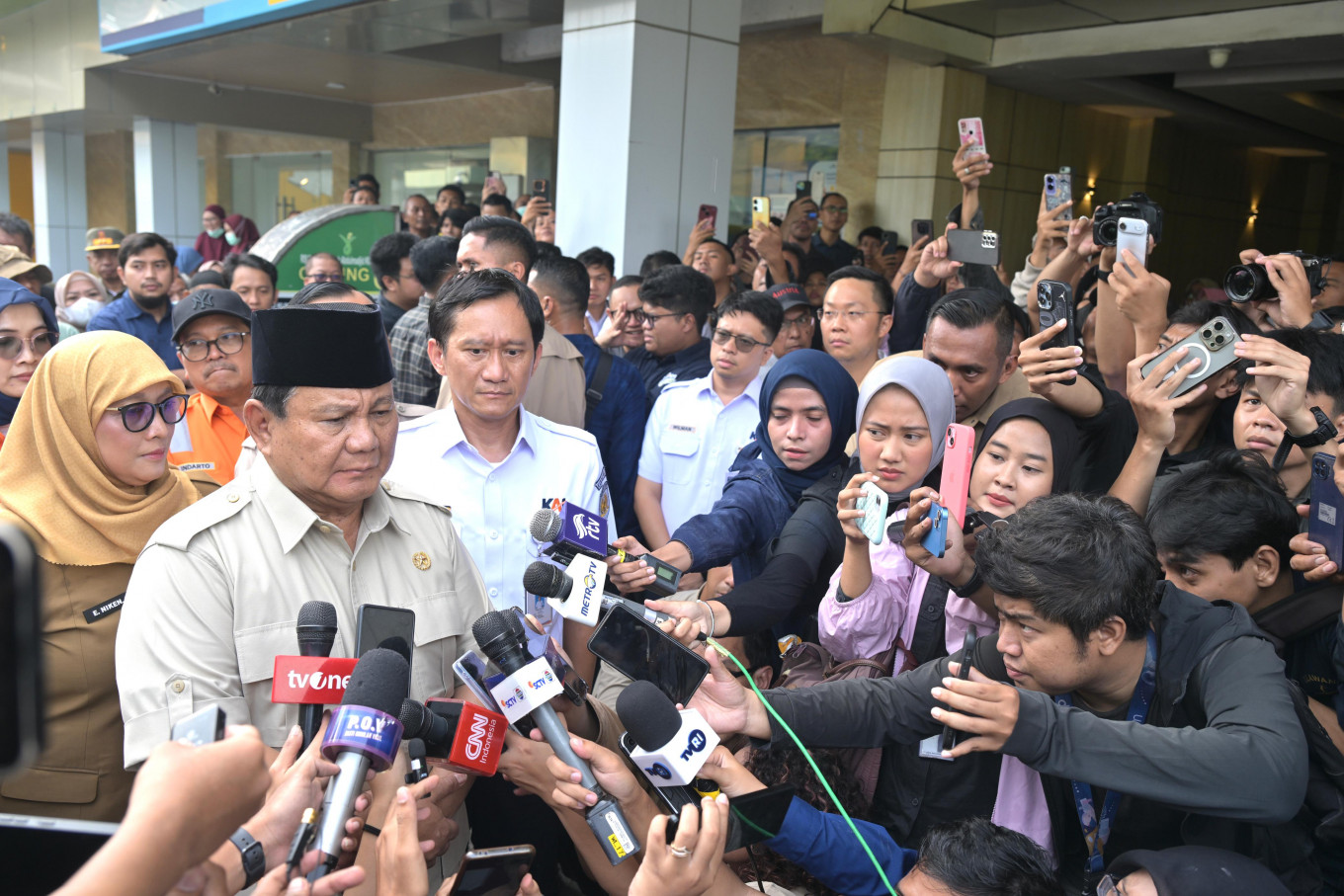
JAKARTA – President Prabowo Subianto visited victims of a fatal train collision at Bekasi Regional Hospital on Tuesday, April 29, 2026, hours after a long-distance intercity train struck a stationary commuter train. The accident resulted in at least 14 confirmed deaths and more than 80 injuries.
The incident has prompted an immediate government review of railway safety infrastructure across Java, with the President ordering a full investigation into the cause of the crash and the failure of warning systems. The collision, which occurred late Monday near East Bekasi Station in West Java, is one of the deadliest rail incidents in the commuter belt surrounding the capital in recent years.
Sequence of the Collision
Preliminary reports indicate the disaster was the result of a chain of events beginning at a level crossing on the line serving Greater Jakarta’s electrified commuter network. The sequence is reported as follows:
- An electric taxi stalled at a level crossing, where it was subsequently struck by a commuter train traveling from Cikarang to Bekasi.
- This initial collision disrupted rail traffic on the line and damaged signaling and safety equipment in the immediate area.
- A second commuter train, traveling from Jakarta to Cikarang, came to a stop near East Bekasi Station as services were halted.
- The Argo Bromo Anggrek intercity train, operating the Jakarta-Surabaya route, then crashed into the stationary commuter train, allegedly due to a delay or failure in warning signals reaching the intercity service.
The impact was most severe in the final carriage of the commuter train, which served as a women-only car. This section of the train sustained the heaviest damage, leading to the highest concentration of fatalities and injuries and raising renewed concerns over passenger protection in designated carriages during peak-hour operations.
Rescue Operations and Casualty Reports
A rescue operation lasting nearly 12 hours concluded Tuesday morning, coordinated by local disaster mitigation officials, police, and medical teams. Emergency responders worked through the night under floodlights to cut through twisted metal and extract passengers trapped in the wreckage, as services on the busy line were suspended and several roads around the site were closed.
Among the injured was 40-year-old Endang Kuswati, who was traveling from Pasar Baru in Central Jakarta to Cibitung in Bekasi. According to her cousin, Muhammad Iqbal, Kuswati called her family around 10 p.m. on Monday, crying for help while trapped inside the wreckage.
Rescuers evacuated Kuswati at approximately 7 a.m. on Tuesday, after which she was transported to Bekasi Regional Hospital.
“The latest update is that she has undergone an X-ray. We still cannot determine the full extent of her injuries, as her body was already swollen when she was evacuated after being trapped for around 10 hours,” Iqbal told reporters, describing overcrowded hospital corridors as families searched for relatives.
While initial reports suggested at least 15 deaths, official figures released by authorities later confirmed 14 fatalities and over 80 injuries, as the transportation ministry, state rail operator and police began reconciling victim lists from multiple hospitals and rescue posts.
Infrastructure Review and Presidential Mandate
During his visit to the hospital, President Prabowo expressed his condolences and outlined a broader strategy to address systemic safety issues within the rail network, saying the Bekasi crash should serve as a turning point for how Indonesia manages high-density urban rail corridors.
“On behalf of the government, I express my condolences for this tragedy. We will immediately investigate how this incident happened,” Prabowo said.
The President identified poorly guarded railway crossings in densely populated areas, specifically in Bekasi, West Java, as a critical vulnerability. He noted that approximately 1,800 similar crossings across Java require urgent attention, many of them informal or minimally protected despite carrying frequent commuter and intercity services.
To mitigate these risks, the President announced the following measures:
- Immediate approval for the construction of flyovers funded through presidential assistance, prioritizing accident-prone crossings on key commuter and intercity routes.
- A comprehensive evaluation of existing railway crossings against national safety standards overseen by the Ministry of Transportation and the rail regulator, including a review of signaling redundancy and emergency communication protocols.
- Implementation of swift improvements through the installation of guard posts, barriers and warning systems, or the building of new flyovers where level crossings are deemed incompatible with safe operation.
“I have approved the immediate construction of flyovers through presidential assistance,” Prabowo stated, framing the move as part of a broader effort to align aging rail infrastructure with Indonesia’s Railway Law and national transport safety commitments.
The investigation into the delayed warning signals and the failure to prevent the intercity train from striking the stationary commuter line is now underway, led by Indonesia’s transport safety authorities. Findings from that probe are expected to feed into a wider review of commuter rail operations in Greater Jakarta, where rapid urban growth has outpaced the modernization of crossings and signaling on some of the country’s busiest tracks.
Keep reading
