
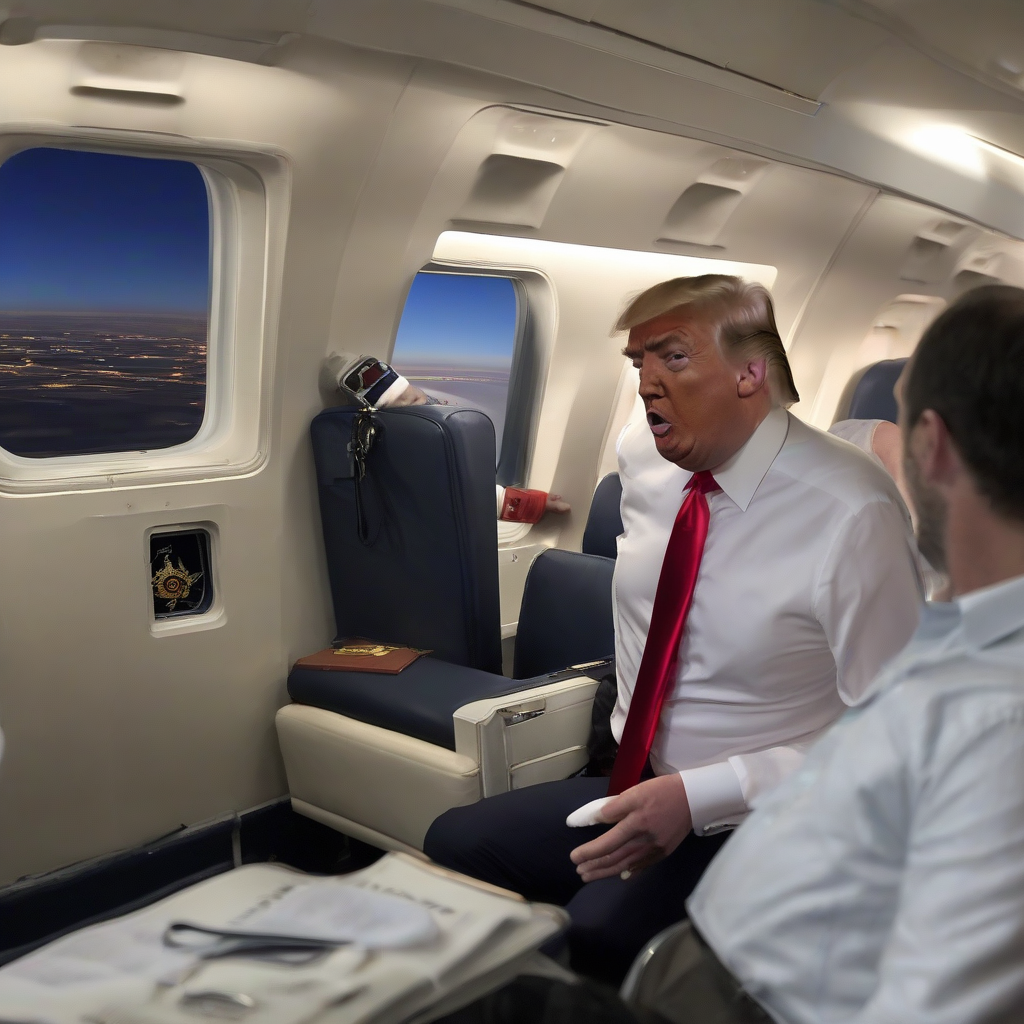
WASHINGTON – President Donald Trump returned from a NATO summit in Turkey on July 8, 2026, using a legacy Boeing VC-25A aircraft for a significant portion of the journey, abandoning the newly retrofitted presidential jet he had used to arrive in Ankara.
The unexpected swap occurred as the United States and Iran engaged in a series of reciprocal military strikes, prompting questions about the security specifications of the new “bridge” aircraft provided by Qatar.
The president arrived in Turkey aboard a red, white, and navy blue Boeing 747-800, but departed Ankara International Airport on one of the older “baby blue” VC-25A jets. The legacy aircraft flew the president to Royal Air Force Mildenhall in the United Kingdom, where he later boarded the newer jet to complete the trip to Joint Base Andrews outside Washington.
 Air Force One on tarmac at Ankara International Airport”>
Alex Brandon/AP
Security Discrepancies in Presidential Fleet
The transition between aircraft has highlighted technical and doctrinal gaps in the Qatari-gifted jet, which the U.S. government spent $400 million to retrofit for presidential use. Aviation analysts and military records indicate that the “bridge” aircraft does not possess the same suite of missile detection and countermeasure systems found on the Cold War-era VC-25As, which for decades have served as the airborne nerve center for the American presidency.
The legacy VC-25A fleet was specifically engineered under the rules of the Department of Defense’s special air mission framework to function in high-threat environments, featuring:
- Hardening against the electromagnetic pulse (EMP) of a nuclear blast, allowing the aircraft to remain operable in the opening stages of a strategic attack.
- Integrated anti-missile countermeasures designed to detect, decoy, or defeat incoming threats.
- A fully equipped onboard operating room and expanded medical facilities for emergency procedures involving the president or senior officials.
- Air-to-air refueling capabilities for extended flight duration, enabling the aircraft to remain aloft for long periods during crises.
The U.S. Air Force previously acknowledged that “several highly complex engineering modifications required for the final (Air Force One aircraft) were intentionally excluded from the Bridge aircraft” to expedite its entry into service and contain costs. Jeremiah Gertler, a senior analyst for the Teal Group, noted that the lack of these countermeasures and a reduced number of communications antennas suggest the Qatari jet is better suited for lower-threat or domestic travel, rather than operating at the edge of a potential conflict zone.
Operational Shifts Amid Iranian Tensions
The aircraft swap followed a series of large-scale U.S. military strikes in Iran conducted in retaliation for attacks on merchant shipping, a campaign that has pulled the presidential travel apparatus directly into a fast-moving regional confrontation. On July 8, 2026, further strikes were carried out, raising the perceived threat level around the president’s route home.
During the flight from Turkey to the U.K. aboard the older jet, reporters were instructed to keep their window blinds closed, a visible reminder that the trip was being treated as a sensitive operation rather than a routine head-of-state movement. When questioned about the directive, Trump suggested it was likely due to “sleazebags over here,” referring to Iran.
Regarding the security risks associated with the region, Trump stated:
“I have a threat all the time. I’m No. 1 on their list.”
He later added during a news conference that he is “No. 1 on the list for killing” when discussing Iranian threats, framing the choice of aircraft and security posture as a direct response to personal targeting by Tehran.
Flight tracking data indicated that the legacy aircraft’s transponder was disabled shortly after takeoff from Turkey, a security protocol typically reserved for war zones or high-risk environments to make it harder to target the plane. In contrast, flights for other world leaders, including those from the U.K. and Germany, remained trackable, underscoring the uniquely elevated risk assessment surrounding the U.S. president’s movement that day.
Strategic Range and Capabilities
The security precautions align with the known capabilities of Iranian weaponry and the geographic realities of the air corridor out of Turkey. According to the Center for Strategic and International Studies, Iran possesses Shahed drones and Shahab ballistic missiles capable of covering the roughly 800-mile distance from Iranian borders to Turkish airspace, placing portions of the presidential route to the U.K. within theoretical range of Iranian systems.
However, the same data indicates that Iran does not possess weaponry capable of effectively striking the United Kingdom, which is located approximately 2,500 miles from Iran. That distance helps explain why the more heavily hardened VC-25A was used for the first leg of the journey, before the president rejoined the newer aircraft for the final, lower-risk segment into Joint Base Andrews.
White House spokesman Steven Cheung defended the use of the new aircraft in a statement, casting the mix of platforms as an intentional part of the administration’s security playbook rather than a sign of doubt about the interim jet:
“The new Air Force One is a state-of-the-art aircraft that has been fitted with high-level security protocols that ensure the safety of the President and his staff. As the President has said recently, there are many enemies of America who have their sights on him, and we use every tool at our disposal – including distraction and misdirection – to address those threats.”
Fleet Modernization Timeline
The current reliance on the legacy VC-25As and the interim Qatari aircraft is a result of delays in the permanent fleet replacement program, a multi-year procurement effort overseen by the U.S. Air Force and subject to congressional oversight and appropriations. Two new Boeing jets designed to serve as the long-term upgrades to the presidential fleet are currently undergoing modification and are expected to be delivered in 2028, according to Air Force planning documents.
Until those aircraft enter service, the White House Military Office and the Air Force’s Presidential Airlift Group will continue to balance cost, survivability, and diplomatic optics on a trip-by-trip basis. The mid-journey swap in Ankara – from the Qatar-funded bridge jet back to a hardened VC-25A and then again to the newer aircraft – illustrates how decisions about the president’s airplane have become an extension of U.S. crisis management, not just a matter of comfort or symbolism.
- Urban Infrastructure Resilience: How European and Asian Megacities Are Adapting to Extreme Climate Oscillations in 2026
- UN General Assembly 2026 Framework on Autonomous Systems: International Diplomacy Faces Algorithmic Governance
- Trump Proposes Camp David-Style Presidential Retreat at Florida Golf Club (archyde.com)
- Jay Clayton named White House AI czar by Trump to lead task force (globallypulse.com)
