
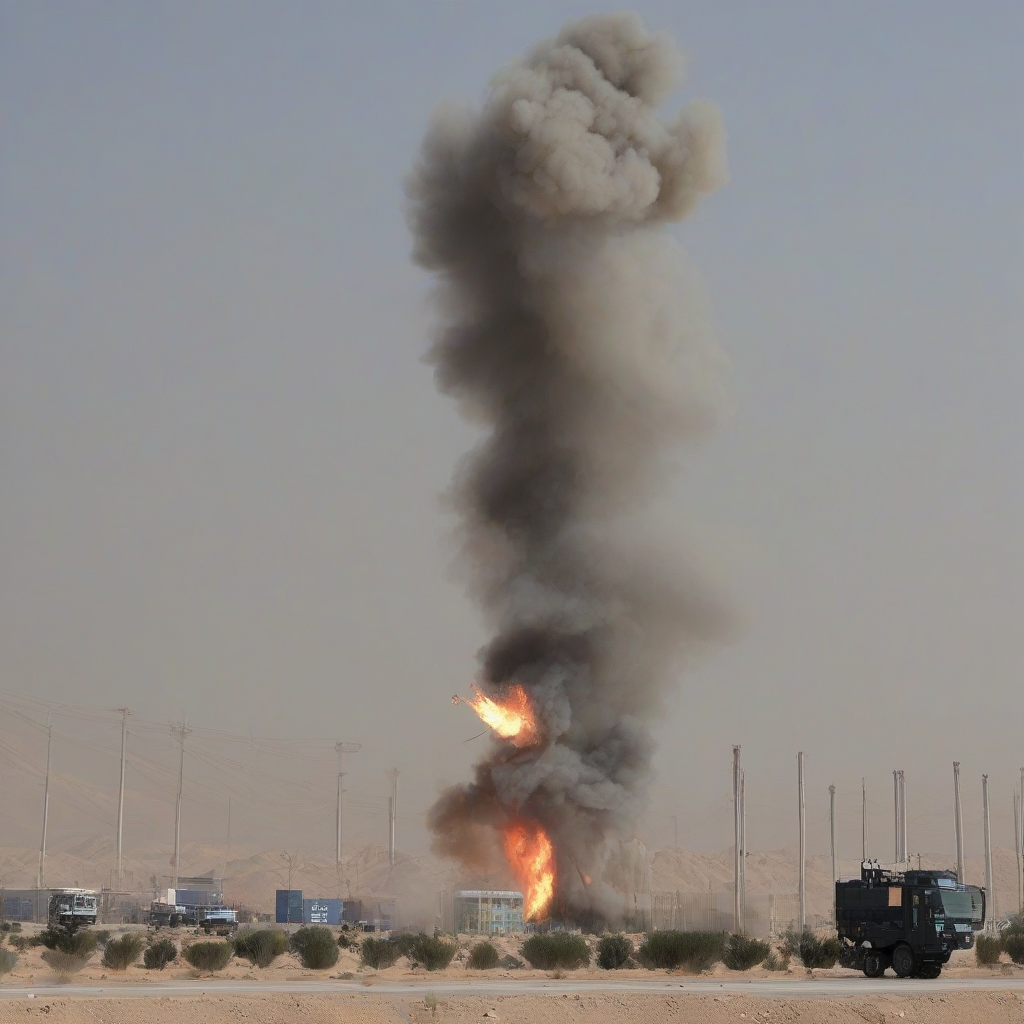
WASHINGTON – The United States and Iran have engaged in a second consecutive day of military strikes on July 9, 2026, as both nations battle for control of the Strait of Hormuz.
The conflict centers on the vital oil shipping corridor, which has become a primary flashpoint in the broader Middle East war. The strait is a narrow waterway between Iran and the Arabian Peninsula that connects the Persian Gulf to the Gulf of Oman and the Arabian Sea, serving as one of the world’s most important chokepoints for seaborne crude exports. Following the collapse of a ceasefire, the waterway’s status-which allowed free passage prior to the start of hostilities in February-is now the subject of a volatile military standoff.
US President Donald Trump announced on July 8, 2026, that the ceasefire with Iran was “over,” though he indicated the possibility of future talks and stated that any strikes would conclude quickly. His remarks came amid mounting pressure from US allies to keep vital energy and shipping lanes open and to avoid a broader confrontation with Tehran.
Aerial and Coastal Military Operations
US Central Command (CENTCOM) reported striking approximately 90 military targets along the Iranian coastline on July 7, 2026. These operations targeted missile and drone storage facilities as well as military logistics sites, including what US officials described as launch platforms used to threaten commercial shipping.
US forces stated the strikes were intended to degrade Iran’s “ability to threaten the freedom of navigation in the Strait of Hormuz,” following recent Iranian attacks on commercial vessels. Washington has framed its actions as enforcing long‑standing principles of free transit through international straits under frameworks such as the UN Convention on the Law of the Sea, even though the United States has not formally ratified the treaty.
The official IRNA news agency and other state media reported that American strikes hit a railway bridge in northeast Iran and a military base in coastal Bushehr, the site of the country’s only civilian nuclear power plant. Iranian authorities accused the United States of endangering civilian infrastructure and vowed a “measured but firm” response.
In the port cities of Bandar Abbas, Konarak, and Chabahar, explosions caused partial power outages, while warplanes were reported over Kish Island. Local authorities imposed curfews in some districts and urged residents to stay away from port facilities and military zones.
US military releases video said to show strikes against Iranian military targets
Iranian Reprisals in Kuwait and Bahrain
Iran’s Revolutionary Guards (IRGC) responded by targeting “key infrastructure and facilities” at US military installations in neighboring Gulf states, directly challenging the US defense posture across the region.
The IRGC confirmed strikes against the following bases:
- Camp Arifjan (Kuwait)
- Ali Al Salem (Kuwait)
- Juffair (Bahrain)
- Sheikh Isa (Bahrain)
Blasts were reported in Manama, the capital of Bahrain, and Kuwaiti authorities reported intercepting “hostile missile and drone attacks.” A US military official stated that these Iranian reprisals did not result in American casualties or cause major damage to facilities, but acknowledged “localized disruptions” to operations and base security protocols.
Iranian state television reported that eight Iranian military personnel were killed during the initial wave of US attacks. The casualty figures could not be independently verified, and US officials declined to provide their own estimate.
Diplomatic Standoff and the Hormuz Mandate
Iran’s chief negotiator, Mohammad Bagher Ghalibaf, stated on July 9, 2026, that the Strait of Hormuz would only be reopened under “Iranian arrangements,” signaling Tehran’s intent to link military de‑escalation to a new political and economic order in the Gulf.
آمریکا هنوز یاد نگرفته است که زورگویی و بدعهدی دیگر بیهزینه نیست. شفاف بگویم: بزنید، میخورید.دست و پای بیهوده نزنید که بیشتر فرو خواهید رفت: تنگه هرمز، فقط با «ترتیبات ایرانی» باز میشود نه با تهدیدات آمریکایی.
— محمدباقر قالیباف | MB Ghalibaf (@mb_ghalibaf) July 9, 2026
The current escalation follows a pattern of aggression that began on February 28, 2026, when US-Israeli strikes triggered the wider war and resulted in the death of Iran’s former supreme leader, Ali Khamenei. Since then, both sides have used control over Hormuz as leverage, with Iran insisting that any reopening must reflect what it calls its “sovereign security requirements” and the United States insisting on a return to pre‑war transit conditions.
President Trump stated on Truth Social on July 8, 2026, that the recent US operations were “in retribution for yesterday’s bombing of ships by Iran,” warning that “if it happens again, it will get much worse!” His comments underscored the widening gap between US deterrence messaging and Iranian demands for a new regional security architecture.
While speaking to reporters aboard Air Force One late on July 8, 2026, Trump claimed the Iranian side had contacted him and “wanted to make a deal so badly,” though he characterized the Iranians as “sort of crazy” and questioned the value of such an agreement. Iranian officials have publicly denied seeking talks on Washington’s terms, insisting that any negotiations must recognize Iran’s central role in Gulf security.
Maritime Disruptions and Regional Mediation
Since February, Tehran has demanded control over the Strait of Hormuz, proposing a system of passage fees and threatening vessels that deviate from authorized routes. The US continues to demand unrestricted free passage and has urged allies to coordinate naval escorts and sanctions enforcement against entities it accuses of helping Iran enforce what Washington calls an “illegal blockade.”
The International Maritime Organisation (IMO) chief, Arsenio Dominguez, reported on July 8, 2026, that nearly 6,000 seafarers remain stranded in the region. Many are aboard tankers and container ships held at anchor or diverted away from Hormuz, adding strain to global supply chains and insurance markets.
Regional responses have remained cautious, with governments balancing domestic security concerns, energy market exposure, and security partnerships with both Washington and Tehran:
- Oman: Condemned the attacks on Bahrain, Kuwait, and commercial ships, but refrained from blaming Iran to maintain neutrality and preserve its longstanding role as a back‑channel mediator.
- Pakistan: Called for “maximum restraint” as a key mediator in US-Iran talks and urged respect for international shipping norms to protect energy‑importing states.
- United Nations: Secretary-General Antonio Guterres called on all parties to exercise maximum restraint and signaled that the Security Council could convene again if attacks on civilian shipping and regional infrastructure continue.
- Qatar: Facilitated a call on July 8, 2026, between Iranian Foreign Minister Abbas Araghchi and the Qatari prime minister to highlight the importance of diplomatic resolutions and to explore options for third‑party monitoring of any future transit arrangements.
Oman has previously proposed a temporary transit corridor hugging its coastline to alleviate the crisis, as Iran has refused to allow vessels to pass through Omani waters under the current standoff. Shipping companies, already facing surging insurance premiums, are pressing for a clearer, internationally recognized mechanism for safe passage through or around the strait.
The EU aviation agency has instructed operators to avoid the airspace of Iran and Iraq, extending flight bans and rerouting major commercial corridors between Europe and Asia. Airlines warn that longer routes will raise costs and extend flight times for passengers and freight.
The current military status remains volatile as the burial of Ali Khamenei approaches, a politically charged moment that Iranian hardliners are using to rally support for a tougher posture toward the United States. Diplomats say any durable settlement over the Strait of Hormuz will likely require a formal security and navigation framework, alongside assurances on sanctions relief and non‑interference, to move beyond the immediate cycle of strikes and reprisals.
Keep reading
- Urban Infrastructure Resilience: How European and Asian Megacities Are Adapting to Extreme Climate Oscillations in 2026
- UN General Assembly 2026 Framework on Autonomous Systems: International Diplomacy Faces Algorithmic Governance
- Britain maintains the most overseas-oriented military among European NATO members, funnelling (archyde.com)
