
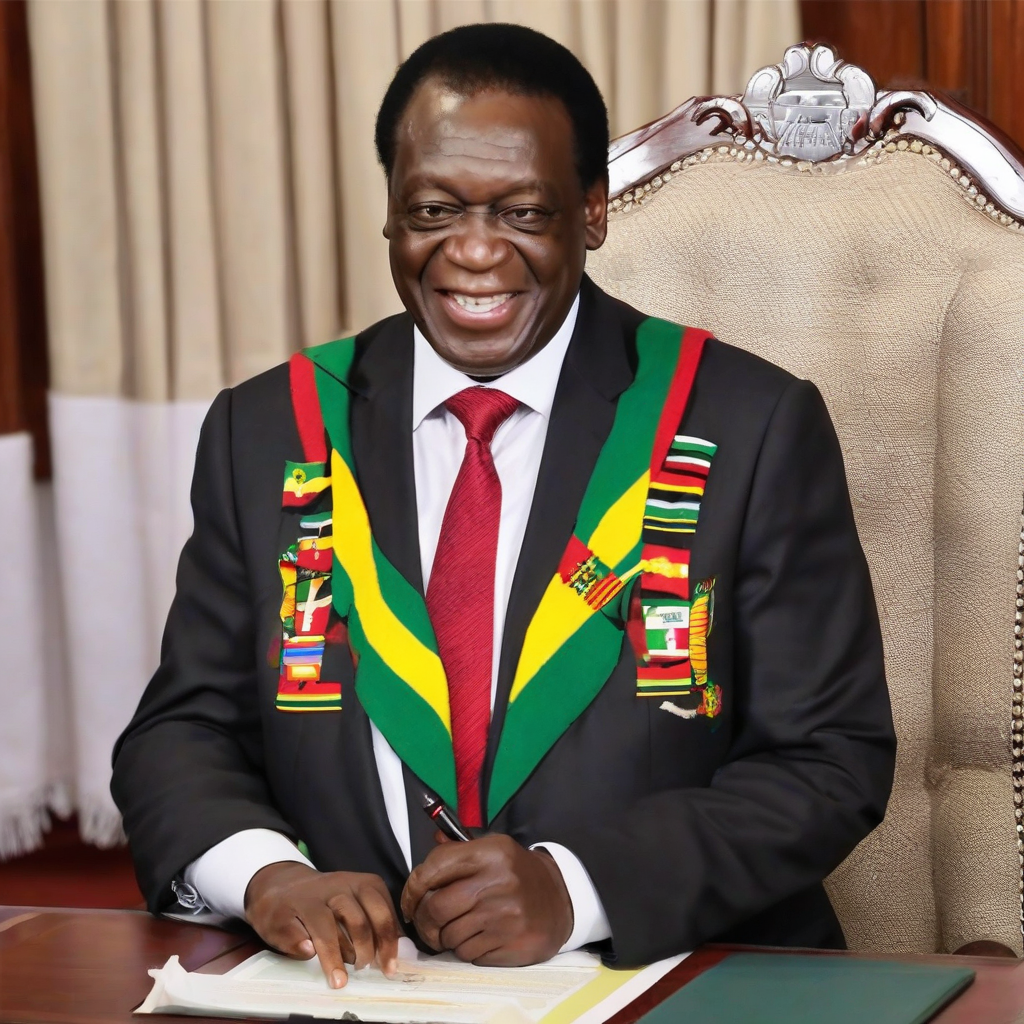
HARARE – Zimbabwean President Emmerson Mnangagwa has signed into law legislation that extends his term in office by two years, moving his mandate to 2030.
The legislative change alters the executive timeline of the Southern African nation and introduces a significant shift in the presidential selection process, moving away from a requirement for a direct popular vote.
Government spokesperson Nick Mangwana confirmed the enactment via a post on X, where he shared a copy of the legislation.
“Signed, sealed and delivered – it is now law,” Mangwana said.
Shift to Parliamentary Election
A key provision of the new law allows for the president to be elected by Parliament. This replaces the previous system of direct popular elections for the head of state, a departure from the framework set out in the country’s 2013 Constitution, which envisaged universal suffrage in presidential races.
The change concentrates the choice of president in the hands of lawmakers, effectively making control of Parliament the decisive factor in determining the country’s leadership. It also aligns the timing of presidential selection more closely with the legislative calendar, further tightening the institutional link between the ruling party and the executive branch.
The bill follows a period of internal movement within the ruling ZANU-PF party to ensure Mnangagwa, 83, remains in power beyond the conclusion of his second term, which was originally set to end in 2028.
Legislative Timeline and Party Support
The path to the current law involved a series of institutional approvals within the ruling party and the state apparatus:
- ZANU-PF adopted a resolution to amend the constitution and extend presidential terms, framing the move as necessary for “policy continuity” and completion of ongoing projects.
- The proposal received formal cabinet backing in February, clearing the way for rapid introduction to Parliament.
- Both houses of the Zimbabwean parliament, where ZANU-PF holds a commanding majority, approved the bill after limited substantive amendment.
- The president signed the legislation into law, completing the constitutional amendment process.
The momentum for the extension first became public approximately two years ago. During ZANU-PF rallies, supporters began using slogans calling for the president to be granted more time to complete his stated agenda, reinforcing an image of Mnangagwa as a long-term steward of the state rather than a two-term office holder.
The legislation is now active and legally binding, adding a new chapter to Mnangagwa’s consolidation of authority, which has drawn scrutiny from rights groups and opposition parties since he assumed power in 2017. The move follows earlier steps that strengthened his influence over key state institutions, including the security services and the judiciary, and cements his status as the country’s most powerful political figure since the end of Robert Mugabe’s rule, according to regional analysts and profiles such as one recent examination of his rise.
Keep reading
- Urban Infrastructure Resilience: How European and Asian Megacities Are Adapting to Extreme Climate Oscillations in 2026
- UN General Assembly 2026 Framework on Autonomous Systems: International Diplomacy Faces Algorithmic Governance
- Koto Ward Assembly Faces By-Election Over Bribery Convictions (archyde.com)
- Spanish election: Pedro Sanchez calls snap election for 29 November after housing protests (globallypulse.com)
