
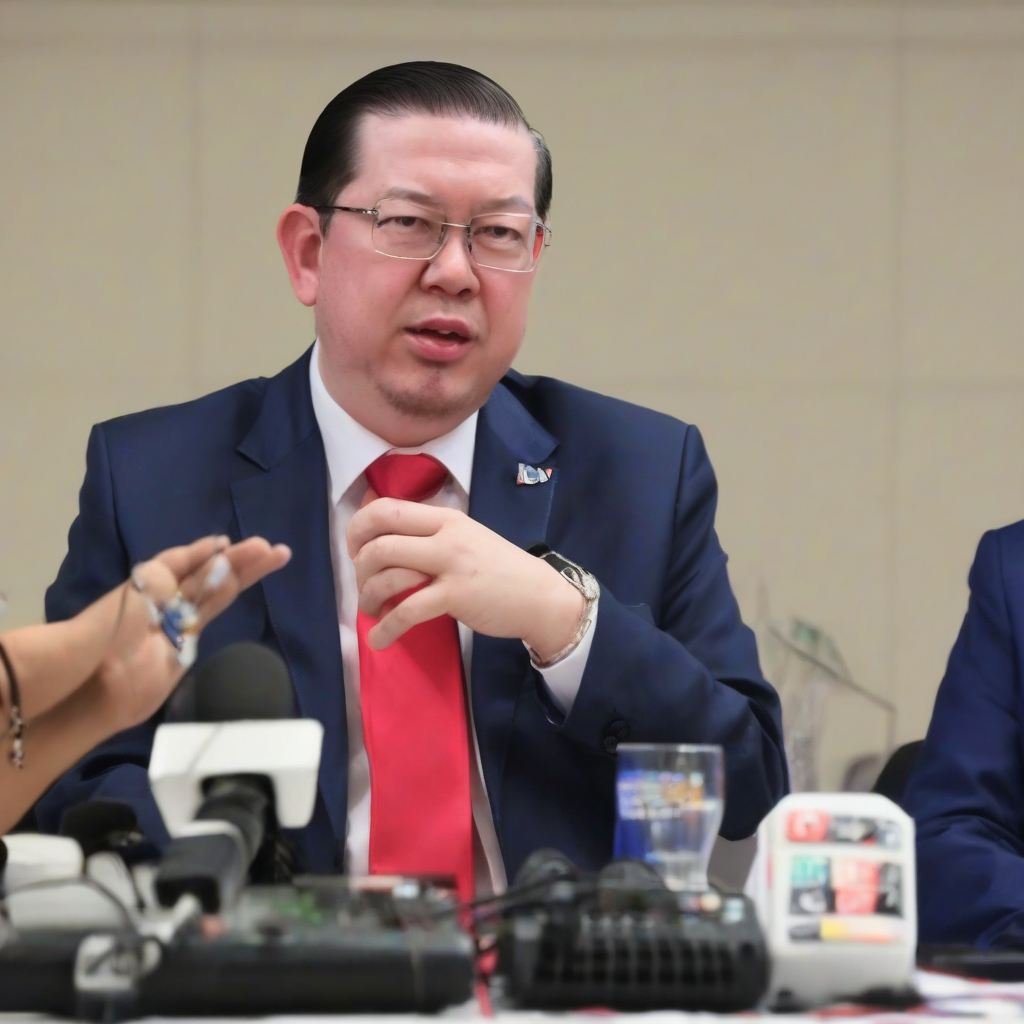
BATU PAHAT – Lim Guan Eng, the chairman of the Democratic Action Party (DAP), has asserted that the Barisan Nasional (BN) coalition does not deserve a second opportunity to govern Johor, alleging a systemic failure to ensure balanced economic growth for the state’s residents.
Speaking at a campaign rally in Taman Bukit Pasir on July 7, the Bagan Member of Parliament argued that while the state has seen overall economic progress, the benefits have not reached ordinary Johoreans equitably. The remarks were made in support of Pakatan Harapan (PH) candidate Felicia Poh, who is contesting the Penggaram state seat.
The critique centers on a perceived “two-tier economy” where wealth and infrastructure are concentrated in specific hubs, leaving wage earners and small to medium enterprises in other districts disadvantaged. Lim framed these concerns as a core test of state-level economic governance in the lead-up to the Johor polls, which will determine the composition of the State Legislative Assembly under Malaysia’s federal constitutional framework as set out in the Laws of Malaysia.
Regional Economic Disparity
Lim claimed that the current development model has disproportionately favored the southern region of the state, creating a divide between the Greater Johor Bahru area and other districts such as Batu Pahat, Muar, and Kluang. He argued that the lack of a bold, inclusive, and long-term macro-level vision at the state level has resulted in uneven growth, with public investment and infrastructure skewed toward key urban and industrial corridors.
The DAP chairman challenged voters to evaluate the tangible impact of state progress on their daily lives:
“Whilst no one disputes that there is economic development and progress, the question Johor’s voters must ask is this: Have you benefited from all this progress and are you confident of enjoying a better life in future?”
According to Lim, the state’s development challenges manifest in several key areas that cut across economic planning and social policy:
- Cost of Living: Rising property rentals and food and beverage prices have made southern areas, specifically Tebrau and Johor Bahru, increasingly unaffordable for local residents, intensifying pressure on household incomes and small business margins.
- Urban Concentration: A heavy population shift toward Greater Johor Bahru, which Lim suggests reflects an imbalance in regional development and raises questions about how infrastructure spending and public services are allocated between urban centers and smaller towns.
- Demographic Decline: A warning that the concentration of wealth in the south is accelerating population ageing in other districts as younger residents migrate for opportunity, with potential long-term implications for local labour markets and social support systems.
Critique of Governance and Metrics
Lim argued that the Barisan Nasional state government has relied on the wrong metrics to measure success, focusing on the volume of investments and the number of buildings constructed rather than the actual improvement in quality of life for the general population. He contended that headline investment figures and high-profile mega projects do not, on their own, demonstrate inclusive growth.
He stated that development should serve to improve the lives of citizens rather than “price them out” of their own communities. Lim further alleged that the BN administration is either unaware of these failures or unwilling to acknowledge the policy choices and planning decisions that produced them, including how state-level incentives, land use decisions, and infrastructure priorities have been set.
The DAP chairman urged voters to support the Pakatan Harapan ticket to address these economic imbalances through what he described as more people-centered development indicators and stronger protections for ordinary wage earners and small businesses. He specifically positioned candidate Felicia Poh as an opportunity for the Penggaram constituency to seek solutions to the issues affecting the local economy, including fairer distribution of state resources and improved oversight of development outcomes.
The Johor state election, which will determine which coalition forms the next state government and controls key levers of economic planning and social programmes, is scheduled for July 11. Under Malaysia’s federal system, state administrations have significant influence over land matters, local infrastructure, and aspects of social and economic development, making the contest a crucial test of competing visions for Johor’s future.
Keep reading
- Urban Infrastructure Resilience: How European and Asian Megacities Are Adapting to Extreme Climate Oscillations in 2026
- UN General Assembly 2026 Framework on Autonomous Systems: International Diplomacy Faces Algorithmic Governance
- Koto Ward Assembly Faces By-Election Over Bribery Convictions (archyde.com)
- Spanish election: Pedro Sanchez calls snap election for 29 November after housing protests (globallypulse.com)
