
European Powerhouses Find Their Rhythm as World Cup Enters Critical Phase
European nations have established significant momentum as the World Cup progresses, overcoming a tentative start to assert their dominance in the tournament. While the initial stages saw several top seeds struggle to find their footing, the transition into the knockout rounds has revealed a renewed resilience and tactical adaptability across the continent’s representatives. For governing bodies across Europe, the performances are also a live test of long-term investment in elite coaching, data-led preparation and player welfare standards shaped by domestic league regulations.
Overcoming Environmental Challenges
The early phases of the tournament were marked by an unexpected struggle for European sides to adapt to the North American climate and travel demands. This was evidenced by a slow start where seven of the first ten European teams failed to secure a victory in their opening group stage fixtures, despite arriving with deep squads drawn largely from the continent’s leading domestic competitions.
Prior to the tournament, the heat was a primary concern for technical staffs. England, among others, utilized training camps in high-temperature regions to acclimatise players to the conditions they would face during the opening matches, aligning their plans with guidelines set out in the FIFA Regulations for the World Cup on player safety, recovery windows and cooling breaks. Sports science teams worked with national associations to manage hydration, sleep and travel as quasi-regulatory issues rather than marginal gains.
Despite these preparations, the results were initially inconsistent. However, managers remained focused on performance rather than environment, pushing back on early excuses and placing accountability squarely on execution:
- Belgium: After a draw with Egypt, boss Rudi Garcia stated that the team should have performed better regardless of whether the temperature was 10 or 30 degrees, framing climate as a constant to manage rather than a variable to blame.
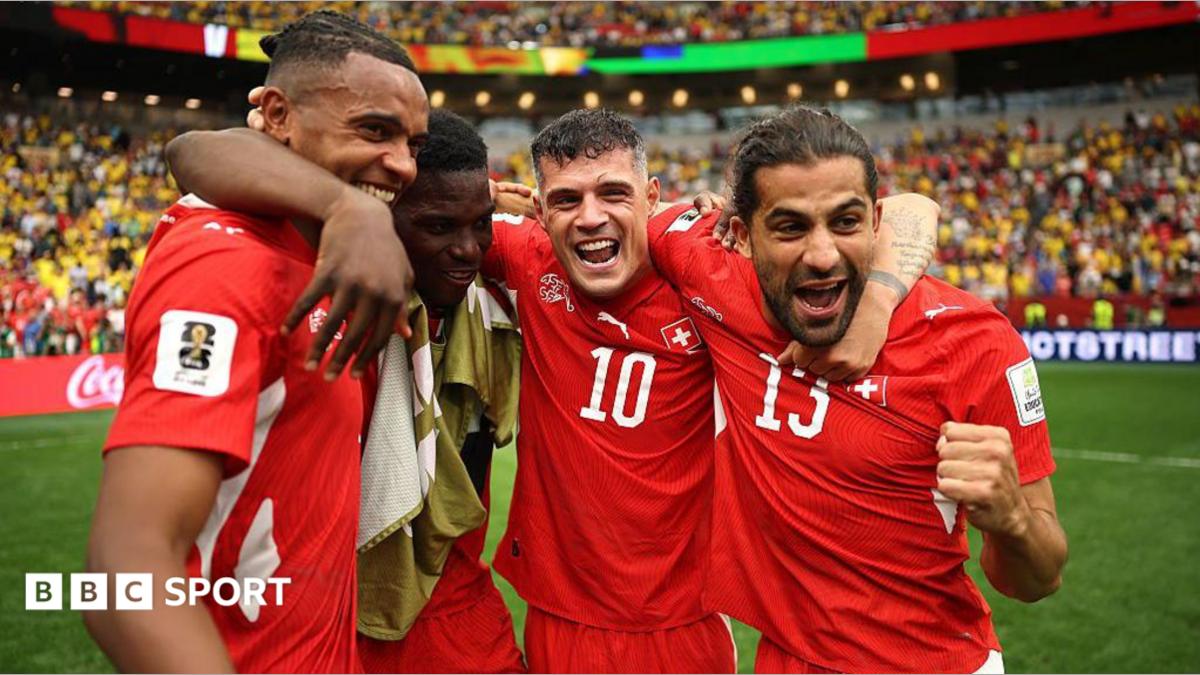
- Switzerland: Following a 1-1 draw with Qatar, coach Murat Yakin attributed the result to the team’s wastefulness in front of goal rather than the external conditions, underlining a preference for technical analysis over environmental narratives.
As the group stages concluded, the European sides successfully shifted their trajectory, recording a strong collective performance against non-European opposition. That turnaround has already prompted quiet satisfaction among administrators who backed expanded backroom teams and stricter physical monitoring protocols for this tournament cycle.
| European Teams vs Non-European Teams (Group Stage) | Results |
|---|---|
| Wins | 17 |
| Draws | 12 |
| Losses | 7 |
Resilience in the Knockout Stages
The shift from group play to the knockout rounds has tested the mental fortitude of the remaining European contenders. The ability to handle adversity-ranging from geographical challenges and congested travel schedules to tactical provocation-has become a defining characteristic of the tournament’s current favorites. With VAR protocols and disciplinary thresholds clearly defined in advance, coaches have had to prepare players not only for footballing scenarios but for the regulatory landscape that can decide a tie in a single incident.
England’s progression past the round of 16 required a disciplined performance at the Azteca against Mexico. Facing both significant altitude and a hostile atmosphere, the team produced a determined display to advance, restricting errors in the penalty area and set-piece situations where officiating scrutiny is most intense. Former striker Wayne Rooney noted that this victory demonstrated the team is capable of winning the FIFA World Cup, suggesting the belief within the squad has grown substantially.
Similarly, France navigated the “dark arts” employed by Paraguay to secure a place in the quarter-finals, keeping their composure under persistent fouls and time-wasting. Belgium, meanwhile, managed the pressure of an expectant home crowd to defeat co-hosts USA in their last-16 tie, a result that will be closely studied by federation officials as a case study in how to shield players from off-pitch noise while leveraging home advantage.
The Tactical Road to the Semi-Finals
The tournament now moves toward a pivotal clash between Belgium and the European champions, Spain. This fixture represents a critical test of Belgium’s growth throughout the competition and, by extension, of the national federation’s decade-long strategy to elevate its so‑called golden generation from club stars to consistent tournament contenders.
While Belgium’s recent form has been promising, they now face a sophisticated Spanish side whose core has been forged in domestic systems that prioritise possession-based football from youth level upwards. Former defender Matt Upson highlighted that while the signs are encouraging for the Belgians, their success will depend on their ability to neutralize a brilliant Spanish midfield and to manage long spells without the ball without drifting into rash challenges that could trigger disciplinary sanctions.
For the European sides, the journey from early environmental struggles to knockout success underscores a psychological evolution. The teams that have successfully navigated the unique pressures of North American hosting-heat, altitude, travel, media scrutiny and the tight regulatory framework of a modern World Cup-are now positioned as the primary contenders for the title. Whatever the final outcome, the tournament is likely to shape policy debates in national associations on how best to regulate domestic calendars, protect players and invest in tactical education ahead of the next global cycle.
