
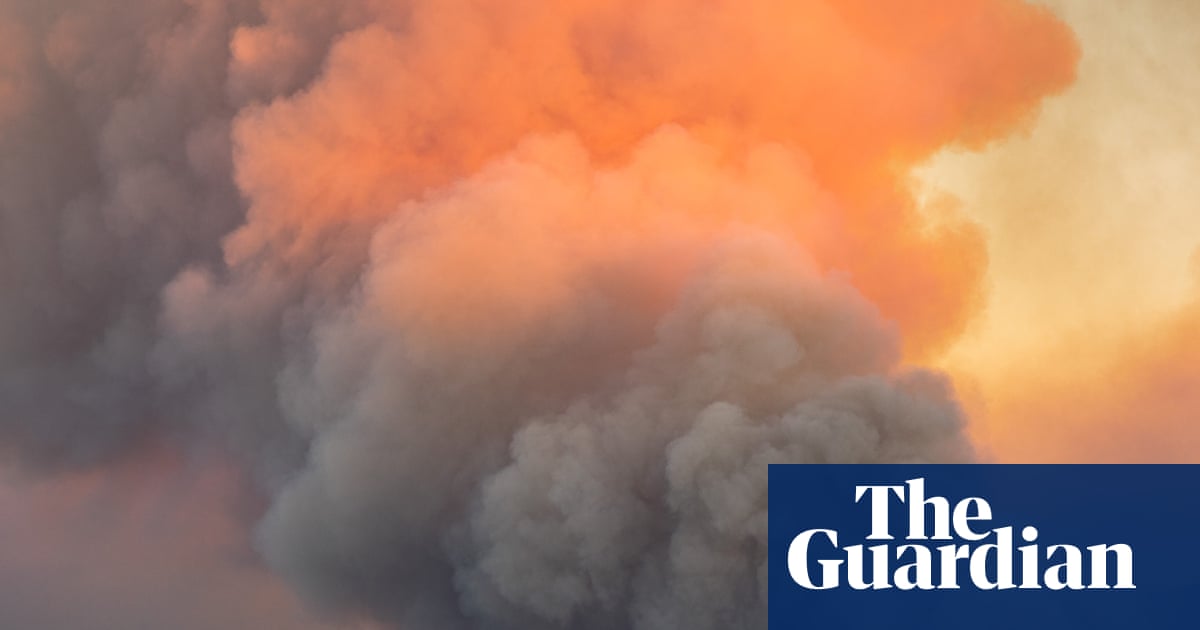
BRUSSELS – The Mediterranean basin is experiencing a volatile climate oscillation that has transformed an exceptionally wet winter into a catalyst for summer catastrophe. After months of torrential rains and floods that paralyzed parts of Western Europe, the region has pivoted sharply into a cycle of record-breaking heat and rampant wildfires.
As of July 1, wildfires have charred 50,000 hectares in Spain and 28,000 hectares in France-figures that more than double the seasonal average, according to national fire services. The rapid transition from saturation to combustion highlights a deepening systemic vulnerability in Southern Europe, where the interplay of climate breakdown and rural abandonment is creating a new, more dangerous fire regime across the Mediterranean rim.
This pattern of “compounding risks” suggests that the floods of early 2026 were not a reprieve from the climate crisis, but rather a precursor to the current infernos. By fueling an explosion of biomass during a rain-heavy spring, the environment essentially stockpiled fuel that the subsequent June heatwaves then desiccated, leaving vast swathes of the landscape primed for ignition. For governments, that means the familiar seasonal cycle of “fire season” increasingly fails to describe a risk that is built over many months and across multiple hazards.
The Green-to-Brown Transition
The phenomenon is driven by a specific meteorological sequence that climate scientists say is becoming more frequent in the wider Mediterranean region, one of the world’s fastest‑warming climate hot spots. In the Iberian Peninsula, surface soil moisture remained above seasonal averages from March to May, driven by an unusually wet winter and high river flows. This moisture sparked aggressive vegetation growth across farmland and forests alike.
However, this growth became a liability when a series of “freak” heatwaves struck in late May and June. The record-breaking temperatures, which scientists say would have been virtually impossible without the influence of fossil fuel emissions, stripped moisture from the newly grown plants with unprecedented speed.
“If a period of active vegetation growth is followed by a period of drought and heat, vegetation becomes stressed and transforms into flammable wildfire fuel,” said Julia Miller, a climate scientist at the WSL Institute for Snow and Avalanche Research SLF.
The result is a surplus of “fine fuel”-grasses and shrubs-that ignite easily and spread rapidly, often outpacing initial firefighting efforts. This cycle mirrors the conditions seen during Spain’s record-breaking fire season last year, reinforcing a pattern where wet springs no longer protect the landscape but instead expand the potential scale of summer blazes.
Emergency planners warn that this green‑to‑brown transition compresses the timeline between heavy rain and extreme fire risk, leaving civil protection agencies and local authorities little time to adapt staffing, equipment and evacuation plans.
The Crisis of Rural Abandonment
While climate volatility provides the spark, the scale of the fires is exacerbated by a socio-economic collapse in the European countryside. For decades, rural villages in Southern Europe have “hollowed out” as younger generations migrate to urban centers, leaving behind traditionally managed agricultural lands.
In the absence of grazing livestock and active farming, these landscapes have become overgrown. This unplanned “rewilding” has removed the natural firebreaks that once existed between forests, pastures and settlements, allowing fires to move uninterrupted across the terrain and increasing the number of communities in the path of fast‑moving flames.
Fernando Pulido Díaz, a fire prevention scientist at the University of Extremadura, argues that the focus of European policy has been misplaced. He notes that while the European Academies Science Advisory Council (EASAC) has criticized the EU’s disproportionate focus on suppressing fires after they start, the practical application of preventative land management-such as controlled burns, agroforestry, support for extensive grazing and maintenance of fuel breaks-remains stalled.
“Climate itself cannot provoke fires if there is no plant fuel, so fuel availability driven by absence of land management is a critical factor underlying extreme fires,” Pulido Díaz said. “The issue has been debated in many forums, but there is a general lack of practical implementation beyond pilot projects led by local communities.”
That gap has direct policy implications. National rural development funds, biodiversity strategies and the EU’s Common Agricultural Policy increasingly acknowledge wildfire risk, but local mayors and firefighting commanders say the money and mandates are still not aligned with the scale of the problem on the ground.
Institutional Lag and the 3C Warning
The European Union is now attempting to manage the fallout through financial instruments and emergency mobilization. On Tuesday, the European Parliament voted to release €120.55 million from its solidarity fund to support Spain’s recovery from the previous year’s heatwaves and fires, with additional funds of €23.55 million allocated to Romania and Cyprus. The payouts come under the EU Solidarity Fund, a mechanism created to help member states respond to major natural disasters but increasingly stretched by climate‑driven events.
Despite these payments, the European Commission has been forced to deploy a record number of firefighters and water-bombing aircraft to France and Portugal this month to contain active fronts under the EU Civil Protection Mechanism and its joint rescEU fleet of firefighting aircraft. Officials privately concede that the bloc’s flagship adaptation and disaster tools were designed for rarer, more clearly bounded emergencies-not for an almost annual cycle of overlapping heatwaves, droughts and megafires.
The institutional struggle reflects a broader disconnect between climate targets and atmospheric reality. Europe is currently heating approximately twice as fast as the global average, leading EU science advisers to issue a stark warning in February: the continent must begin preparing for 3°C of global heating, even as the Paris Agreement strives for a 1.5°C limit.
Current adaptation efforts have been described by advisers as “insufficient, incremental and often coming too late.” The compounding nature of these weather extremes-where heat intensifies rain, rain fuels vegetation growth and that growth later feeds fire-suggests that historical averages are no longer a reliable guide for emergency preparedness or infrastructure design.
For Brussels, that raises difficult choices: whether to channel more cohesion and recovery funds into fire‑resilient infrastructure and rural economies, and how far to hard‑wire wildfire risk into building codes, land‑use planning and cross‑border mutual aid.
“I see wildfires breaking records in Europe almost every year,” Miller said. “Wildfire preparedness and management is becoming increasingly important, but at the same time, we need to reduce greenhouse gas emissions to address the root cause of the emerging wildfire crisis.”
The European Commission continues to coordinate the deployment of firefighting resources across member states as heatwave warnings remain in effect for the Mediterranean coast. With another peak summer month ahead, officials and frontline responders alike are treating this season less as an anomaly and more as a preview of Europe’s new fire‑climate normal.
Keep reading
