
TEHRAN – US President Donald Trump ordered a new wave of military strikes against Iran on July 8, issuing a stark warning that conditions would deteriorate further if Tehran continues its campaign of attacks on commercial vessels in the Strait of Hormuz.
The escalation marks a volatile collapse of a fragile June ceasefire and threatens to destabilize the world’s most critical oil transit chokepoint, through which approximately 20% of the global consumption of petroleum liquids and a significant portion of liquefied natural gas (LNG) flow daily.
The strikes, announced by US Central Command (CENTCOM), targeted multiple locations along Iran’s southern coastline. Iranian state media reported explosions in the port cities of Bandar Abbas, Konarak, and Chabahar, with reports that some areas suffered total electricity failure. Warplanes were also reported over Kish Island.
“This is in retribution for yesterday’s bombing of ships by Iran,” Trump said in a post on Truth Social. “If it happens again, it will get much worse!”
The military action follows a period of intensified Iranian aggression in the Gulf. In recent days, Iranian forces struck at least three commercial ships, prompting a massive US response on July 7 that saw CENTCOM hit more than 80 targets, including coastal radar sites, Iranian air-defense systems, and 60 small boats belonging to the Islamic Revolutionary Guard Corps (IRGC).
The IRGC, which maintains primary jurisdiction over the Strait of Hormuz, has long utilized asymmetric warfare-including drone strikes and mine-laying-to project power and exert leverage over international shipping. The US and its allies frame their response within the long‑standing principle of freedom of navigation under the UN Convention on the Law of the Sea, even though Washington has not formally ratified the treaty, arguing that Iran’s actions amount to an unlawful attempt to rewrite rules governing one of the world’s key international straits.
Retaliation and Regional Spillover
Tehran responded almost immediately to the US strikes, with the IRGC claiming to have targeted dozens of US military facilities in Kuwait and Bahrain in what it described as a broader campaign against “foreign occupiers” in the Gulf.
In Bahrain, the Iranian army reported attacks on the Sheikh Isa air base. Kuwaiti authorities confirmed the interception of two ballistic missiles and 13 drones. A US military official stated on July 8 that the Iranian retaliation failed to cause major damage or result in American casualties, underscoring the asymmetry between Tehran’s messaging and the operational impact on US forces.
Iranian state television reported that the US strikes killed eight military personnel, while explosions were reported in the coastal city of Bushehr. The city is strategically sensitive as it hosts Iran’s only civilian nuclear power plant and sits near Kharg Island, the hub for 90% of Iran’s crude oil exports, raising concerns in Western capitals over potential risks to nuclear safety and energy infrastructure.
Mohsen Rezaei, a military adviser to Iran’s supreme leader, signaled a continued hardline stance via X, stating: “The aggressor enemy and its accomplices will be severely punished.” The statement appeared aimed both at a domestic audience rallying around the leadership and at regional governments hosting US forces, reminding them they remain potential targets.
The Struggle for the Strait
The conflict centers on the legal and physical control of the Strait of Hormuz. Since the outbreak of broader hostilities on February 28, Tehran has insisted on establishing absolute control over the waterway and has moved to treat it as a zone under near‑exclusive Iranian security authority rather than as an international transit corridor.
Iran has threatened to charge passage fees for commercial vessels and has warned of strikes against any ships that deviate from authorized routes. This challenge to the “freedom of navigation” principle has placed the US and its allies in direct confrontation with the IRGC and has triggered emergency consultations among states that rely on Gulf energy exports.
For Washington, any Iranian attempt to restrict shipping runs counter to the regime governing “transit passage” through international straits set out in the UN Convention on the Law of the Sea, which underpins most global maritime practice. US officials have increasingly invoked that framework in calls for allied naval patrols and coordinated rules of engagement in the Gulf.
Oman, which shares the waterway with Iran, has attempted to maintain a neutral diplomatic position to protect its own administration of the strait. Oman recently proposed a temporary transit corridor hugging its coastline to ensure the safety of shipping. However, Washington continues to push for unrestricted passage, while Tehran has refused to allow vessels to utilize Omani waters under what it calls “foreign military protection.”
The timing of the latest escalation is particularly sensitive, coinciding with the July 9 burial of Ali Khamenei, Iran’s former supreme leader, who was killed during the initial outbreak of the war in February. The ceremony, attended by senior clerics and military commanders, was expected to showcase regime resilience; instead, it is unfolding under the shadow of renewed US airstrikes and regional retaliation.
Diplomatic Friction and Economic Shock
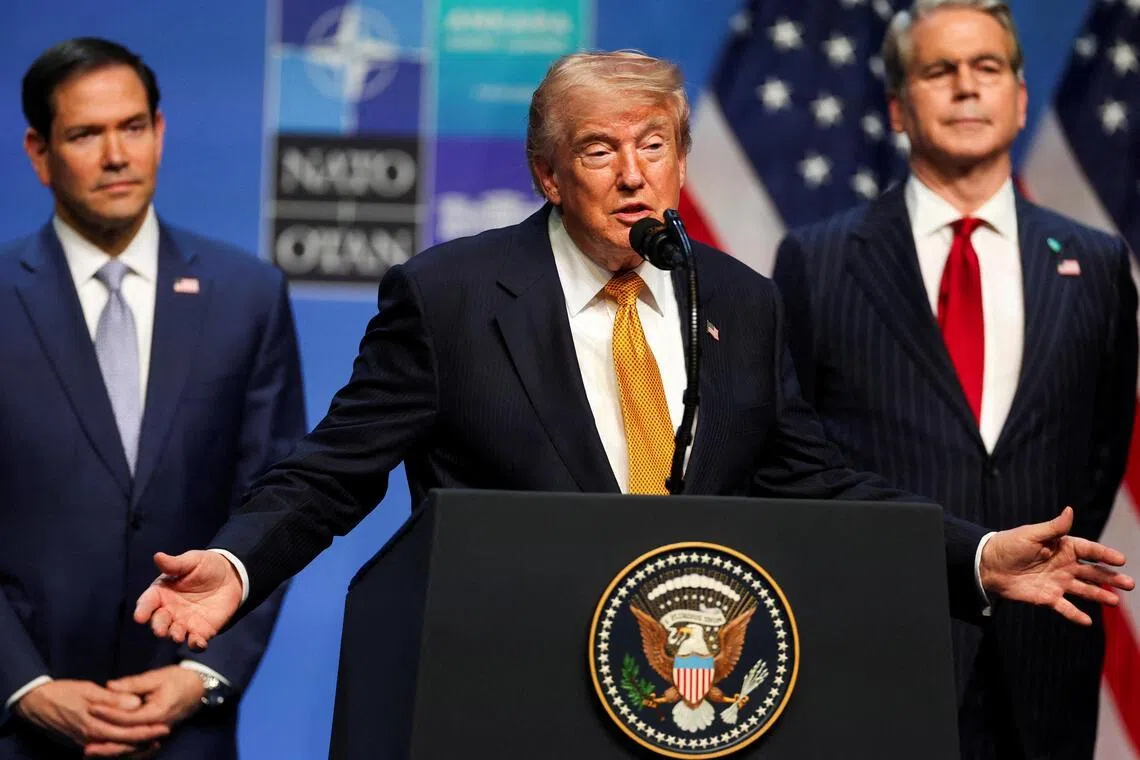
Despite the military escalation, signals from the White House have remained contradictory and have complicated efforts by European and regional mediators to gauge Washington’s endgame. While speaking at a NATO summit in Ankara, Trump declared, “We’re gonna hit ’em hard tonight,” adding that Iran violates agreements daily and accusing Tehran of “terror on the seas.”
However, shortly after, Trump told reporters aboard Air Force One that the Iranian side had contacted him, claiming they “wanted to make a deal so badly.” He cast doubt on the viability of such a deal, describing the Iranian leadership as “sort of crazy,” while maintaining that the current flare-up would be “over very quickly.” The mixed messaging has left allies uncertain whether the US priority is coercive diplomacy, open‑ended deterrence, or a short, sharp campaign.
The volatility has already triggered significant economic and governance pressures:
- Energy Markets: Global oil prices surged 8% following Trump’s announcement that the ceasefire was over, prompting emergency reviews of strategic petroleum reserves and import dependence in several major consuming countries.
- Maritime Crisis: International Maritime Organisation chief Arsenio Dominguez reported on July 8 that approximately 6,000 seafarers remain stranded in the region, with shipping lines re‑routing tankers around the Cape of Good Hope and insurers reassessing war‑risk premiums for Gulf transits.
- Diplomatic Pressure: UN Secretary-General Antonio Guterres, alongside mediators from Pakistan and Qatar, has called for “maximum restraint,” urging both sides to re‑engage with de‑confliction channels established after earlier Gulf tanker incidents.
Iran’s Foreign Minister Abbas Araghchi and the Prime Minister of Qatar spoke via telephone on July 8, emphasizing the necessity of diplomatic means to resolve the regional crisis and signal support for a renewed, internationally monitored framework for shipping security in the Gulf.
For policymakers, the confrontation now stretches far beyond a bilateral US‑Iran clash. It is testing emergency decision‑making in Gulf monarchies that host US forces, the capacity of NATO states to present a unified position, and the resilience of global energy and shipping governance when a single chokepoint is subject to sustained military pressure. The situation remains fluid as international shipping companies weigh the risks of transiting the Strait of Hormuz amid continued threats from Tehran and ongoing US military operations in the Gulf, even as coastal states and industry bodies quietly explore contingency routes and interim safety protocols through the International Maritime Organization’s convention framework.
Worth a look
