
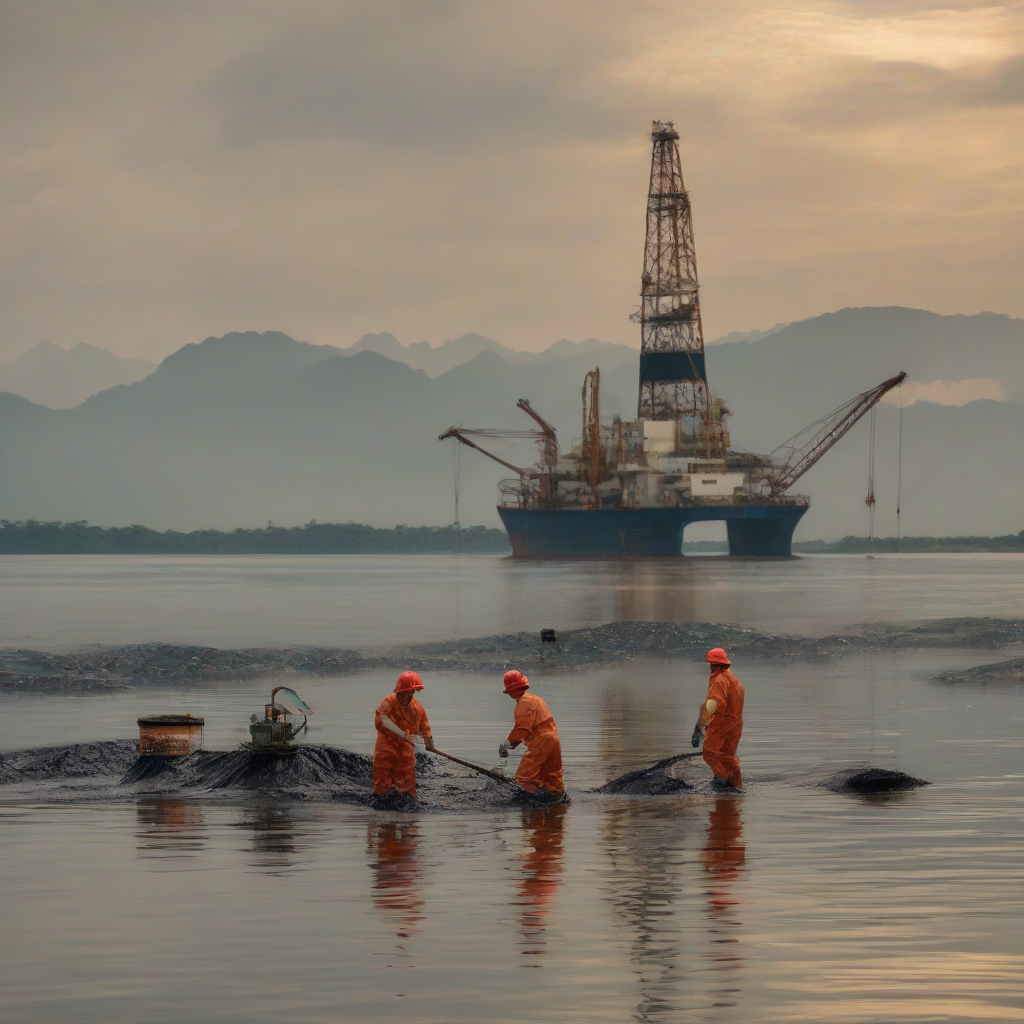
KUALA LUMPUR – Government representatives from South-East Asia, industry stakeholders, and international experts convened in Kuala Lumpur from June 23-24 for a subregional workshop focused on improving collaboration for transboundary oil spill responses.
The gathering aimed to synchronize preparedness and cooperation mechanisms to manage oil spill incidents that cross national maritime borders, which often complicate jurisdiction and resource allocation.
Given the high volume of maritime traffic in South-East Asian waters, the ability to execute a coordinated cross-border response is critical to mitigating environmental damage and economic disruption across multiple sovereign territories.
Operational Coordination and Response Frameworks
The workshop addressed the specific actions required at both the operator and government levels during a maritime crisis. Discussions centered on the implementation of standard operating procedures (SOPs) and the activation of existing regional cooperation frameworks, with an emphasis on clarifying roles between coastal states, flag states, and private operators.
Government participants detailed their national systems and capabilities, specifically focusing on:
- National contingency planning arrangements, including command-and-control structures
- Established mechanisms for initiating cross-border response requests and mutual assistance
- The integration and prioritization of national assets within a wider regional response effort
Central to these discussions was the International Maritime Organization (IMO) and its Integrated Technical Cooperation Programme (ITCP), which provided support for the event. The workshop emphasized alignment with the OPRC Convention (International Convention on Oil Pollution Preparedness, Response and Co-operation), which mandates that member states establish national systems for responding to oil pollution incidents and cooperate with other parties. Officials underscored that effective implementation of the convention is increasingly tested in congested waterways such as the Strait of Malacca and the South China Sea, where spills can rapidly cross into neighboring jurisdictions.
Liability, Compensation, and Regional Agreements
Participants examined the complex legal and financial structures that govern transboundary spills, specifically focusing on liability, claims, and compensation. Because spills affecting multiple countries often trigger overlapping or conflicting national laws, the workshop highlighted the necessity of regional agreements to provide predictable rules for shipowners, insurers, and affected communities.
Key frameworks analyzed during the sessions included:
- The ASEAN Memorandum of Understanding, which outlines cooperation on oil spill preparedness and response among member states
- The Regional Oil Spill Contingency Plan (ROSCP), which sets out joint activation procedures, information-sharing protocols, and resource mobilization pathways
- The role of Oil Spill Response Organizations (OSROs) in providing specialized technical support, equipment, and surge capacity when national resources are exceeded
These frameworks are designed to streamline how costs are recovered and how damages are assessed when a spill originates in one jurisdiction but impacts the coastline of another, reducing the risk of prolonged disputes that can delay cleanup and compensation. Officials also discussed how lessons from major international incidents are informing updates to these regional arrangements.
Simulation and Coordination Testing
The workshop concluded with a guided tabletop exercise designed to test the theories discussed during the sessions. Participants were required to respond to a realistic cross-border spill scenario, simulating the flow of communication, decision-making timelines, and the deployment of resources between different national agencies and private-sector operators.
The exercise was used to identify specific gaps in coordination and response challenges that occur when transitioning from national to subregional command structures, including bottlenecks in information-sharing and the need for clearer triggers to escalate from bilateral to multilateral action.
The event was organized by the Government of Malaysia in cooperation with the Global Initiative for South-East Asia (GI SEA) and various national stakeholders. As part of the follow-up, participating administrations are expected to report back on how they incorporate the exercise findings into updated contingency plans and standard operating procedures.
South-East Asian nations continue to update their readiness protocols to meet the requirements of the OPRC Convention and address the specific risks associated with the region’s maritime corridors. For policymakers, the Kuala Lumpur workshop served as both a technical drill and a diplomatic platform to reinforce that, in the event of a major spill, rapid cross-border cooperation will depend on the legal and institutional architecture being put in place now.
Related reading
