
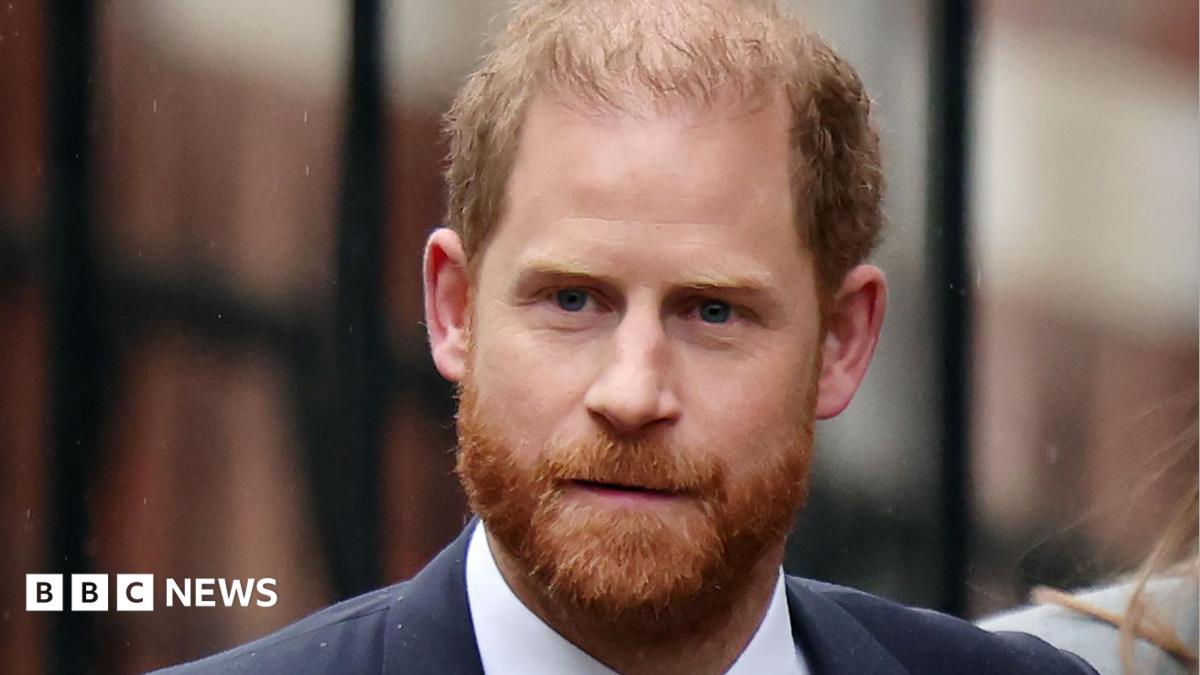
LONDON – Prince Harry, the Duke of Sussex, has returned to the United Kingdom for a series of engagements focused on the Invictus Games and other charitable initiatives.
The visit coincides with a significant legal development regarding media governance and press ethics in the UK. A court is expected to deliver a ruling in a case brought by the Duke and several other high-profile figures against Associated Newspapers, the publisher of the Daily Mail and the Mail on Sunday.
The litigation centers on allegations of unlawful information gathering, a dispute that highlights ongoing tensions between public figures and the institutional practices of the British press. The outcome of this case is expected to be the final in a sequence of courtroom battles initiated by the Duke against the practices of UK media outlets, and is being closely watched as a potential marker for how far privacy protections can be enforced against powerful news organisations.
Litigation Against Associated Newspapers
The legal action against Associated Newspapers is a joint effort involving several claimants, including Sir Elton John, Sir Simon Hughes, Liz Hurley, Sadie Frost, and Baroness Doreen Lawrence. The claimants allege that the newspaper group employed unlawful methods to obtain information for its stories, including the interception of private communications and the use of third parties to secure confidential data.
The case sits against the backdrop of the UK’s post-phone-hacking regulatory landscape, shaped in part by the Data Protection Act 2018 and the broader regime governing privacy and misuse of personal data. Campaigners see the proceedings as a test of whether those frameworks can meaningfully constrain newsroom practices, or whether celebrities and public figures must continue to rely on costly, individual civil claims.
Associated Newspapers has strenuously denied these allegations and argues that its newsgathering operations complied with the law and served a legitimate public-interest role. Executives contend that an adverse ruling could chill investigative reporting and encourage politicians and public figures to use privacy claims to shield themselves from scrutiny.
Legal analysts suggest that a mixed ruling-where the judge supports some claims while rejecting others-could allow both the claimants and the publishers to claim a degree of victory. Even a partial win for the Duke and his co-claimants, however, could reinforce a pattern of courtroom pushback against parts of the tabloid press and prompt renewed debate over whether the UK’s system of largely self-regulated print media requires further statutory oversight.
Invictus Games and Charitable Schedule
The Duke’s visit includes five days of engagements intended to raise support for the Invictus Games, a charity he founded for injured military veterans. The schedule involves events in London and a visit to Birmingham, the host city for the games next year, where organisers are seeking to secure funding commitments, institutional partnerships and community involvement ahead of the competition.
The Duke is attending these events alone. His wife, Meghan, and their children, Archie and Lilibet, are not in London due to security concerns. The decision underscores the unresolved question of what level of publicly funded protection should be afforded to working and non-working members of the royal family-a matter that has previously drawn in the Home Office and police across the UK.
Supporters of the Invictus Games hope that the visibility generated by the visit will help insulate the tournament’s long-term planning from political and budgetary pressures, positioning it as part of a wider commitment to veterans’ welfare rather than a personality-driven project.
Institutional Coordination and Security
The visit began with a public discrepancy regarding the Duke’s accommodations. While the Duke’s representatives announced that an invitation to stay at Buckingham Palace had been accepted, the Palace rejected this claim.
Palace officials stated that the Duke had been informed that he would be unable to stay at the residence because he had not responded to the invitation within the required timeframe. The back-and-forth, though minor in practical terms, has again highlighted the delicate choreography required between the Royal Household, government security agencies and the Duke’s private team whenever he returns to the UK.
The episode also comes amid ongoing discussions over the extent to which royal residences function as state assets or private family homes when it comes to hosting members of the family who no longer undertake official duties. That ambiguity has implications not just for protocol and optics but for who ultimately decides on security posture and access.
The court is set to publish the result of the case against Associated Newspapers, a decision that will resonate well beyond the parties involved. For the Duke, it is likely to be read as a verdict on his broader campaign to challenge press practices; for editors and regulators, it may help set informal boundaries around the methods that can legitimately be used to report on the private lives of Britain’s most scrutinised figures. As that judgment lands, the Duke’s parallel focus on veterans and the Invictus Games offers a reminder that his public role now straddles both courtroom and charitable arenas, each with its own stakes for the UK’s institutions.
- Interactive Storytelling and Immersive Audio: How Next-Gen Gaming Engines Are Transforming Contemporary Television Production
- Independent Cinema’s New Distribution Paradigms: How Direct-to-Consumer Micro-Premiers Are Shifting Box Office Dynamics
- Hokkaido Tohoku High School Baseball Exchange Games: Tickets and Parking Now Available for Escon Field HOKKAIDO (archysport.com)
- India vs New Zealand: Bhuvneshwar Kumar returns to India's T20I squad (globallypulse.com)
