
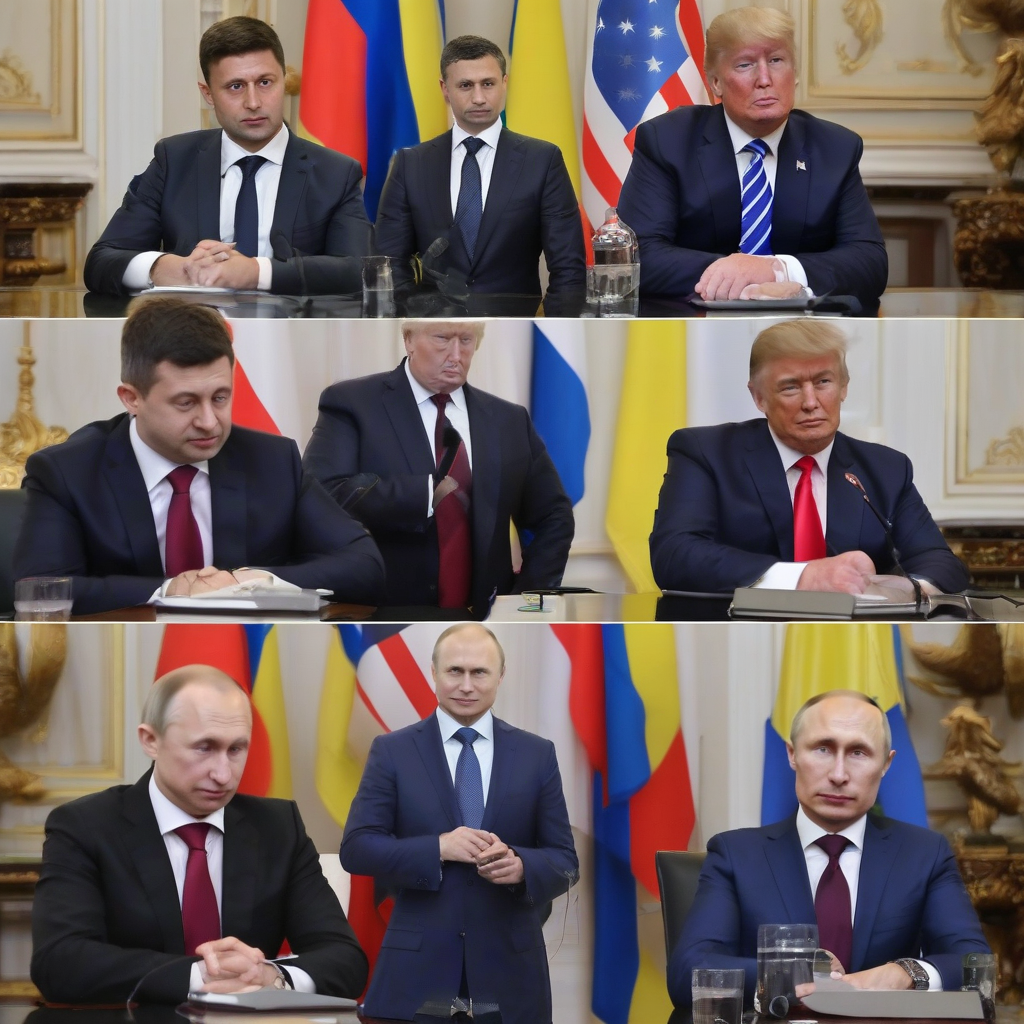
ANKARA – President Donald Trump has proposed providing Ukraine with a license to domestically manufacture Patriot interceptors, a move that would shift the nature of US military support from the delivery of hardware to the transfer of production capabilities.
The proposal was made during a press conference at the NATO summit in Ankara on July 8, 2026, during a meeting between Trump and Ukrainian President Volodymyr Zelensky. The diplomatic shift occurs as both nations face an intensification of aerial warfare, characterized by deep-strike drone campaigns and repeated ballistic missile attacks.
The move to license the Patriot system aims to address long-standing Ukrainian requests for more interceptors, which are currently the only weapons in Kyiv’s arsenal capable of neutralizing high-velocity ballistic projectiles.
US Proposal for Domestic Missile Production
During the meeting, Trump indicated that the US would be open to allowing Ukraine to produce its own defensive munitions to reduce reliance on direct shipments from Washington and to shorten supply chains that have strained under wartime demand.
“We’re going to give a license to you to make Patriots. That’s pretty cool. This way, you can’t complain that we’re not giving ’em enough,” Trump said. “I’d say, ‘Make them yourself.’”
Trump emphasized the defensive nature of the system as the primary reason for his support. “It’s a defensive weapon, which I like better than an offensive weapon,” he stated, framing the proposal as consistent with what he called a deterrence-focused approach to arming Ukraine.
Addressing reporters, Trump acknowledged that the manufacturer has not yet been informed of this potential arrangement, adding, “We haven’t informed the company of that yet, but that’ll, that’ll work out all right. They’ll be thrilled, but you know they’ll be able to do it.”
The Patriot system, designed and produced under US export control rules and subject to the International Traffic in Arms Regulations, could only be licensed to Ukraine following formal approval by the US government and consultations with the prime contractor. Officials at the summit said any agreement would need to clarify where components are sourced, how sensitive technology is protected, and whether production would be limited to munitions used within Ukrainian territory.
Separately, Trump commented on the difficulty of brokering a peace deal, describing both Vladimir Putin and Volodymyr Zelensky as “difficult” characters. He stated that while both sides appear to want a settlement, the personalities involved have complicated the process. Diplomats in Ankara said Trump’s remarks underscored how any potential shift to licensed production would sit alongside, rather than replace, stalled political efforts to end the conflict.
Strategic Drone Campaign Against Russian Energy
The diplomatic discussions in Ankara coincide with a significant escalation in Ukraine’s long-range strike capabilities, which has become a central point of debate among NATO allies over the balance between supporting Kyiv and avoiding direct alliance involvement in the conflict. Ukrainian forces have launched a concerted campaign against Russian energy infrastructure, targeting facilities deep within Russian territory.
Recent operations have focused on oil refineries and maritime assets:
- Omsk Refinery: A strike hit Russia’s largest refinery, located in Siberia, approximately 2,700 km (1,700 miles) from Ukrainian-held territory.
- Tatarstan: Drones targeted the TANECO and TAIF-NK oil refineries in Nizhnekamsk.
- Saratov: The Saratov oil refinery was struck.
- Voronezh Region: Strikes were recorded at the Borisoglebsk military airbase.
- Sea of Azov: Ukrainian drones targeted Russian tankers.
Russian officials confirmed strikes in these regions, though the Russian Defence Ministry claimed to have downed 415 drones overnight. The full extent of the damage to the refineries remains unconfirmed, and independent verification has been limited by access constraints and ongoing military operations.
Russian Counter-Measures and Starlink Jamming
In response to these strikes, Russia has begun deploying powerful jamming systems designed to disrupt Elon Musk’s Starlink satellite internet service, which has become a cornerstone of Ukraine’s battlefield communications and targeting networks.
Ukraine has utilized “mid-strike” drones-cheap, accurate munitions capable of hitting targets dozens of kilometers behind front lines-which often rely on Starlink for navigation and control. These drones have been used to disrupt Russian logistics, fuel storage, and command centers, particularly in Russian-occupied Crimea, in operations that Ukrainian officials say are intended to degrade Russia’s ability to sustain offensive actions.
Simultaneously, Russia has maintained pressure on Ukrainian cities. On July 8, 2026, Moscow launched its third round of strikes on Kyiv in a single week and carried out fresh attacks on Odesa, which left six people injured. The tempo of strikes has reinforced Ukrainian arguments at the summit that additional air and missile defenses are not only a front-line requirement but a condition for basic civilian security.
European Defense Deficits and NATO Strategy
The ongoing conflict has highlighted critical gaps in European military independence and the alliance’s long-term force structure. NATO allies have noted a shortage of strategic assets, specifically long-range strategic bombers and midair refuelers, which the US possesses in abundance but are in low supply within Europe.
Diplomats said the Ankara summit is also being used to review national commitments under the alliance’s updated defence investment pledge, as governments weigh the cost of new high-end capabilities against immediate demands for ammunition, air defenses and industrial-scale production.
Finnish Prime Minister Alexander Stubb told the Financial Times that NATO leaders generally support Ukraine’s long-distance strikes on Russian military and oil infrastructure to increase pressure on the Kremlin. Stubb asserted that Kyiv is in its strongest position since the start of the war, citing improved coordination of Western aid and Ukraine’s growing domestic arms industry.
President Zelensky has warned that Europe requires its own anti-ballistic missile systems to counter the threat posed by Russia, arguing that reliance on US-made systems such as Patriot and THAAD leaves European security vulnerable to shifts in Washington’s priorities.
The NATO summit continues in Ankara with further discussions planned regarding the specific licenses for Patriot interceptors and the broader framework for European defense spending, including whether allies will back longer-term contracts that would allow Ukraine and European manufacturers to invest in new production lines.
Worth a look
- Urban Infrastructure Resilience: How European and Asian Megacities Are Adapting to Extreme Climate Oscillations in 2026
- UN General Assembly 2026 Framework on Autonomous Systems: International Diplomacy Faces Algorithmic Governance
- Jay Clayton named White House AI czar by Trump to lead task force (globallypulse.com)
