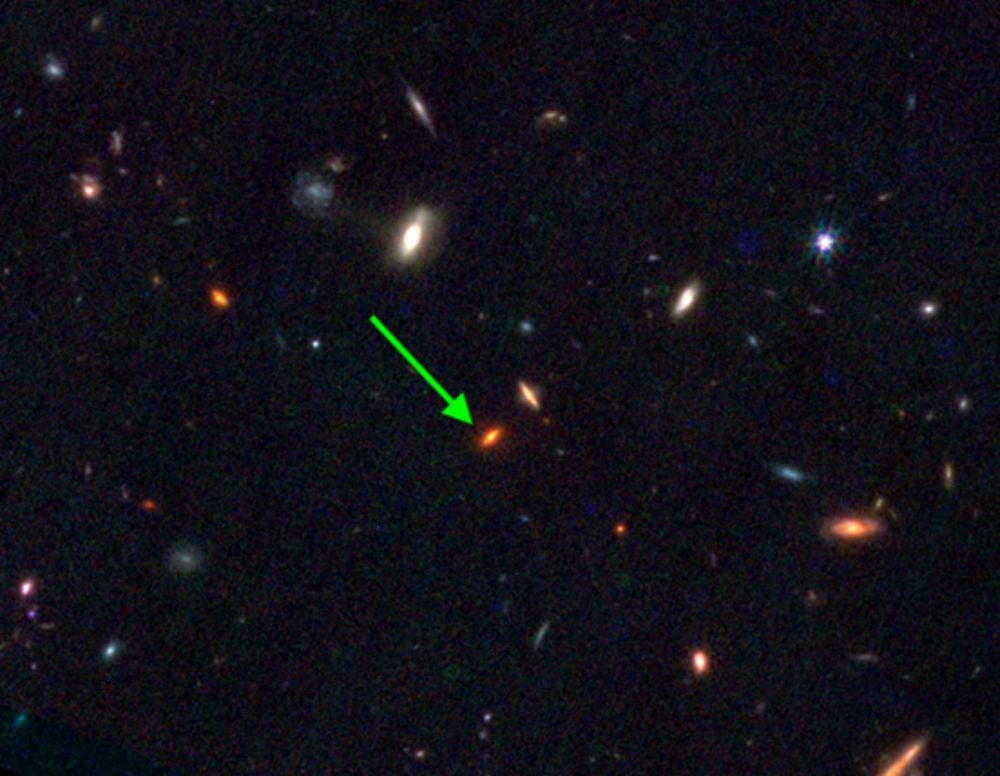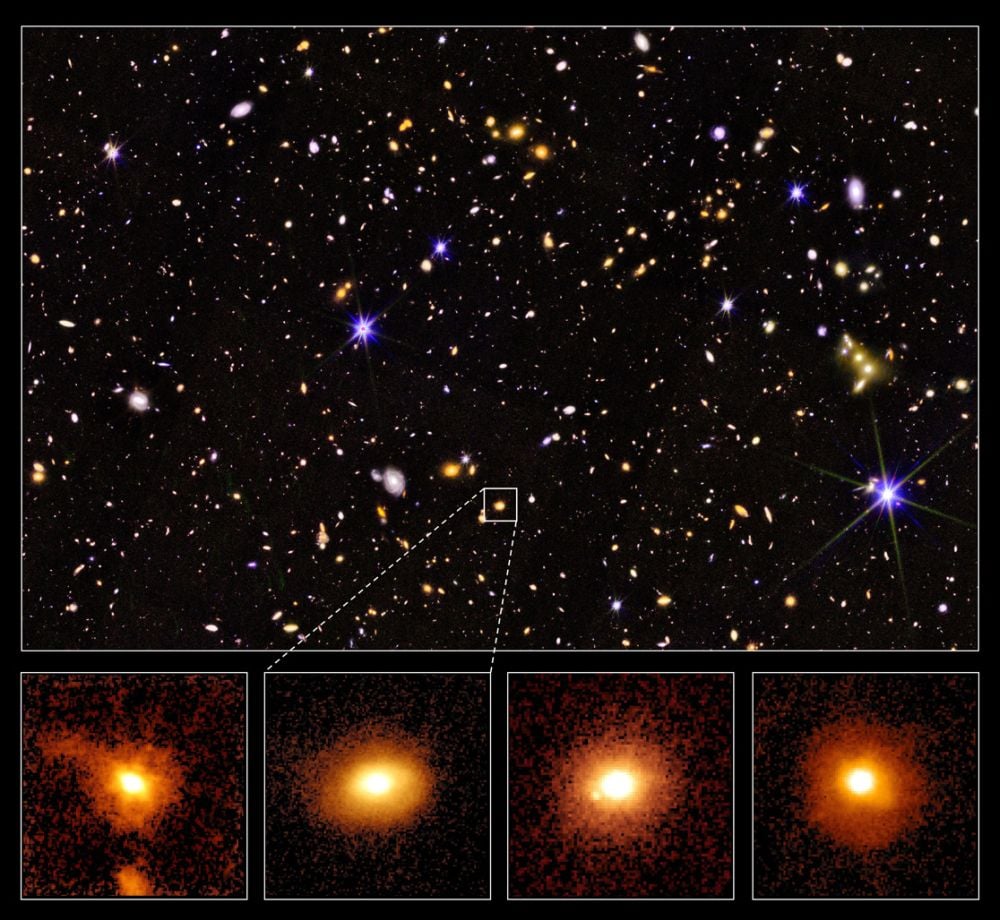
The James Webb Space Telescope (JWST) is fundamentally altering the timeline of the early universe. By detecting red-shifted infrared light that was previously invisible to Hubble, the observatory has revealed a population of massive galaxies that matured and ceased star formation far earlier than current cosmological models predicted. These “quenched” galaxies, such as ZF-UDS-7329, existed only two billion years after the Big Bang, presenting a significant challenge to our understanding of galactic evolution.
Decoding the Mechanisms of Galactic Quenching
Star formation requires the presence of cold, collapsing gas. For a galaxy to “quench,” it must either lose this gas entirely or experience a surge of heat and turbulence that prevents the gas from condensing. New data from the JWST PRIMER (Public Release IMaging for Extragalactic Research) survey allows astronomers to distinguish between these processes by analyzing the structural integrity of post-Starburst (PSB) galaxies, a short-lived transitional phase between actively star-forming and fully quiescent systems.
The research identifies two distinct pathways to quenching, depending on the mass of the galaxy and its position in cosmic time:
| Pathway | Era / Galaxy Type | Primary Driver | Resulting Morphology |
|---|---|---|---|
| Violent Quenching | High Redshift (z > 1) / High Mass | Major mergers & AGN feedback | Compact spheroids |
| Gentle Quenching | “Cosmic Afternoon” / Lower Mass | Tidal stripping & minor mergers | Passive disks |
“This was the epoch of peak activity in the Universe, when many of the most massive galaxies we see today were formed,” said Professor Omar Almaini, who led the team behind the new study. “A long-standing problem has been to understand why these galaxies stop forming stars. With Webb we can see detail that was completely hidden before, allowing us to search for clues to what drives this dramatic transformation.”
Although the work is fundamentally astrophysical, it sits on top of a vast, long-term public investment. JWST is operated under an international partnership between NASA, the European Space Agency (ESA) and the Canadian Space Agency, formalised through inter-agency agreements and overseen on the U.S. side by the framework that governs civil space science in the Title 51 United States Code – National and Commercial Space Programs. That governance structure shapes how telescope time is allocated, how data are made publicly available, and how future flagship observatories will be justified to policymakers.
High-Resolution Structural Analysis
To uncover the causes of quenching, researchers analyzed 120 post-Starburst galaxies. By utilizing the near-infrared capabilities of the telescope, delivered primarily through JWST’s NIRCam instrument, the team could quantify “disturbance indicators” – including asymmetry and the residual flux fraction (RFF) – that were previously obscured by a galaxy’s overall stellar glow. These subtle metrics effectively separate galaxies that merely look smooth from those that still carry hidden scars of past collisions.
“At z > 1, massive PSBs show enhanced residual asymmetry relative to the passive population, indicating a previously unrecognized level of structural disturbance masked beneath a smooth stellar distribution,” the authors write. In practical terms, that means galaxies that appear settled in lower-resolution images can, under Webb’s scrutiny, be revealed as recent products of upheaval.
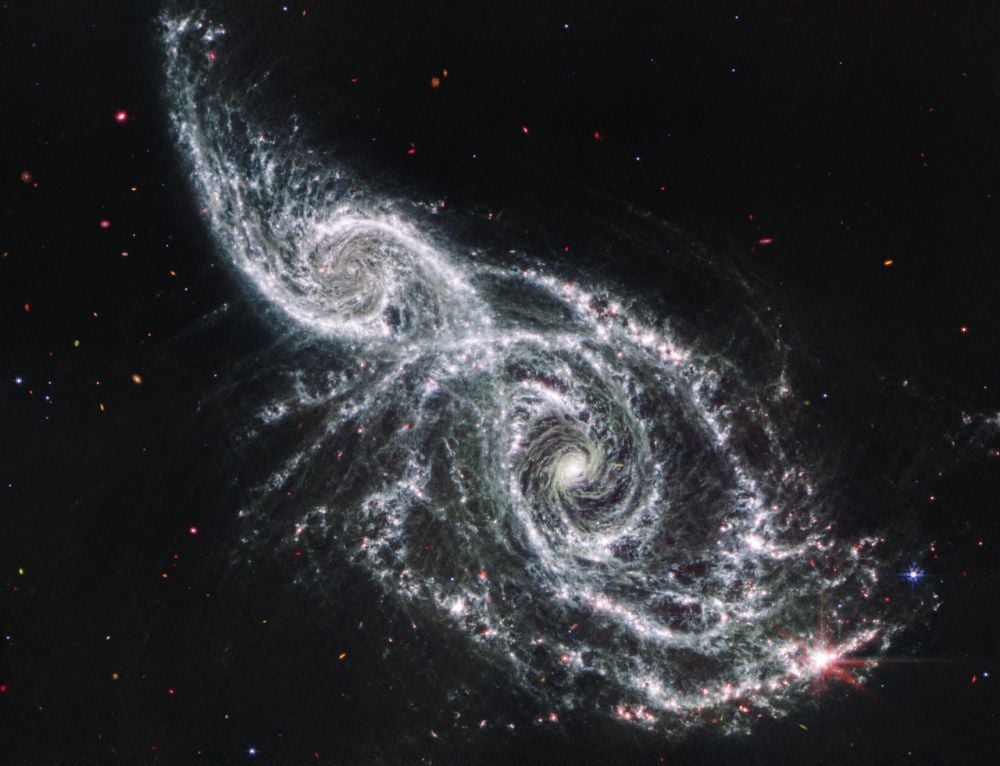
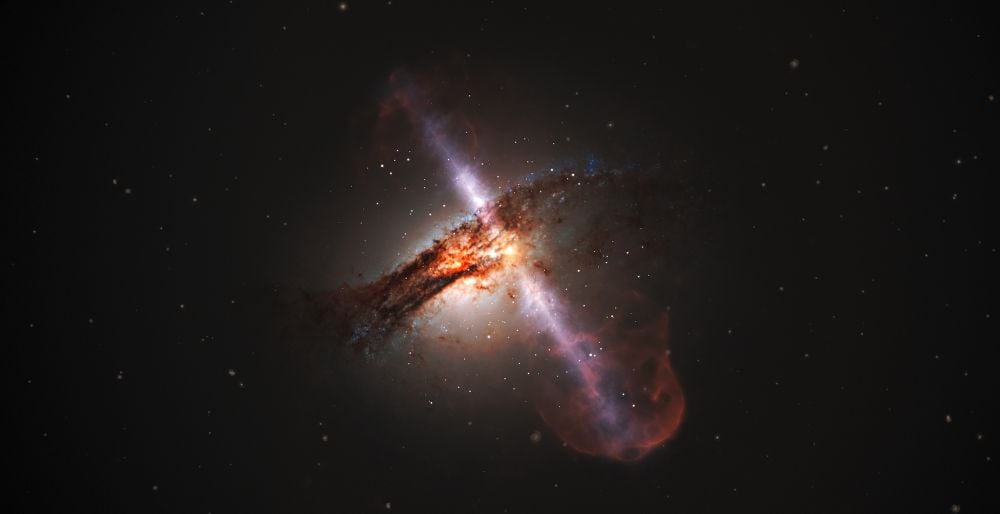
This structural evidence points to a violent history for high-mass galaxies. The researchers suggest that major mergers drove gas toward the center of these galaxies, triggering an intense burst of star formation. This event was subsequently halted by feedback from an Active Galactic Nucleus (AGN) – the supermassive black hole at the galaxy’s core – which ejected the remaining gas via powerful jets and winds, effectively shutting down the galaxy’s ability to form new stars.
“These galaxies look calm on the surface, but Webb allows us to see the subtle signs of past violence,” said lead author Dr. David Maltby. “The galaxies show clear signs of disturbance, telling us that something dramatic happened to them not long before their star formation shut down, most likely a merger with another galaxy.”
Infrastructure of the Early Universe
The transition from the “Cosmic Noon” – the Universe’s peak epoch of star formation around 10 billion years ago – to the “Cosmic Afternoon” marked a shift in how galaxies evolved. While the earliest massive galaxies were forged in violence, later, less massive galaxies underwent a more gradual starvation process. These galaxies retained their disk-like shapes because they were not subjected to major collisions; instead, their gas was slowly stripped away through interactions with galaxy clusters and the surrounding cosmic web.
“These results suggest that, while structural transformation is largely complete by the PSB phase, residual disturbances persist at high redshift, supporting a scenario in which rapid quenching proceeds via two distinct pathways: highly disruptive events (e.g. major mergers) at high z and high mass, and comparatively gentle processes at later times,” the authors write. That emerging picture gives cosmologists a more precise set of benchmarks for testing large-scale simulations of galaxy formation.
The ability to map these differences relies on the specific instrumentation of the JWST, specifically the NIRCam and MIRI imaging systems, which allow for the dissection of galactic internals across different wavelengths of the electromagnetic spectrum. Together with the mission’s open-archive policy under the partnership’s science program, that hardware is turning JWST into a reference observatory for how structure and environment influence galaxy life cycles, with implications for how space agencies will prioritise future infrared and X-ray missions.
“The results presented here highlight the power of deep, high-resolution JWST imaging to dissect the internal structure of transitional galaxy populations,” the authors write. They conclude that the next stage of research will incorporate stellar kinematics – precise measurements of how stars move within these galaxies – to further refine the timing and mechanisms of these transformations.
“Together, such analyses will allow a more complete understanding of how galaxies transition from star-forming to quiescent, and of the diverse physical routes through which this transformation proceeds across cosmic time,” the authors conclude. For policymakers and science agencies weighing the next generation of multi-billion-dollar observatories, JWST’s ability to expose these previously inaccessible phases of galaxy evolution is likely to become a central part of the case for sustained, coordinated investment in deep-space infrastructure.
Keep reading
- Quantum Networking Milestones: How Quantum Key Distribution (QKD) Testbeds Are Moving to Financial Hubs in 2026
- The Rise of Specialized Small Language Models (SLMs) in Enterprise On-Premise Deployments
- Why Stores Put Christmas Decorations Out So Early (daybreakwire.com)
- NY Attorney General Letitia James named special prosecutor in Cornell case (globallypulse.com)