
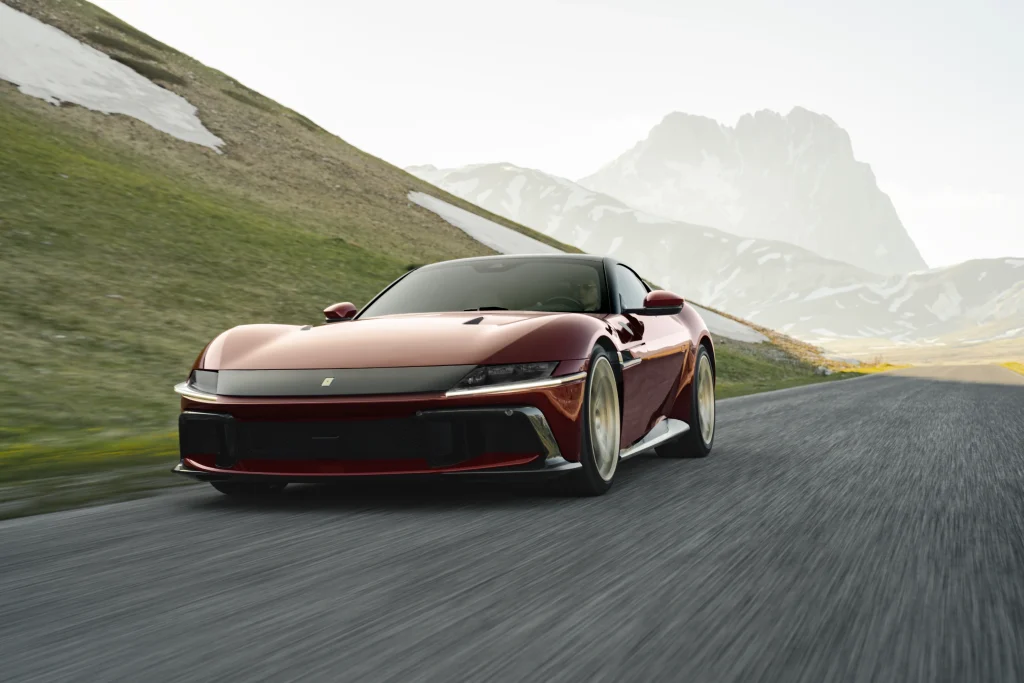
The automotive industry has spent the last two decades migrating toward total automation, replacing mechanical linkages with electronic impulses to maximize efficiency and shift speeds. However, Ferrari is challenging this trajectory not by reverting to obsolete hardware, but by applying high-fidelity “by-wire” architecture to the driving interface. The unveiling of the Ferrari 12Cilindri Manuale introduces a sophisticated software-defined experience that decouples the physical act of shifting from the mechanical execution of the transmission.
At the heart of this vehicle is the Manuale by Wire system. Unlike a traditional manual gearbox, which relies on a physical connection between the gear lever, clutch, and transmission, this system utilizes a layer of electronic actuators and sensors. It essentially treats the driver’s inputs as data points, which are then processed and executed by an eight-speed dual-clutch transmission (DCT). This allows the vehicle to maintain the performance benchmarks of a modern supercar while restoring the cognitive and tactile engagement of a legacy driver’s car.
The Architecture of Haptic Simulation
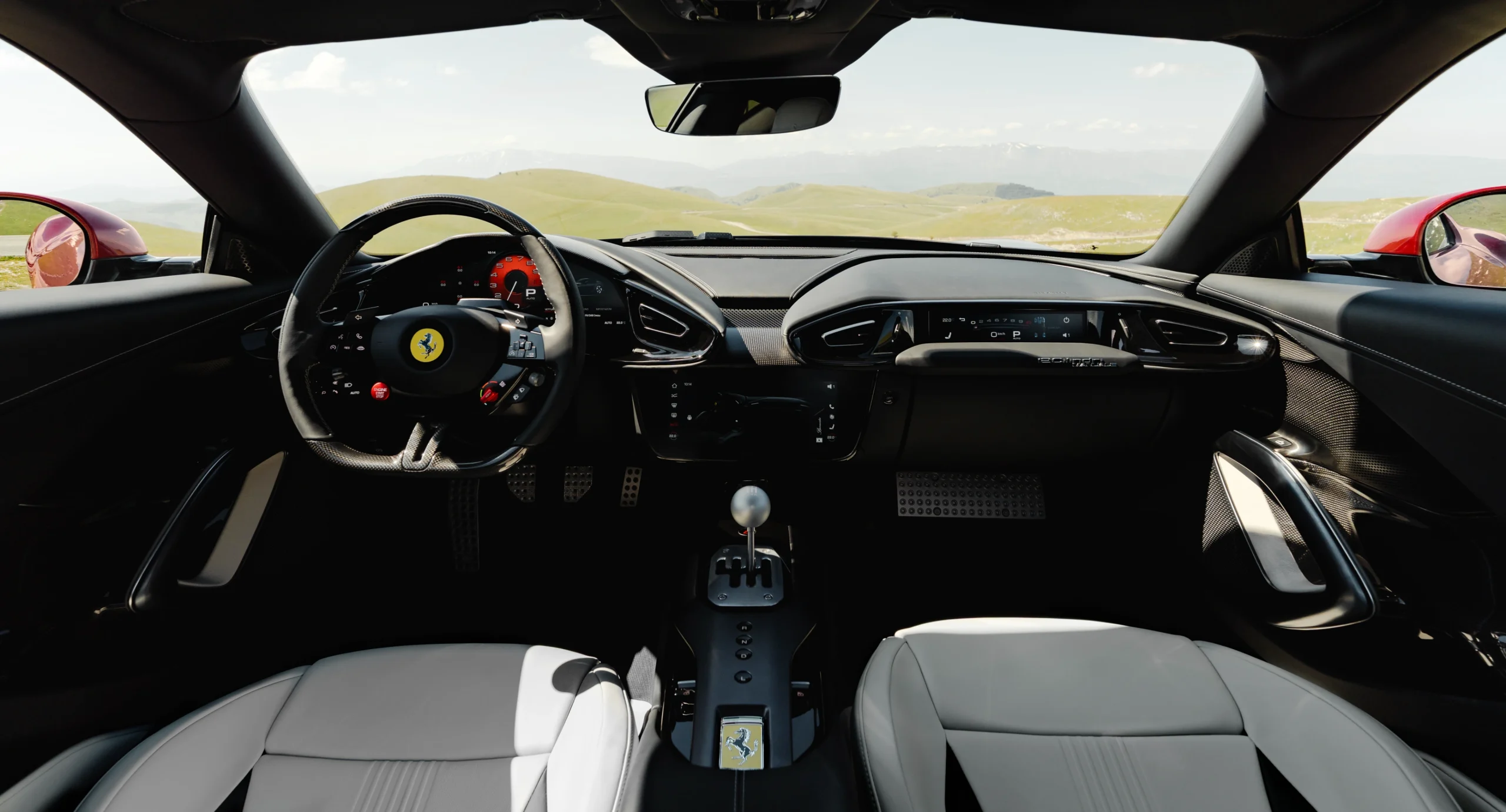
The engineering challenge of the Manuale by Wire system lies in haptic fidelity. To prevent the experience from feeling like a gaming peripheral, Ferrari has integrated physical resistance and audible feedback into the interface. The system employs an open-gated aluminum gear selector that reproduces the specific mechanical “click-clack” sound and resistance associated with vintage Ferraris, anchoring the experience in a brand lineage that stretches back to the earliest road-going models of the post-war era.
This is achieved through a complex interplay of software calibration and electronic actuators that simulate the physical effort of moving a gear into place. The system is designed to be immersive enough that it can even simulate engine stalls under specific conditions, adding a layer of realism that is typically absent from automated transmissions. In effect, Ferrari is using code to recreate mechanical fallibility-turning what regulation and automation have largely engineered out of modern drivetrains into a curated, controllable feature.
The operational logic of the system changes based on velocity. When the driver engages the clutch pedal below 100 km/h (62 mph), the vehicle enters Manuale mode. In this state, the driver manages six gears via a classic H-pattern, giving a more analog rhythm to urban and B-road driving. To ensure long-distance usability and compliance with efficiency and noise expectations on major highways, the final two gears are reserved for automatic high-speed cruising, eliminating the need for constant shifting during transit and allowing the system to prioritize fuel consumption and emissions performance when the car is operating as a grand tourer.
Technical Specifications and Performance
Despite the focus on analog feel, the 12Cilindri Manuale remains a powerhouse of modern internal combustion. The vehicle utilizes a naturally aspirated V12, a configuration that is becoming increasingly rare due to tightening global emissions standards and the industry-wide pivot toward electrification. For Ferrari, retaining a large-displacement, high-revving engine while introducing a digitally mediated manual interface is a way of extending the lifespan of traditional performance architectures into a decade that will be dominated by hybrid and fully electric powertrains.
| Component | Specification |
|---|---|
| Engine | 6.5-litre naturally aspirated V12 |
| Maximum Power | 830 hp (approx. 819 hp in specific markets) |
| Peak Torque | 678 Nm |
| Interface | Manuale by Wire (H-pattern gated shifter) |
| Transmission | 8-speed Dual-Clutch (DCT) |
| Drivetrain | Rear-wheel drive (RWD) |
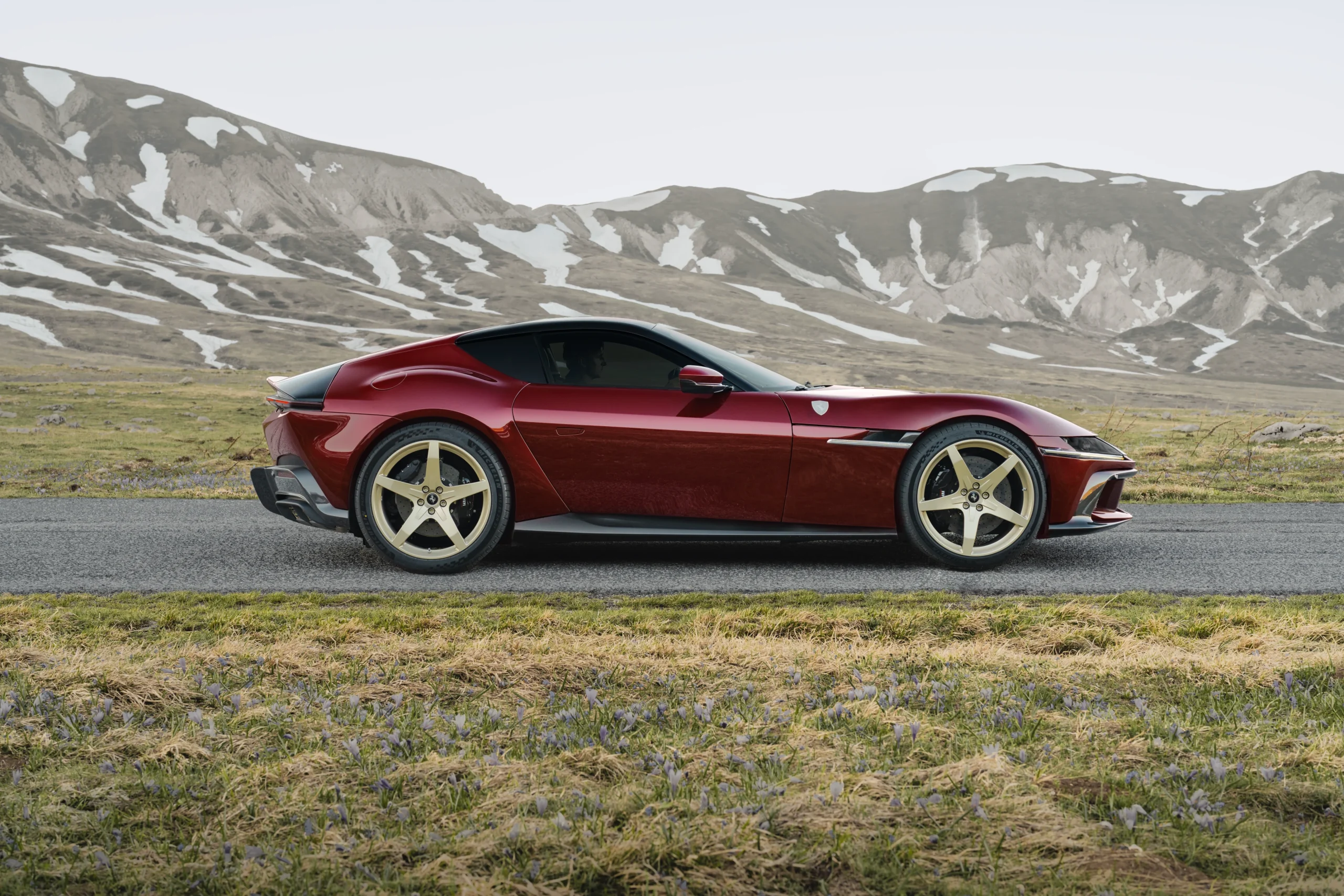
Performance figures place the 12Cilindri Manuale firmly in contemporary supercar territory, but Ferrari’s emphasis here is less on headline acceleration statistics and more on the consistency and repeatability of responses. Because the Manuale by Wire interface communicates with the DCT via software, Ferrari can precisely map pedal effort, gear engagement timing, and traction management across different drive modes, allowing regulatory-compliant stability and emissions strategies to coexist with a driver experience that feels deliberately analog.
Market Positioning in the Era of Electrification
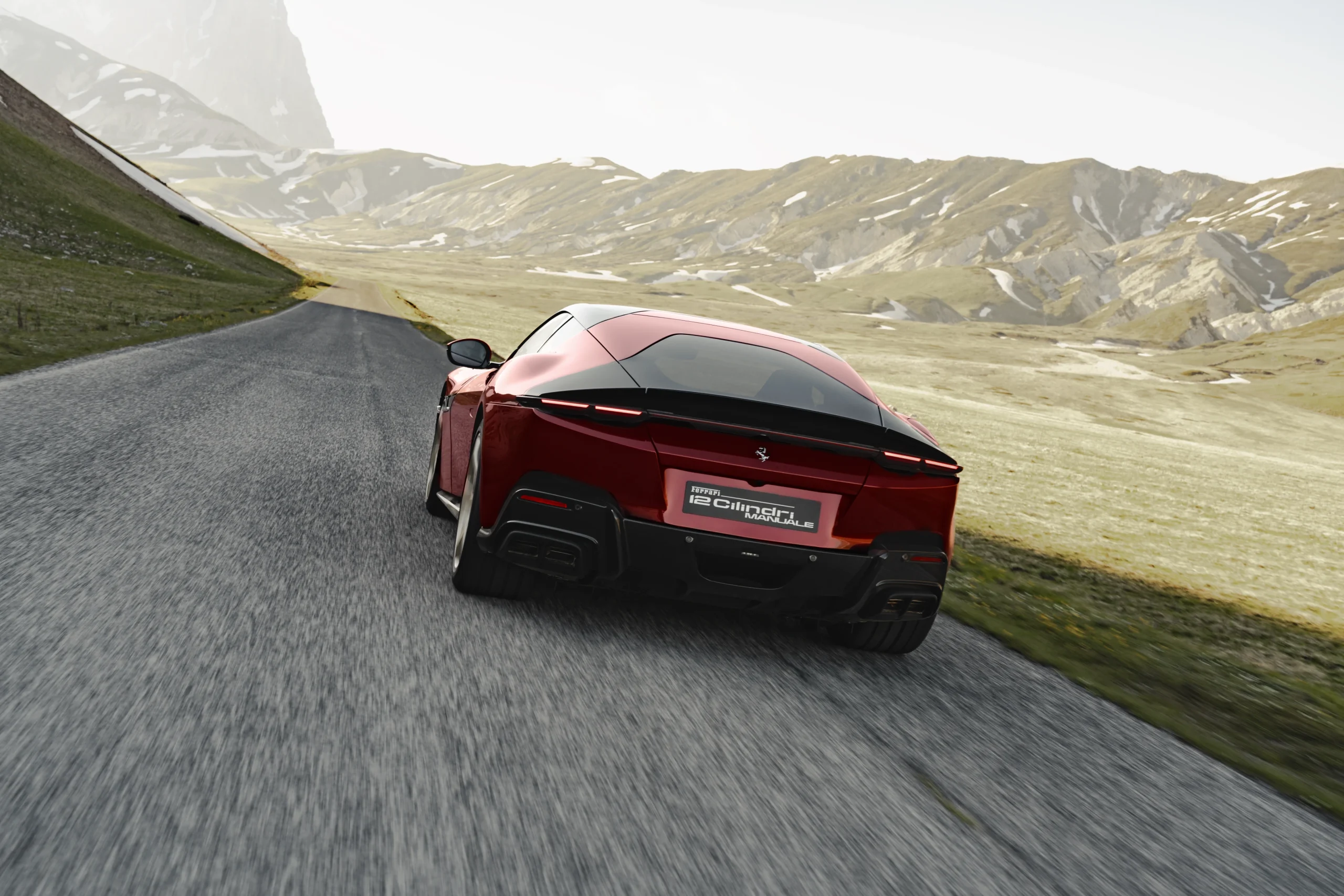
The release of the Ferrari 12Cilindri Manuale is a strategic move in the luxury collectibles market. As automotive regulations like the forthcoming Euro 7 emissions standard move toward constraining traditional high-displacement internal combustion engines, the value of naturally aspirated V12s has shifted from mere transportation to high-value assets. By limiting production to only 1,499 units, Ferrari is catering to a demographic of collectors who prioritize emotional resonance and “driver-centric” technology over pure autonomous efficiency, while also responding to policymakers’ clear signals that such powertrains are entering their regulatory twilight.
The pricing reflects this exclusivity, starting at approximately €590,000 (roughly US$675,000). Because the Manuale by Wire system creates a bridge between the 599 GTB Fiorano’s legacy gated shifts and modern DCT reliability, it effectively future-proofs the driving experience against the total sterility of electric powertrains-at least for a final generation of combustion-led flagships. For institutional investors, family offices and museum-grade collections, this kind of tightly controlled production run, coupled with a powertrain layout that regulators are gradually phasing out in mainstream segments, positions the 12Cilindri Manuale as both an emotional purchase and a potential long-horizon store of value.
For policymakers and city-level transport planners, cars like the 12Cilindri Manuale will be numerically insignificant yet symbolically powerful. They underscore a widening gap between mass-market regulation, which is pushing automakers toward zero-emission fleets, and the niche provisions often carved out for ultra-low-volume manufacturers and heritage engines. How long those carve-outs survive will influence whether Ferrari’s by-wire manual experiment is remembered as the start of a new subcategory of regulated, software-governed analog performance-or as one of the last fully combustion-driven grand tourers to secure type approval in multiple major markets.
Design Synthesis and Heritage
Visually, the Manuale retains the silhouette of the standard 12Cilindri, which draws heavy inspiration from the 365 GTB/4 Daytona. This design language-characterized by a long bonnet and muscular rear haunches-serves as a visual precursor to the mechanical nostalgia found inside the cabin. It signals continuity to long-time Ferrari clients even as the underlying control logic moves decisively into software.
The interior represents the most significant departure from the brand’s recent road cars. By replacing paddle shifters entirely with the gated gear lever, Ferrari has removed the “digital” shortcuts to acceleration, forcing a more deliberate interaction between the human and the machine. This approach underscores a broader trend in high-end technology where “difficulty” and “effort” are rebranded as luxury features, providing a counter-narrative to the industry’s obsession with frictionless automation. For a small but influential group of buyers, the additional cognitive load of driving becomes part of the product’s value proposition rather than a compromise.
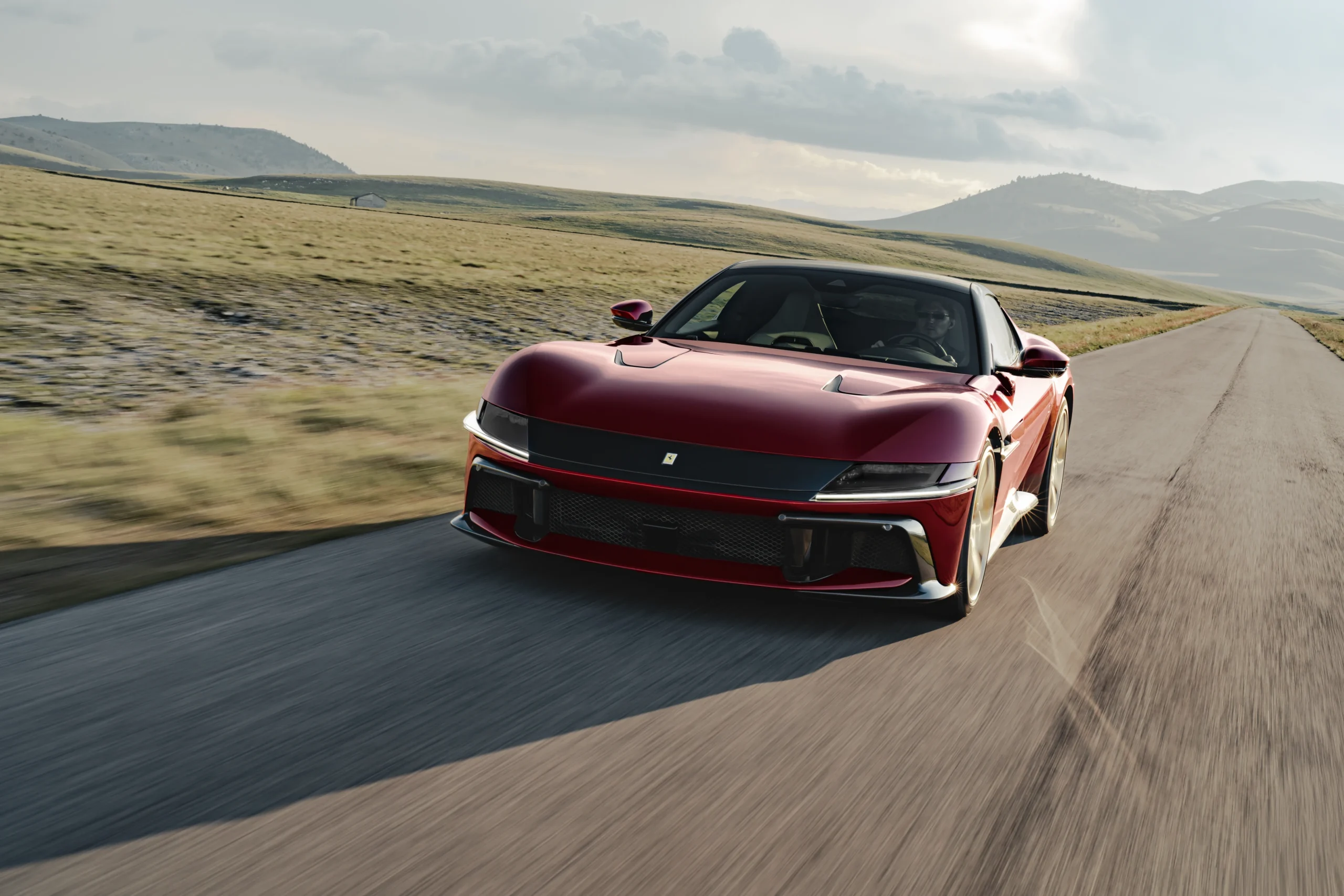
In that sense, the 12Cilindri Manuale is not just another limited-run supercar; it is a rolling negotiation between past and future. Its software-governed manual interface acknowledges regulatory realities and institutional pressure for cleaner, more controlled mobility, while its naturally aspirated V12 and open-gated shifter assert that some dimensions of driving pleasure are still best delivered through noise, vibration and human error. How regulators, city authorities and automotive boards weigh these competing imperatives over the next decade will determine whether Ferrari’s experiment becomes a template-or a closing chapter.
Keep reading
