
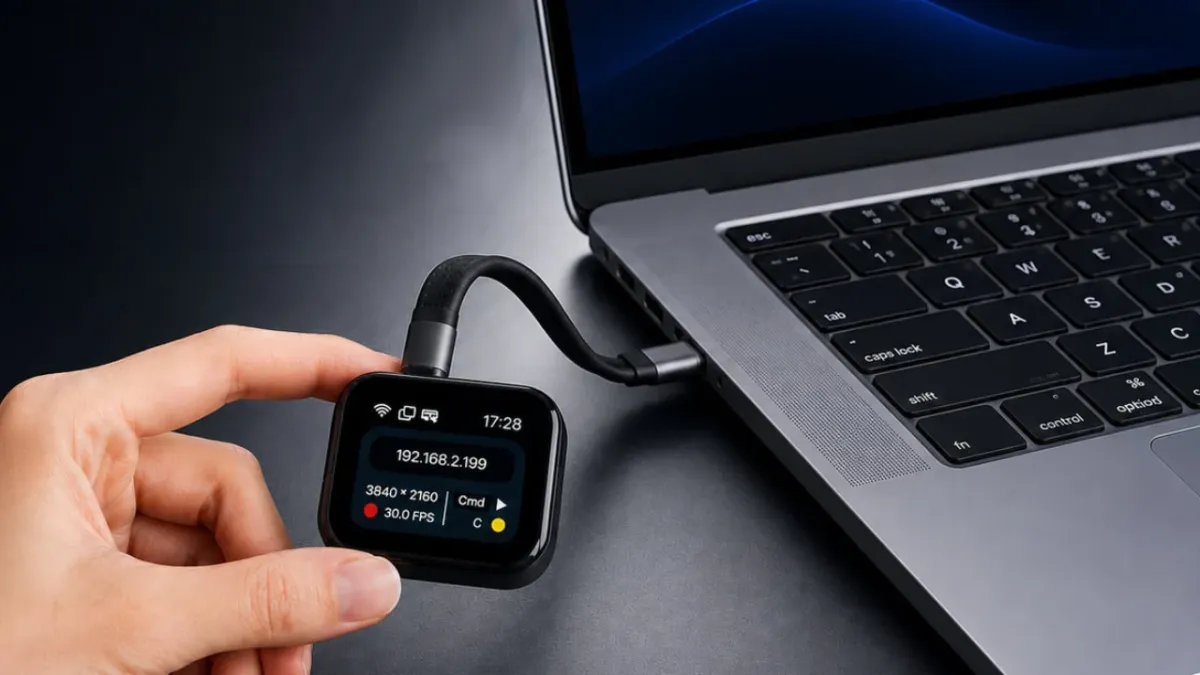
The paradigm of remote system management is shifting from software-defined access to hardware-level orchestration. Sipeed is accelerating this transition with the NanoKVM-Go, a miniature KVM-over-IP device designed to bypass the traditional constraints of operating system dependencies and complex cabling. By consolidating video, audio, and peripheral emulation into a single USB-C interface, the device targets the growing demand for out-of-band management in home labs and edge computing environments.
Unlike standard remote desktop software, which requires a functioning OS and active network stack on the host machine, a hardware KVM operates at the BIOS level. This allows for critical recovery tasks, such as firmware updates or OS reinstalls, to be performed remotely. The NanoKVM-Go streamlines this by utilizing USB-C DisplayPort Alt Mode, making it compatible with a wide array of hardware including MacBooks, iPhone 15 and later, the Steam Deck, and various Android devices. For institutions that already rely on baseboard management controllers or IPMI in their data centers, the device brings a similar class of out-of-band control into environments that were previously unmanaged or reliant on ad hoc tools, from small business racks to university labs.
Hardware Architecture and Performance
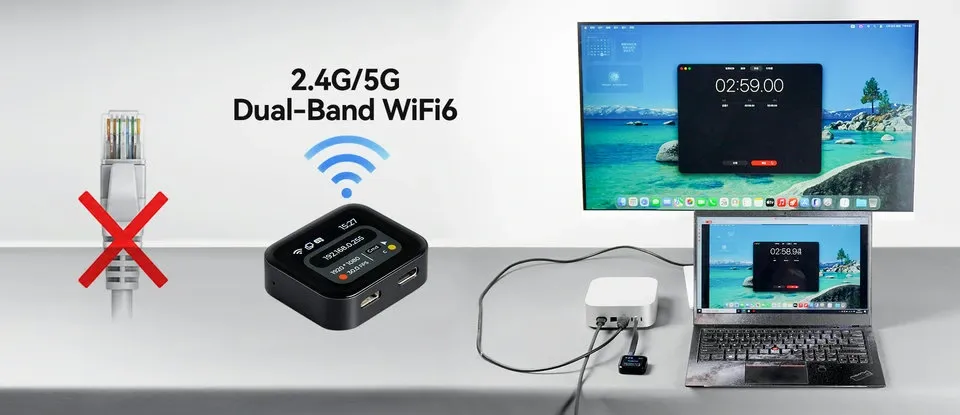
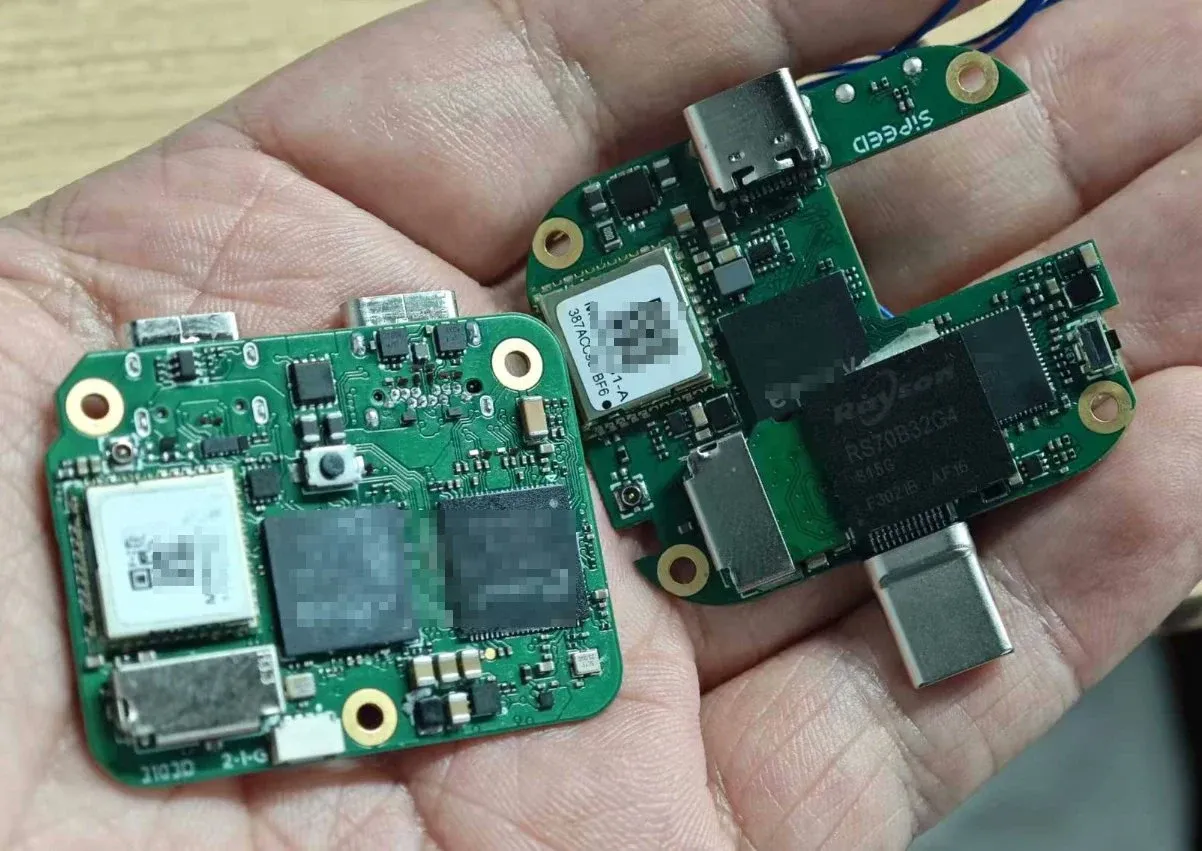
The device is powered by an Axera Tech AX630C SoC, paired with a dual-core Cortex-A53 and a 3.2 TOPS NPU. This hardware stack enables high-resolution capture and low-latency transmission over dual-band WiFi 6, making it viable for both interactive troubleshooting and longer maintenance sessions. To eliminate the need for complex port forwarding or VPN configurations, the device integrates Tailscale for secure, encrypted remote access, a design choice that will sit squarely within many organizations’ existing zero-trust and identity-aware networking policies.
The NanoKVM-Go handles several data streams through a single cable: video and audio via DisplayPort Alt Mode, keyboard and mouse emulation, and virtual disk mounting for OS image deployment. An auxiliary USB-C port provides power pass-through to ensure the target device remains charged. In practice, this means a single technician-or, increasingly, an automated agent-can image, patch, and recover machines that are physically distributed across campuses or branch offices without local hands-on support.
| Specification | NanoKVM-Go | NanoKVM-Go+ |
|---|---|---|
| RAM | 256MB | 512MB |
| Storage | 16GB eMMC | 64GB eMMC |
| AI Processor | 3.2 TOPS NPU | 3.2 TOPS NPU |
| Max Resolution | 4K @ 45Hz / 2K @ 90Hz | 4K @ 45Hz / 2K @ 90Hz |
| Latency (1080p60) | ~60ms | ~60ms |
| Retail Price | $89 | $129 |
Integrating Agentic AI via Model Context Protocol
Sipeed is positioning the NanoKVM-Go as the world’s first “AI-native” KVM. This designation refers to the device’s ability to function as a hardware-level interface for AI agents. By exposing KVM functions-such as mouse movements, keystrokes, and screen capture-as an MCP (Model Context Protocol) server, the device allows AI agents to interact with a computer exactly as a human would, without requiring software installation on the target machine.
This architecture enables “Computer Use” capabilities, where an agent can navigate a GUI, troubleshoot a frozen system, or interact with a BIOS screen. In regulated sectors, that could mean scripted remediation of a failed security patch or rapid rollback of a misconfigured endpoint, carried out within the same access-control regimes that govern human administrators. It also removes the primary vulnerability of software-based AI agents: the requirement that the target OS be operational and the agent software be installed and privileged.

Compatible agents include Sipeed’s own PicoClaw, as well as OpenClaw, Claude Code, Codex, and Hermes Agent. This move aligns with the broader industry trend toward agentic workflows, where AI moves from generating text to executing complex tasks across diverse hardware interfaces. For CIOs and public-sector technology leaders, the emergence of hardware-level “AI operators” will intersect with governance frameworks now being developed under instruments such as the EU Artificial Intelligence Act, which classifies and regulates certain high-risk AI uses in critical infrastructure and public services.
Local-First Intelligence and Data Privacy
The NanoKVM-Go+ variant introduces “Ambient Screen Intelligence,” a feature that continuously captures the screen and maintains a searchable history of up to 180 days. While similar in concept to cloud-based recall features, Sipeed has implemented this as a local-first system. All processing and storage occur on the device’s 64GB eMMC, eliminating the need for cloud uploads or subscription-based data hosting.
From a security perspective, this local implementation mitigates the risk of sensitive screen data being intercepted during transit or stored on third-party servers. At the same time, it raises familiar questions for compliance teams: in many jurisdictions, long-lived, searchable recordings of user activity will fall under existing data-protection and access-control rules, rather than sit in a regulatory vacuum. The ability of a hardware device to record every pixel on a screen for six months introduces a new attack vector if the KVM device itself is compromised, effectively creating a permanent, hardware-level keylogger and screen recorder that security policies will need to treat as a privileged system of record.
Deployment and Market Availability
The project has seen significant traction on Kickstarter, raising over $130,000 against an initial goal of approximately $6,000. This indicates a strong market appetite for accessible, low-cost out-of-band management tools that bridge the gap between hobbyist maker boards and enterprise IPMI solutions. For public institutions and mid-sized enterprises that cannot justify full-featured proprietary KVM suites in every location, devices at this price point could change how critical systems are supported in the field.
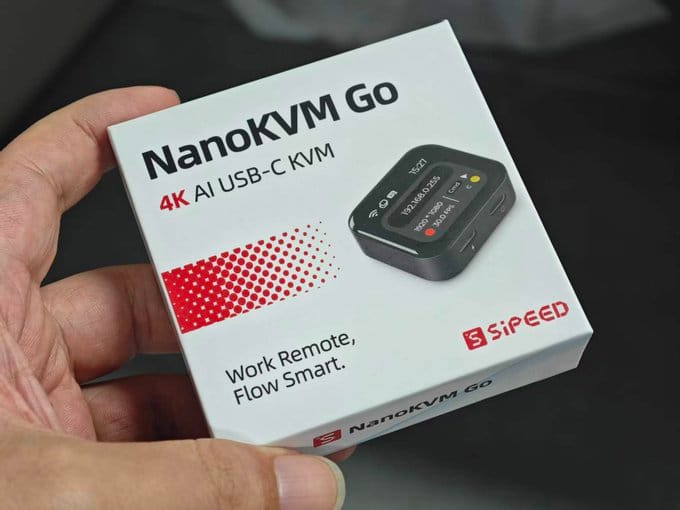
Pricing for the devices is tiered for early backers, with the base NanoKVM-Go available for $69 and the NanoKVM-Go+ for $99. Standard retail pricing is expected to be $89 and $129, respectively. For users requiring physical intervention, the device supports an optional FingerBot accessory capable of physically pressing a power button to force a hard reboot. As these kinds of low-cost tools move from hobbyist racks into corporate and government deployments, they are likely to be folded into formal security baselines issued by national cybersecurity agencies, alongside existing guidance for remote administration under frameworks such as the U.S. National Institute of Standards and Technology’s Special Publication 800-53.
Related reading
