
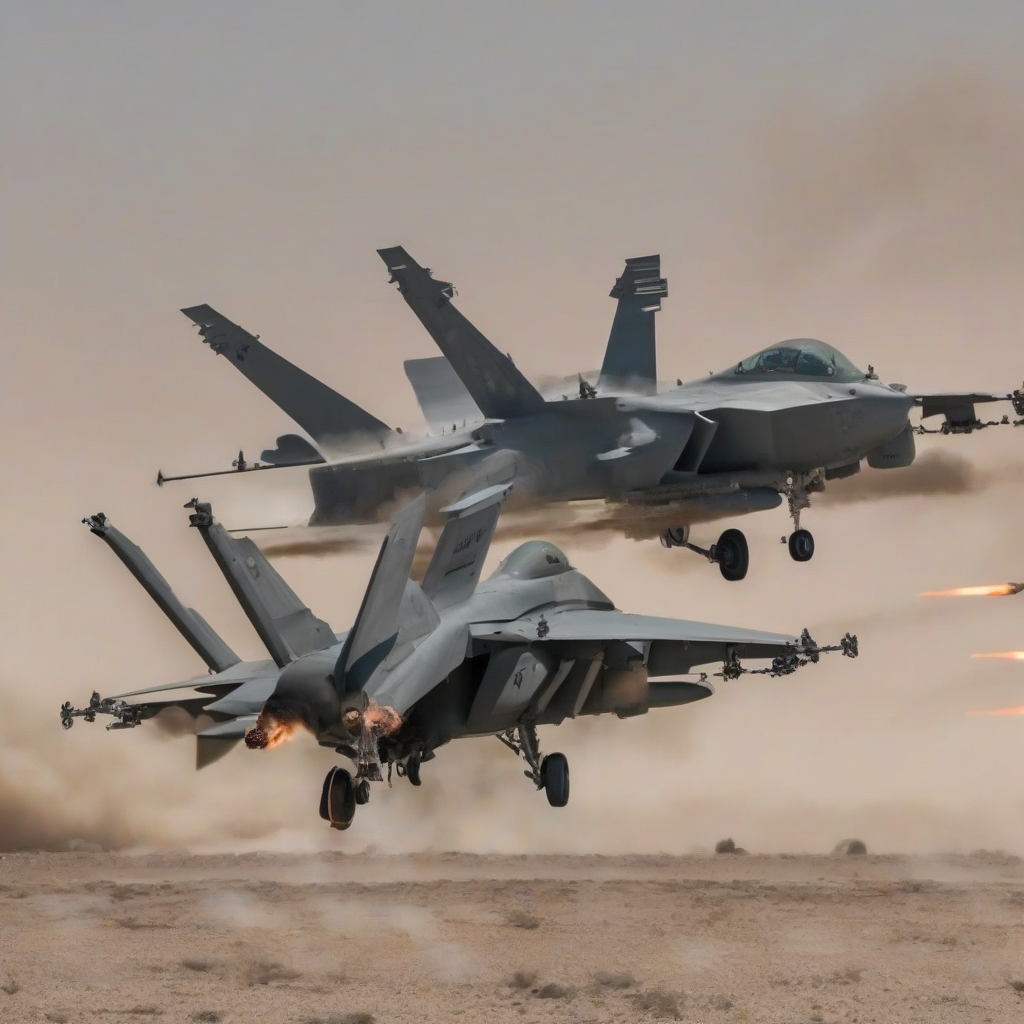
WASHINGTON – U.S. Central Command has initiated a series of airstrikes against Iran to secure the Strait of Hormuz and maintain the flow of international maritime traffic.
The military action follows reported Iranian strikes on United States military installations in Bahrain and Kuwait. The escalation has triggered an immediate reaction in global energy markets, with oil prices rising by approximately 7 percent and governments monitoring the potential impact on inflation and fuel costs.
Military Response and Objectives
The strikes were ordered to neutralize threats to commercial shipping in one of the world’s most critical maritime corridors. U.S. Central Command, the combatant command responsible for all U.S. military operations in the Middle East, confirmed the operations via a post on X.
“At the direction of the Commander in Chief, U.S. Central Command forces have started conducting additional strikes against Iran to further degrade their ability to threaten freedom of navigation in the Strait of Hormuz,” the command stated.
The military specified that the objective is to address recent hostilities involving civilian maritime assets. “The United States is holding Iran accountable for recent unjustified aggression against commercial shipping and civilian crews freely navigating a vital international waterway,” the statement added.
The actions fall under long-standing U.S. commitments to protect freedom of navigation in international straits and shipping lanes, principles embedded in global maritime governance frameworks such as the U.N. Convention on the Law of the Sea, and are being closely watched by allied navies that routinely transit the area.
Strategic Significance of the Strait of Hormuz
The Strait of Hormuz serves as the only sea passage from the Persian Gulf to the open ocean, situated between Oman and Iran. Because of its geography, the waterway is a primary chokepoint for global energy supplies and a recurring flashpoint in U.S.-Iran tensions.
- Oil Volume: Approximately one-fifth of the world’s total oil supplies pass through the strait, including exports from key producers such as Saudi Arabia, Iraq, the United Arab Emirates, and Qatar.
- Strategic Leverage: Control over the narrow waterway allows Tehran to exert significant pressure on global markets and military powers through the threat of disruption, even without a formal blockade.
- Current Status: The ability to harass or impede tanker traffic has historically allowed Iran to force stalemates in military and diplomatic confrontations and to test the resolve of Western security guarantees to Gulf partners.
While Iran has not officially claimed responsibility for the attacks on Bahrain and Kuwait, analysts suggest Tehran uses these actions to highlight its leverage during negotiations for a long-term peace deal. Regional diplomats warn that any sustained disruption in Hormuz could quickly draw in additional naval assets under existing security arrangements, including those overseen by U.S. Central Command.
Conflict Timeline
The current exchange of strikes occurs within a broader period of military volatility:
- February 28: War commenced following US-Israeli airstrikes on Iran, triggering retaliatory missile and drone attacks across multiple Gulf states.
- June 17: A memorandum of understanding was signed as a preliminary step toward peace, outlining de-escalation measures and a framework for future talks rather than a binding treaty.
- Recent: A shaky ceasefire agreement was established but has since been rattled by the latest exchange of strikes, raising questions about enforcement mechanisms and monitoring on both sides.
Diplomats say the sequence has left capitals balancing domestic political pressure for firmness with fears that a miscalculation at sea or in the air could fracture the emerging framework.
Diplomatic Status and NATO Summit
The flare-up coincides with a NATO military alliance summit in Ankara, Turkey, where President Trump has addressed the volatility of the negotiations and consulted allies on burden-sharing for Gulf security. While the alliance is not formally at war with Iran, member states have ships and aircraft operating under separate national mandates in the same air and sea space, making coordination a central topic behind closed doors.
During a press conference in Ankara, Trump expressed skepticism regarding the reliability of a permanent agreement with Tehran.
“If we make a deal with Iran I’m not sure that will stick,” Trump said. “I found them to be very dishonourable people.”
Despite the retaliatory strikes, Trump stated he does not expect a return to full-fledged war. He has a documented history of threatening escalated military action before opting for a tactical withdrawal, a pattern closely scrutinized by allies and lawmakers who oversee U.S. use of force authorities under the War Powers Resolution.
It remains unclear whether the negotiations to convert the June 17 memorandum of understanding into a permanent peace deal will continue. European mediators have urged both Washington and Tehran to preserve channels established in earlier rounds of talks, warning that the combination of military escalation and high energy prices could rapidly spill over into domestic political debates on sanctions, arms sales, and future security guarantees. For now, diplomats describe the process as paused but not formally collapsed, with further movement likely to depend on whether the latest strikes remain limited in scope.
Keep reading
