
West Ham hold nerve from the spot as Ouattara’s Panenka fails and Brentford exit the FA Cup
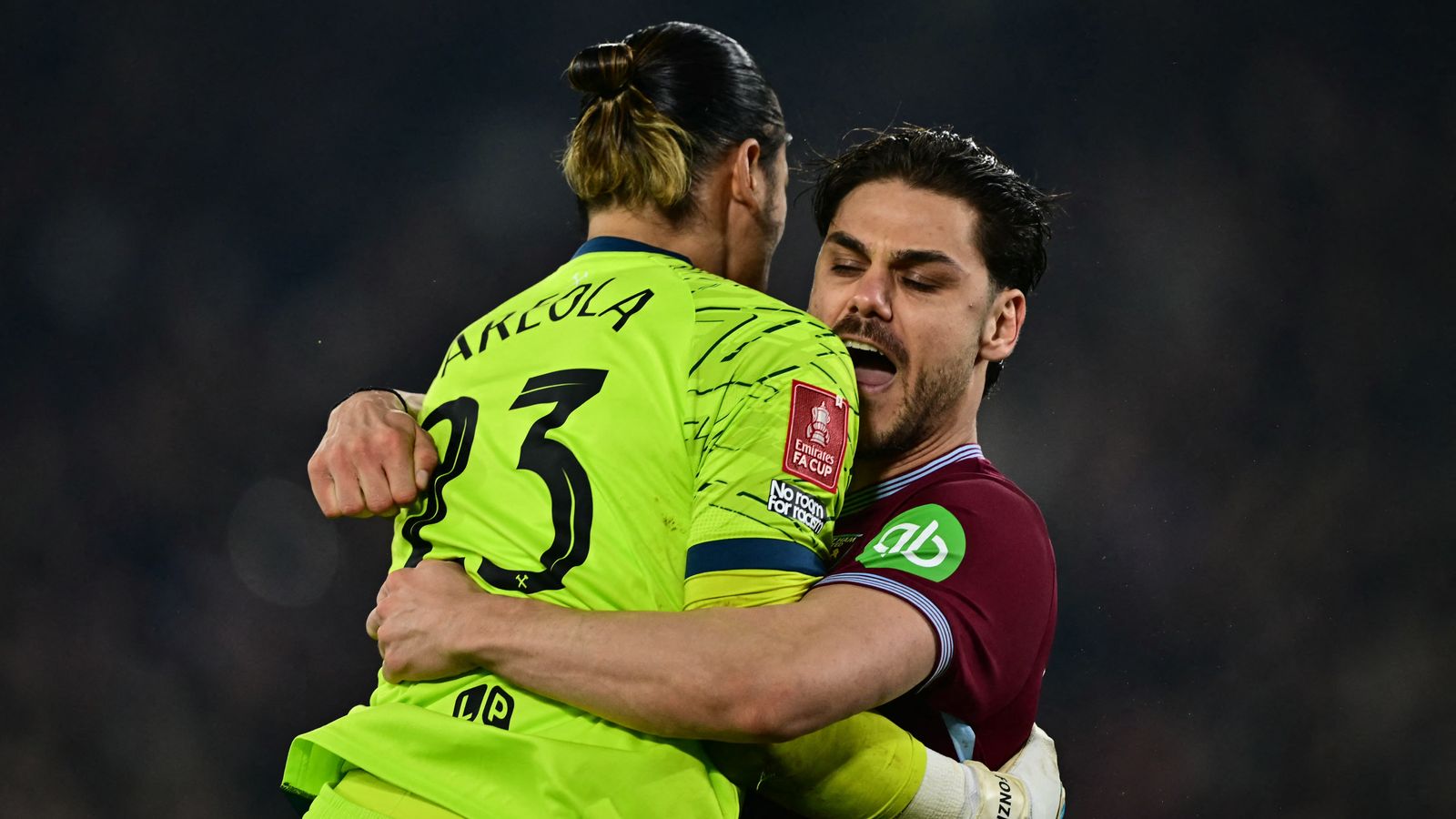
West Ham advanced to the quarter-finals of the FA Cup after a penalty shoot-out, defeating Brentford following an eventful tie that finished level after extra-time. Dango Ouattara’s attempted Panenka was gathered by Alphonse Areola, and Konstantinos Mavropanos converted the decisive kick as the hosts converted their full set of spot-kicks to progress.
Clinical from 12 yards after breathless 120 minutes
Across a frenetic contest that featured repeated momentum swings, Jarrod Bowen and Igor Thiago each struck twice in normal time as the tie see-sawed between east and west London. Extra-time offered half-chances rather than a breakthrough, with fatigue and caution creeping in, setting the stage for a shoot-out in which West Ham’s penalty execution proved decisive and Ouattara’s chipped effort down the middle did not.
For Brentford, the pain was acute given how close they came to turning the tie in regulation and again in extra-time. For West Ham, the outcome keeps a cup run alive under Nuno Espírito Santo and provides a tangible lift at a pivotal point in the season, with a demanding domestic and European schedule looming.
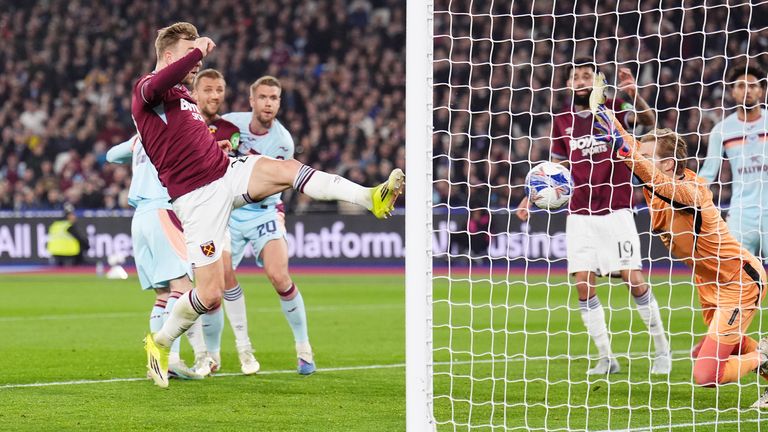
Jarrod Bowen gave West Ham the lead from a corner
Key moments and officiating decisions
- Early chances came and went for Brentford through Jordan Henderson and Michael Kayode before Bowen tapped in the opener after a knock-down from a Matheus Fernandes delivery at a crowded near post.
- Brentford found parity when Nathan Collins’ goalbound header from a rehearsed throw-in routine was diverted over the line by Igor Thiago, taking him to 20 goals in all competitions this season and underlining his status as Brentford’s focal point.
- From the restart, Adama Traoré was tripped by Kayode as he surged into the box. Referee Andy Madley initially played on but, after an on-field review initiated by the video assistant referee (VAR), awarded a penalty that Bowen converted low into the corner.
- Kevin Schade went down later in the half under contact from Fernandes. Replays showed a slight touch on the ball before contact on Schade’s foot, and the VAR did not advise a spot-kick, leaving the on-field decision to play on intact.
- Late in normal time, a second penalty of the match was awarded when Kayode was pushed at the back post, allowing Thiago to equalise again from the spot and drag the tie into extra-time.
- In extra-time, Romelle Donovan and Callum Wilson spurned clear shooting opportunities, and a late long-range strike from Axel Disasi flew just over before the shoot-out formalised what had felt like an inevitable climax.
- In the shoot-out, Ouattara’s Panenka was read by Areola, who held his position, and Mavropanos converted the clincher as West Ham scored all of their penalties with minimal delay and visible pre-selection of takers.
The referee’s monitor review that produced West Ham’s first-half penalty reflected the current threshold for “clear and obvious” intervention in the video review system, while the later non-award for Brentford aligned with the higher bar for overturning on-field calls within the video protocol set out in the Laws of the Game, which underpin VAR governance across this season’s FA Cup.
Quotes from the tunnel
Brentford head coach Keith Andrews backed Ouattara despite the decisive miss: “I’m not annoyed at all. The easiest thing for a footballer to do is to not take a penalty. It takes unbelievable courage on a stage like that to take a penalty… He practices that technique a lot. If it goes in, everyone’s raving about him. So Dango will get the absolute support he needs from us and everybody attached to him.”
West Ham captain Jarrod Bowen, who scored twice in normal time, underlined the squad’s ambition: “We’re into the quarter-finals of the FA Cup, and things are on the up for us… We want to get to the final, we want silverware at this club. It’s a dream of mine to win it.”
Head coach Nuno Espírito Santo praised the support and demanded a quick reset amid a demanding schedule: “Our fans deserve this moment of joy… Now we have to rest. Knowing Saturday we face a tough one [against Man City]… Our performance will require the best from all of us.”
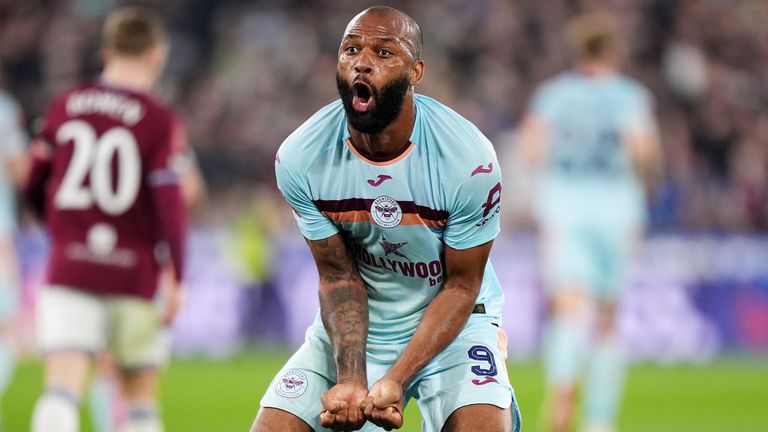
Brentford’s Igor Thiago celebrates scoring against West Ham
Why this result matters
For West Ham, the win secures a place in the last eight and sustains the prospect of a first major domestic cup run in years, with a quarter-final against Leeds in early April adding to a congested spring calendar across league and cup. It also provides a platform of momentum and belief-elements Bowen referenced-that can bleed positively into league form at a stage of the campaign where confidence tends to correlate with points and where squad management decisions take on a quasi-governance role within the club.
For Brentford, exiting on penalties stings given the resilience shown to haul the game back twice. Thiago’s 20th goal of the season underscores his centrality to Brentford’s attack and strengthens his case in internal planning over contracts and recruitment. Yet the tie also highlighted the thin margins of knockout football: one VAR call that goes against you and one high-risk penalty technique that fails can end a cup run in an instant, with implications for revenue, rotation policy and how coaches are judged on progress beyond the league table.
Quarter-final lineup
As confirmed by the competition draw, the FA Cup quarter-finals are set to feature:
- Southampton vs Arsenal
- Chelsea vs Port Vale
- Man City vs Liverpool
- West Ham vs Leeds
For the Football Association, that slate ensures representation from both traditional heavyweights and lower-league sides, preserving the competition’s governance objective of competitive balance while concentrating significant broadcast and matchday interest on a single knockout weekend.
Tactical and psychological beats
West Ham’s penalty sequence showcased a clear pre-plan: strike with pace and conviction rather than disguise, with takers stepping up quickly and repeating similar routines. Areola’s decision to hold central on Ouattara’s attempt paid off-a reminder that, in shoot-outs, keepers often play the taker as much as the ball, informed by data and pre-match briefing from coaching and analysis staff.
Brentford’s mixture of set-piece craft and direct running again proved productive, but managing transition moments immediately after scoring-when the subsequent concession occurred-remains an area to lock down in knockout contexts. With both clubs operating under tight scheduling and financial controls, marginal tactical decisions of this kind increasingly feed into boardroom assessments of coaching performance and medium-term squad strategy.
