
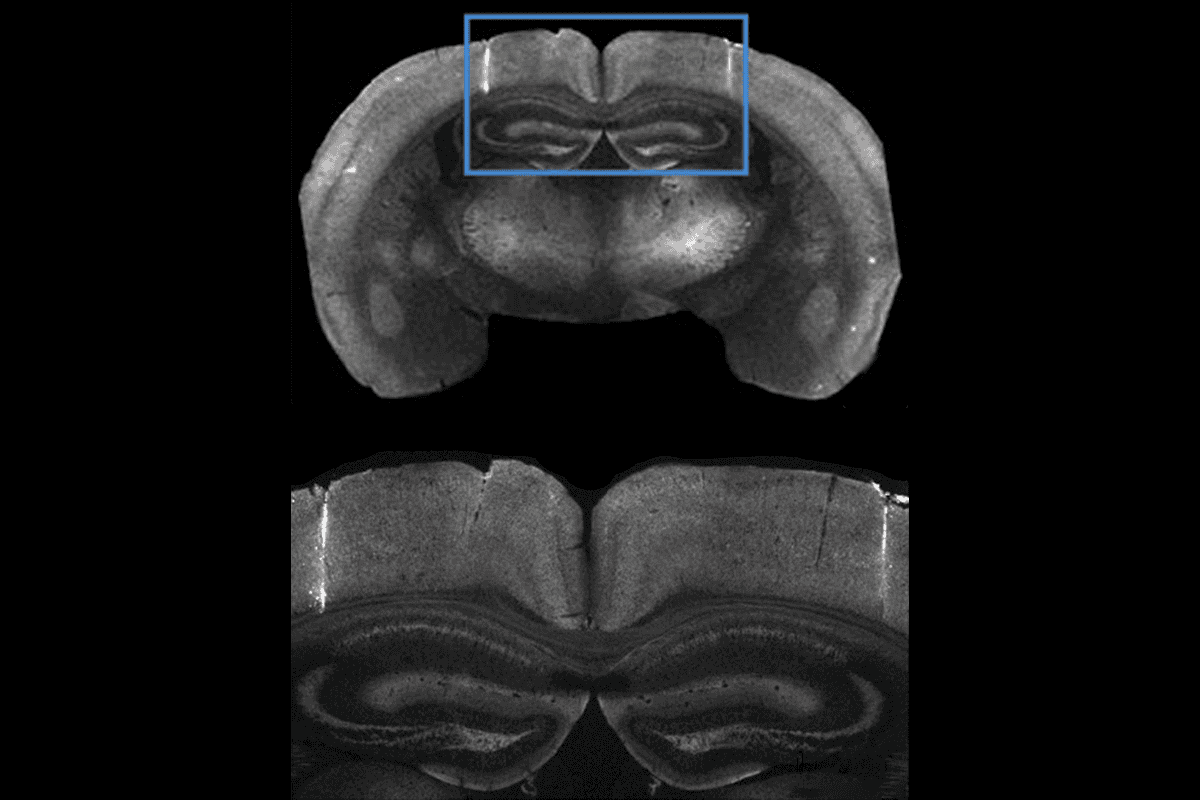
The physiological imperative of sleep has long been understood as a necessity for survival, yet the precise mechanisms that allow the brain to restore itself remain a primary focus of neurological research. New evidence published in Nature Neuroscience suggests that the restorative power of deep sleep is driven specifically by slow-wave brain activity-synchronous “on and off” cycles of cortical neurons occurring between 0.5 and 4 Hertz.
This rhythmic activity is central to the synaptic homeostasis hypothesis, which posits that the excitatory synaptic strength accumulated during waking hours must return to a baseline to allow for the consolidation of memories. While previous observations in anesthetized animals hinted at this process, the distinction between pharmacological sedation and natural sleep has remained a critical gap in the evidence.
“Anesthesia and sleep may share some features, but definitely overall they are not the same thing,” says Chiara Cirelli, professor of psychiatry at the University of Wisconsin School of Medicine.
Artificial Induction of Synaptic Homeostasis
To isolate the effects of these neural dynamics, researchers utilized optogenetics-a technique that uses light-sensitive proteins to control neural activity with precise temporal resolution-to mimic deep-sleep patterns in awake mice. By using discrete pulses of light to activate specific interneurons or inactivate pyramidal neurons, the team created an artificial “off” pattern, while the intervals between pulses allowed neurons to resume normal spiking, creating the compensatory “on” pattern.
“The idea was to induce these patterns in awake mice, and see whether this is enough to get sleep benefits,” Cirelli says. By focusing on the pattern rather than on behavioral sleep itself, the study directly tests the long-standing assumption that slow waves are not merely a correlate of restoration, but a driver of it.
The results indicated that the physical act of sleep is perhaps less important than the specific electrical dynamics that occur during the deep-sleep phase. By delivering these pulses to one hemisphere of sleep-deprived mice for 30 minutes, the researchers observed a significant reduction in the subsequent need for recovery sleep in that specific region, effectively creating a localized “rested” cortex in an otherwise sleep-deprived brain.
| Measured Outcome | Effect of Induced Slow-Waves | Comparison to Natural Sleep |
|---|---|---|
| Sleep Pressure | Decreased need for recovery sleep in stimulated hemisphere | Mimicked natural, region-specific restoration |
| Synaptic Strength | Reduction in GluA1-containing AMPA receptors | Equivalent to natural synaptic renormalization |
| Cognitive Function | Improved performance on memory and learning tasks | Comparable to well-rested mice |
| Neural Synchrony | Reduced synchrony during subsequent sleep | Consistent with prior restoration having already occurred |
“What is new is that the artificial induction during wakefulness is sufficient to decrease the need for recovery sleep, and that’s key-it’s not just a property of sleep, it’s really a property of the dynamics,” says Adrien Peyrache, associate professor of neurology and neurosurgery at McGill University’s Montreal Neurological Institute-Hospital.
Clinical Translation and Regulatory Pathways
The ability to artificially induce the restorative benefits of sleep without the requirement of unconsciousness presents a potential shift in how cognitive impairment and sleep disorders are managed, particularly for patients whose conditions or occupations chronically disrupt normal sleep. However, the transition from optogenetics in murine models-which requires invasive genetic and surgical interventions-to human application demands a pivot toward non-invasive neuromodulation techniques that can be regulated within existing medical frameworks.
Cirelli notes that the groundwork for this transition already exists. “We already have ways of inducing slow waves and on/off patterns non-invasively, through transcranial magnetic stimulation.” In the United States and other jurisdictions, devices that deliver this kind of brain stimulation are overseen as medical devices by regulators such as the U.S. Food and Drug Administration, which already evaluates TMS systems for safety, labeling, and specific clinical indications.
From a regulatory and public health perspective, the deployment of technologies explicitly targeting sleep homeostasis would necessitate rigorous clinical trial frameworks to ensure safety and efficacy. While TMS is already approved for specific psychiatric indications, using it to modulate sleep homeostasis would require new institutional protocols and likely new device approvals to determine:
- The optimal frequency, intensity, and duration of stimulation to achieve restoration without adverse neurological or psychiatric effects.
- Whether localized induction in specific cortical regions-such as motor or somatosensory areas-can scale to influence global brain restoration and daytime functioning.
- The long-term impact of repeated artificial synaptic renormalization on natural sleep architecture, including whether such interventions risk masking, rather than treating, underlying sleep disorders.
Clinicians and hospital systems would also need guidance on which patient populations-ranging from people with severe insomnia to shift workers and military or emergency personnel-could ethically and safely be offered such interventions, and under what monitoring requirements.
Luis de Lecea, professor of psychiatry and behavioral sciences at Stanford University, highlights the remaining uncertainties regarding the scope of this effect, specifically whether inducing these dynamics in one region can influence the restoration of the whole brain. Answering that question will shape not only future basic research, but also how broadly regulators and payers view the clinical utility of any eventual therapy.
Public Health Implications for Cognitive Resilience
On a population level, chronic sleep deprivation is linked to systemic healthcare burdens, including increased rates of metabolic syndrome, cardiovascular disease, workplace accidents, and cognitive decline. Employers, school systems, and health agencies already grapple with the economic cost of insufficient sleep; a technology that could safely reproduce the key “on/off” dynamics of deep sleep would inevitably enter debates over how societies manage fatigue risk and protect cognitive performance in critical roles.
If the “on/off” dynamics of deep sleep can be successfully replicated in humans, it could offer a targeted intervention for populations unable to achieve restorative sleep due to clinical conditions or high-stress occupational demands-provided that safeguards prevent its use as a shortcut that normalizes dangerous scheduling or undermines existing labor protections. For policymakers, the prospect of “wakeful restoration” tools would raise questions about access, equity, and reimbursement: who receives such treatments, who pays for them, and how they are integrated into clinical pathways for sleep and mood disorders.
The study’s focus on the motor and somatosensory cortical regions-and the subsequent improvement in memory tasks-suggests that the brain’s ability to “reset” its synaptic strength is a fundamental requirement for learning and cognitive stability. “We provided direct evidence that these on and off patterns are what really matter,” says Cirelli. For neurologists and regulators alike, that evidence reframes deep sleep not just as a nightly necessity, but as a manipulable physiological process-one that, if harnessed carefully, could redefine how health systems think about cognitive resilience in an increasingly sleepless world.
Related reading
- Cyclospora Outbreak in the US: Over 1,400 Cases Linked to Contaminated Produce and Food Supply Chain Risks
- Cardiovascular and Metabolic Benefits of Moderate Coffee Consumption
- Why USPS Just Lost the Power to Raise Stamp Prices Twice a Year (daybreakwire.com)
- Meet Power Take Off: The Father-Son Rock Band From Wisconsin Farms (archyde.com)
