
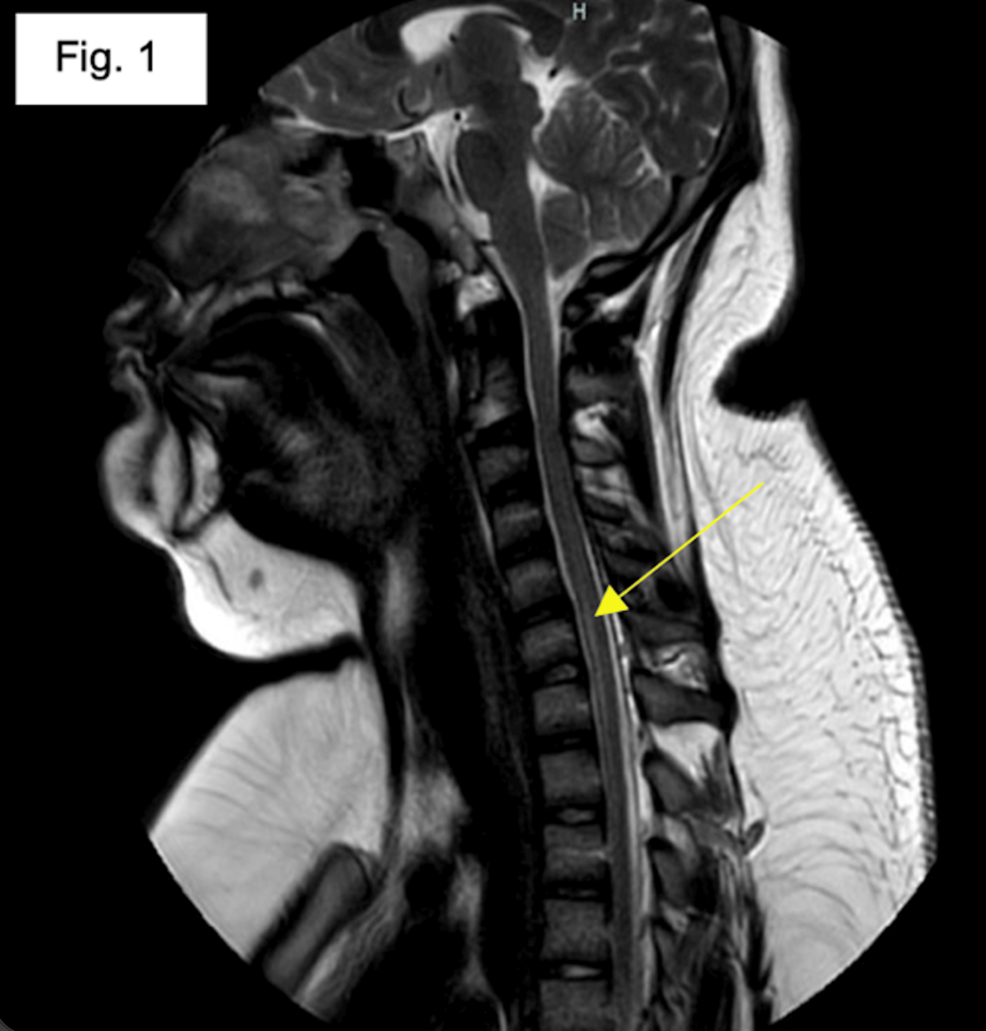
The occurrence of non-traumatic spinal cord infarction (SCI) in young, healthy individuals is an exceptionally rare clinical event, often complicating the initial stages of emergency triage and diagnosis. While spinal cord injuries are typically associated with high-impact trauma or chronic degenerative diseases, a recent case highlights the possibility of vascular compromise triggered by an unconventional mechanism: a simple stretching maneuver.
Vascular Compromise and Rare Triggers
Spinal cord infarction occurs when the blood supply to the spinal cord is interrupted, leading to rapid tissue death and neurological deficit. In most clinical settings, this is secondary to systemic hypotension, aortic aneurysms, or cardiovascular collapse. However, the identification of a stretching maneuver as a catalyst suggests a mechanical trigger-potentially involving arterial dissection or a sudden occlusion of the spinal arteries-that is not currently recognized as a standard risk factor in public health screenings or clinical guidelines.
The sudden nature of the onset often mimics other neurological emergencies, creating a precarious window for intervention. In this specific case, the rarity of the etiology contributed to significant diagnostic challenges, as the patient did not present with the typical cardiovascular risk profile associated with ischemic events.
Clinical Presentation and Diagnostic Hurdles
The primary challenge in managing non-traumatic SCI is the absence of obvious external trauma, which often leads clinicians to look for inflammatory or infectious causes rather than vascular ones. The speed of diagnosis is critical, as the window for potential neuroprotection is narrow and the risk of irreversible paralysis escalates with each hour of delay.
The following factors contribute to the difficulty in identifying these events within acute care systems:
- Symptomatic Overlap: Initial presentations often mirror transverse myelitis or acute spinal cord compression, with sudden weakness, sensory loss, or sphincter disturbance that can be mistakenly attributed to more common conditions.
- Patient Profile: Young patients without hypertension, diabetes, or known vascular disease are rarely screened for ischemic spinal events, which can bias clinicians away from vascular explanations.
- Imaging Latency: The reliance on MRI for definitive diagnosis can lead to delays if the facility lacks 24/7 advanced imaging capacity or rapid transfer agreements with higher-level centers.
- Atypical Triggers: Mechanical triggers, such as stretching, minor neck or back movements, or routine exercise, are not typically listed in differential diagnosis protocols for paralysis, increasing the risk that critical details are dismissed as coincidental.
For emergency departments already operating under resource strain, these factors converge into a systemic vulnerability: rare, high-impact neurological events that fall between standard pathways for stroke, trauma, and infection.
Comparative Impact of Spinal Cord Injuries
Understanding the distinction between traumatic and non-traumatic infarction is essential not only for determining long-term rehabilitation trajectories, but also for planning institutional capacity, insurance coverage, and disability-support policy.
| Feature | Traumatic Spinal Cord Injury (TSCI) | Non-Traumatic Spinal Cord Infarction (SCI) |
|---|---|---|
| Primary Cause | Mechanical impact, fracture, or dislocation | Vascular occlusion or hypoperfusion |
| Onset Speed | Instantaneous (at time of injury) | Rapid, but can evolve over minutes to hours |
| Diagnostic Gold Standard | CT Scan / X-ray (structural) | MRI (tissue perfusion/infarction) |
| Common Demographic | Accident victims, sports injuries | Typically older adults or those with vascular disease; rare in young, low-risk patients |
These differences carry practical consequences. Traumatic injuries tend to trigger well-rehearsed trauma protocols and immediate mobilization of surgical teams, while non-traumatic infarctions risk being routed through slower, less definitive diagnostic pathways. For health systems and insurers, this mismatch can translate into higher long-term costs, longer rehabilitation, and more complex disability claims for cases that might have benefited from earlier recognition.
Systemic Implications for Neurological Care
The identification of such rare etiologies underscores a broader need for increased institutional agility in the face of “medical anomalies.” When standard diagnostic pathways fail to explain a patient’s sudden decline, the ability of a healthcare system to pivot toward high-resolution imaging and vascular specialists is a key determinant of patient outcome.
From a regulatory and policy perspective, this case suggests a need for refined awareness within the medical workforce regarding the potential for mechanical, non-traumatic triggers of vascular events. National clinical quality frameworks and stroke or spinal injury guidelines, such as those informed by the universal health coverage agenda, increasingly emphasize rapid, equitable access to time-critical diagnostics; incorporating rare spinal ischemia into these frameworks would align practice with that principle.
Enhancing the clinical awareness of rare neurological presentations can reduce the time between symptom onset and definitive diagnosis, potentially mitigating the severity of permanent paralysis. It also positions health authorities to update triage algorithms, continuing education requirements, and reporting obligations so that such cases are detected, analyzed, and learned from rather than written off as unexplained outliers.
Furthermore, the economic burden of long-term care for a young patient with an SCI is substantial, extending from inpatient rehabilitation and assistive technologies to lost productivity and social-care costs. Ensuring that emergency departments have streamlined protocols for rapid MRI access-regardless of the patient’s age or perceived risk factors-is a critical component of population-level health preparedness and disability prevention, and a point of leverage for policymakers tasked with allocating finite diagnostic resources.
Rehabilitation and Long-Term Outlook
Recovery from spinal cord infarction is highly variable and depends heavily on the extent of the lesion and the speed of medical intervention. Unlike traumatic injuries where structural stabilization is the priority, SCI management focuses on hemodynamic stability, early mobilization where possible, and the prevention of secondary complications such as pressure injuries, infections, and deep vein thrombosis.
The focus for patients surviving such rare events shifts toward comprehensive evidence-based rehabilitation, incorporating multidisciplinary teams to manage motor deficits, sensory loss, autonomic dysfunction, and the psychological impact of abrupt disability. For payers and social protection systems, these long, intensive rehabilitation pathways test whether existing benefits and coverage schemes are designed for sudden-onset, life-altering disability in otherwise healthy young adults, or remain calibrated mainly around older, chronically ill populations.
The long-term prognosis in young patients remains a subject of intense clinical study, as the plasticity of the younger nervous system may offer different recovery potentials compared to older populations. For health ministers, regulators, and hospital leaders, that scientific uncertainty is not a reason to delay action; rather, it reinforces the case for surveillance, data-sharing, and flexible clinical guidelines that can be rapidly updated as the evidence base for non-traumatic SCI continues to evolve.
