
Wimbledon Champions Celebrate Historic Fortnight at Traditional Ball
The curtain fell on another edition of the All England Club’s prestigious championships on Sunday, as the tournament’s victors gathered for the traditional champions’ ball. This year, the event returned to Raffles London at The OWO hotel in central London, bringing together champions, runners-up, officials, and special guests to mark the conclusion of the fortnight and the formal close of the tournament overseen by the Club under the Grand Slam Rulebook.
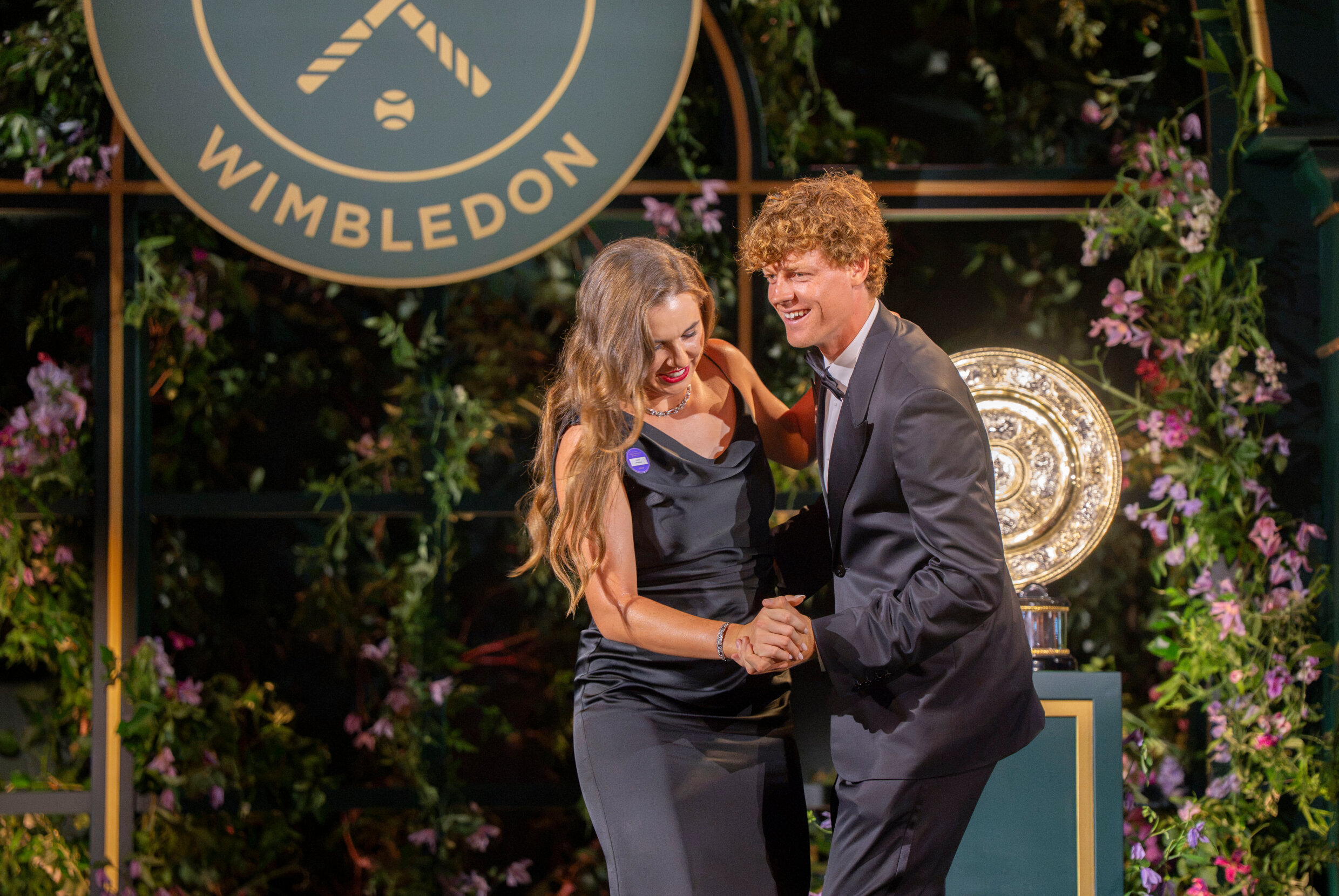
The evening was highlighted by a lighthearted moment on the dance floor, where singles champions Linda Noskova and Jannik Sinner shared a dance to Justin Timberlake’s “Can’t Stop the Feeling!” Dressed in classic black evening attire, the pair provided a relaxed contrast to the high-stakes competition of the preceding days and the intense media and commercial scrutiny that now accompanies Grand Slam winners.
A Milestone for Czech Tennis
For Linda Noskova, Sunday marked her first official day as a member of the All England Club, an invitation-only status that historically signals a player’s arrival among the sport’s elite. Her entry follows a landmark achievement in the women’s singles draw, where she secured a dramatic three-set victory over Karolina Muchova. This encounter stood as the first all-Czech singles final in Grand Slam history, signaling a peak in the nation’s current influence on the women’s game and reinforcing the long-term investment of the Czech federation in structured junior development.
Noskova’s transition from the grass courts to the gala was marked by a series of wardrobe changes coordinated by Elisabeth Piner of Wimbledon’s pop-up atelier. After posing with the Venus Rosewater Dish on Centre Court in an Alice+Olivia corset midi shirt dress, she attended the ball in a black gown from Savile Row’s Knatchbull, maintaining her signature look with a silver septum piercing. The carefully choreographed appearances underscored how modern champions must navigate not only performance expectations but also the ceremonial and commercial obligations built into the Wimbledon fortnight.
Doubles Redemption and National Records
The women’s doubles champions, Guo Hanyu and Kristina Mladenovic, also featured prominently at the event, attending in striking shades of blue. For Mladenovic, the victory served as a long-awaited redemption, securing a title that had eluded her since 2014 and restoring her place among the most successful doubles specialists of her generation.
The win also carried significant weight for Chinese tennis, as Guo Hanyu became only the second Chinese champion in the history of the women’s doubles event at Wimbledon. In a country where tennis now sits within broader state-backed high-performance programs, her success will likely feed into future funding and talent-identification decisions. Taken together, these results underscore the growing global parity in doubles play, where experienced veterans and emerging international stars are increasingly sharing the podium as federations respond to Wimbledon’s status as one of the four cornerstone events of the professional calendar.
Rising Talent in the Junior Ranks
The event also showcased the next generation of stars, a key constituency for both the All England Club and national federations seeking to align youth pathways with the professional game. Anna Pushkareva, the girls’ singles champion, attended after winning the longest girls’ singles final in the tournament’s history. The 17-year-old expressed her initial uncertainty regarding the ball’s formal dress code in an interview with the International Tennis Federation, noting that she had primarily learned about the tradition through social media rather than official briefings.
Pushkareva spent the evening networking with established stars, including a selfie with the two-time men’s champion Jannik Sinner. She also posed with Jordan Lee of the United States, the boys’ singles winner, highlighting the cross-generational community that the champions’ ball fosters within the sport. For tournament organizers and governing bodies alike, those informal interactions are increasingly seen as part of the soft infrastructure that helps young champions transition from junior success to the demands – competitive, commercial and regulatory – of the senior tour.
Related reading
