
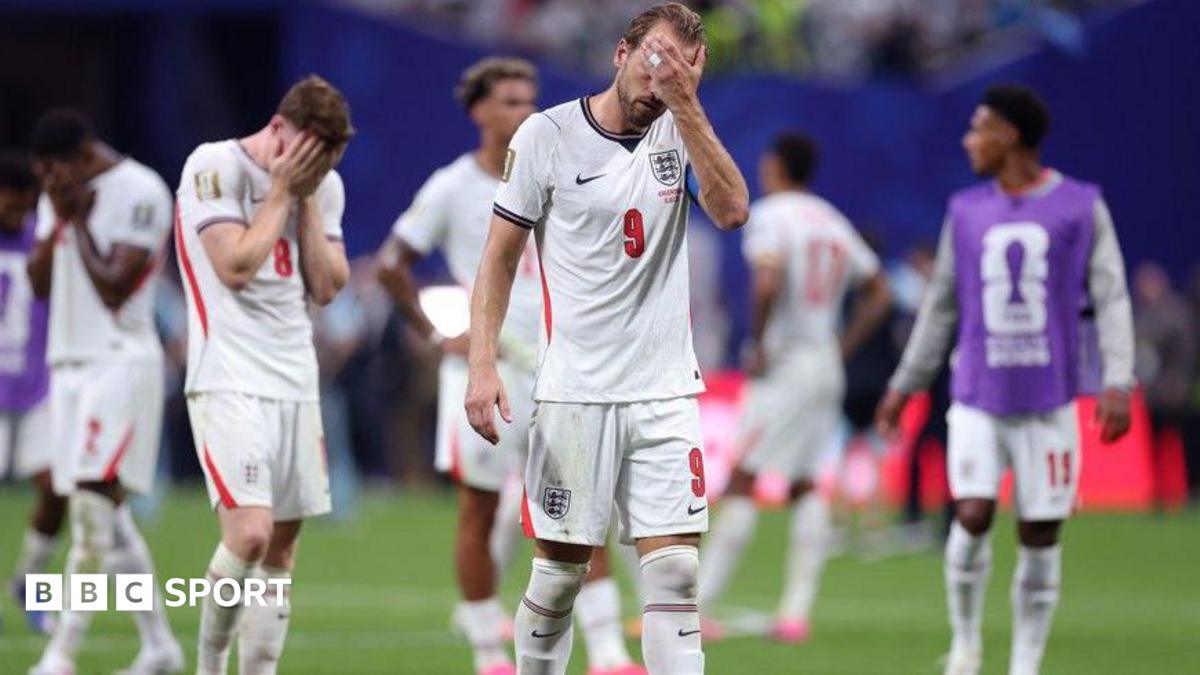
Tactical Retreat: Defensive Shift Costs England World Cup Semi-Final
England’s journey toward a World Cup title ended in disappointment on Wednesday, as a tactical pivot by manager Thomas Tuchel saw a narrow lead evaporate against Argentina. Despite a tournament defined by resilience and late turnarounds, the Three Lions were unable to withstand the pressure of a late Argentinian surge, raising serious questions about the team’s approach to closing out major games and, by extension, the decision-making culture around the national side.
England entered the semi-final having demonstrated significant character throughout the competition. The squad had successfully navigated high-pressure scenarios, coming from behind to secure victories over DR Congo in the round of 32 and Norway in the quarter-finals, following a controlled win against Mexico in the last 16. Those performances had been heralded by the Football Association as evidence that long-term investment in elite coaching pathways and sports psychology was finally paying off.
The match appeared to be swinging decisively in England’s favor when Gordon scored ten minutes into the second half, giving the Three Lions a 1-0 lead and briefly vindicating Tuchel’s selection choices. However, the momentum shifted as England retreated into a defensive shell, surrendering the initiative to an Argentina side led by Lionel Messi and stacked with attacking options. Instead of pressing for a second goal, England ceded territory and possession, inviting precisely the kind of sustained pressure they had vowed to avoid in this World Cup cycle, governed by the competition regulations of the FIFA World Cup.
### Tactical Timeline and Substitutions
The point of contention for analysts and fans alike was the sequence of defensive reinforcements introduced by Tuchel while England held the lead, a series of choices that transformed a proactive game plan into reactive damage limitation:
- 72nd minute: Ezri Konsa replaced Gordon, shifting the formation to a back five and leaving England with reduced outlets in transition.
- 82nd minute: Further defensive depth was added with the introduction of Burn and O’Reilly, effectively conceding midfield control as Argentina pushed higher.
- Added time: Marcus Rashford and Ollie Toney were brought on as forwards, though the move arrived too late to re-establish an attacking threat or disrupt Argentina’s rhythm.
Each substitution, viewed in isolation, could be framed as pragmatic game management. Taken together, they signalled a clear shift in intent-from seeking to kill the game with a second goal to simply trying to survive the remaining minutes. That message was not lost on Argentina, who began to commit more players forward, confident that England no longer posed a serious counter-attacking threat.
### Analysis of the Coaching Collapse
The decision to prioritize defense over a second goal has been labeled a “coaching catastrophe” by observers. The structural change allowed Argentina to establish a rhythmic passing flow, freeing Lionel Messi to operate in the pocket between England’s midfield and back line, and repeatedly drawing the reconfigured defense out of shape.
Former England captain Alan Shearer noted that while opponents like Norway or Mexico may have lacked the clinical edge to punish a deep defensive block, Argentina possessed the technical quality and tournament pedigree to exploit even half-chances. Micah Richards echoed this sentiment, arguing that dropping so deep not only conceded territory but also handed the psychological initiative to the opposition, giving them the confidence and control necessary to mount a comeback.
The failure to maintain offensive pressure reflects a recurring psychological hurdle for the national team: the instinct to protect what they have rather than to extend a lead. Joe Hart observed that the tendency to “shut up shop” after taking a lead-a tactic often criticized during Gareth Southgate’s tenure-remained evident despite the change in leadership, raising uncomfortable questions about whether the issue lies solely with the manager or with a deeper institutional conservatism within England’s football set-up.
For the Football Association, which oversees the appointment, remit, and review of the national team coach under its own governance framework and in line with broader football governance rules, this match will form a critical case study. The pattern of retreat under pressure touches not just on tactics, but on how risk appetite, performance metrics, and accountability are defined at the very top of the English game.
### Historical Context and Future Implications
The loss extends a difficult history between the two nations, evoking memories of the 1986 “Hand of God” incident and the bruising defeat in 1998. While those matches were marked by external controversy and officiating flashpoints, Wednesday’s exit is being viewed as a self-inflicted wound-one in which England controlled the game state, only to relinquish it through choice rather than circumstance.
This result carries significant weight for the future of the World Cup cycle. The decision-making process during the final 30 minutes of the semi-final has placed Thomas Tuchel under intense scrutiny, not only from supporters but also from the administrators who will decide whether his tenure embodies the more progressive, front-foot identity the FA has publicly championed. When a manager opts for negativity in a high-stakes knockout game, it creates a crisis of confidence regarding their ability to lead the team forward in future tournaments where marginal, judgment-based decisions have systemic consequences-on youth development priorities, on coaching philosophy, and on how England measures success beyond simply reaching the latter stages.
The loss not only ends England’s hopes for the trophy but also leaves a lingering question about whether the squad-and the institutions that shape it-can ever move past their historical tendency to retreat when victory is within reach. The coming weeks will test not just Tuchel’s position, but the willingness of England’s football authorities to confront the conservative instincts that once again turned a winning platform into a painful exit.
Worth a look
