
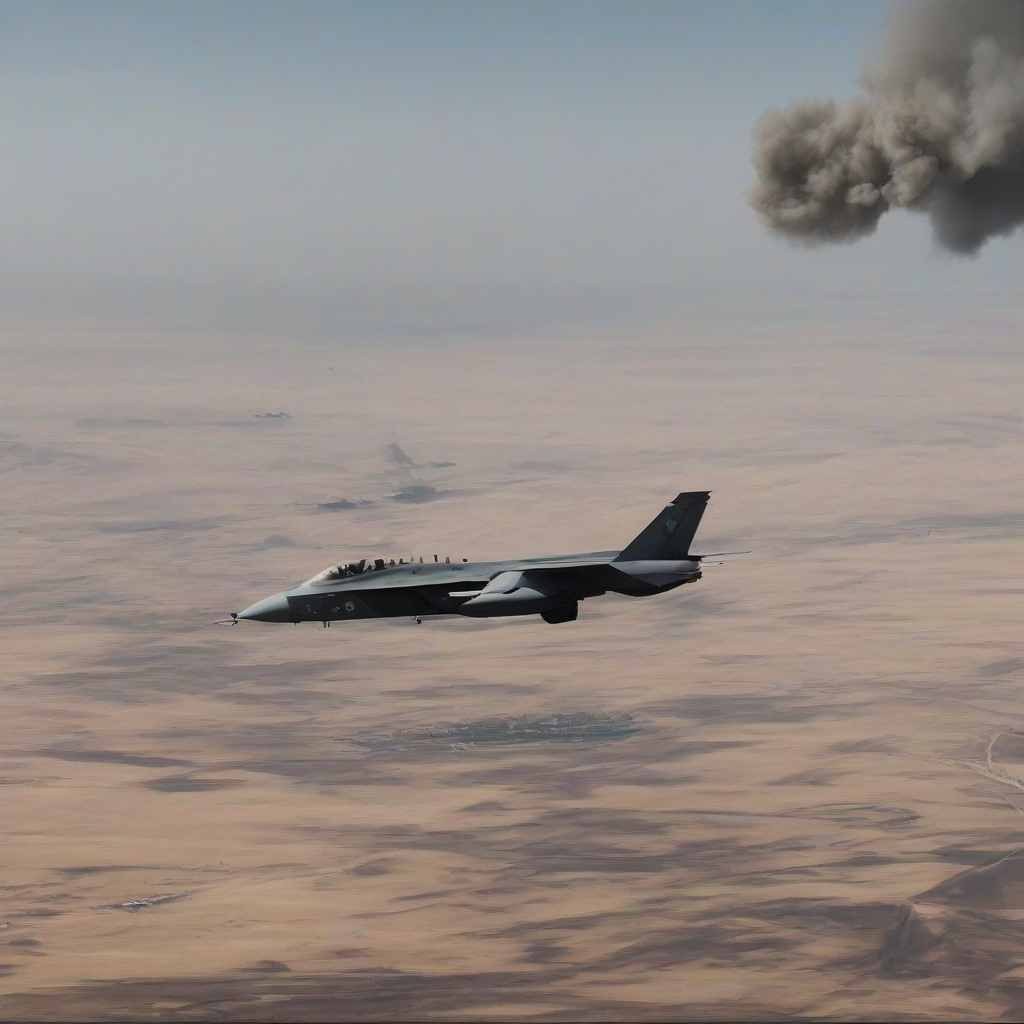
WASHINGTON – US Central Command (CENTCOM) has conducted a series of precision strikes across southern Iran, targeting cruise-missile infrastructure and coastal defense systems.
The operations focused heavily on the Strait of Hormuz, including rare daylight attacks that struck strategic military sites. These actions follow a wave of retaliatory missile strikes launched by Iran’s Islamic Revolutionary Guard Corps (IRGC) against US military installations in the region.
The engagement marks a significant escalation in direct military confrontation between the two powers, focusing on the maritime chokepoints of the Persian Gulf and the Gulf of Oman.
Targeted Infrastructure in Southern Iran
US strikes targeted a variety of military assets designed to monitor and control maritime traffic in the Strait of Hormuz. According to CENTCOM, operations on Greater Tunb Island focused on:
- Coastal defense systems
- Cruise-missile storage facilities
- Missile launch sites
Iranian semi-official media and state agencies reported additional impacts across multiple provinces. Reports from the Mehr news agency and Tasnim news agency indicated strikes in the following locations:
- Hengam Island: A projectile hit a location within the strait during daylight operations.
- Ahvaz: Four distinct locations were hit inland from the northern Persian Gulf.
- Bandar Abbas: Strikes hit the city, which serves as Iran’s principal port on the Strait of Hormuz.
- Konarak: Explosions were reported in this city at the southern end of the Gulf of Oman.
- Sirik and Qeshm: Projectiles hit areas near these southern coastal regions.
The Mehr news agency stated that no casualties were reported from the strikes in Ahvaz and Bandar Abbas. Casualty figures for other locations could not be independently verified.
The Pentagon has not publicly detailed battle-damage assessments from the latest strikes, but US officials have framed similar operations as falling under existing authorities for the use of force granted to the executive branch by Congress, including the long-standing authorizations for military action in the wider region.
IRGC Retaliatory Operations
The US strikes followed an offensive by the Islamic Revolutionary Guard Corps. The IRGC stated it launched missile strikes targeting US military facilities in Kuwait, Jordan, and Bahrain.
State media specified that the attacks in Bahrain targeted logistics, fuel, and military equipment facilities. These sites are utilized by the US Navy’s Fifth Fleet, the naval component of US Naval Forces Central Command.
The Fifth Fleet is headquartered in Bahrain and is responsible for maintaining maritime security and ensuring the free flow of commerce through the Strait of Hormuz and the Bab el-Mandeb strait. Any sustained disruption in these waterways would carry significant implications for global energy markets and could prompt additional diplomatic engagement by Gulf states and major oil-importing countries.
Strategic Role of the IRGC and Fifth Fleet
The IRGC operates as an elite force separate from Iran’s regular army, with a specific mandate for asymmetric warfare and the protection of the Islamic Republic’s ideological system. Its naval wing is primary in operations involving the seizure of vessels and the deployment of fast-attack craft in the Persian Gulf.
In contrast, the US Navy’s Fifth Fleet manages a vast area of operations spanning the Arabian Sea and the Persian Gulf. Its mission focuses on deterrence and the protection of global energy corridors, as the Strait of Hormuz remains one of the world’s most critical oil transit points. The region falls under the responsibility of US Central Command’s unified combatant command structure, which coordinates joint operations across land, air, maritime, cyberspace, and space domains.
Both the United States and Iran regularly cite international law and freedom-of-navigation principles in public justifications of their actions in and around the Strait of Hormuz, a waterway whose status is governed in part by the UN Convention on the Law of the Sea, even though Washington is not a party to the treaty.
US Central Command continues to monitor the regional security situation and the status of the targeted Iranian installations, as policymakers in Washington and regional capitals assess how far the latest exchange of strikes will reshape rules of engagement and crisis-management channels in the Gulf.
Worth a look
