
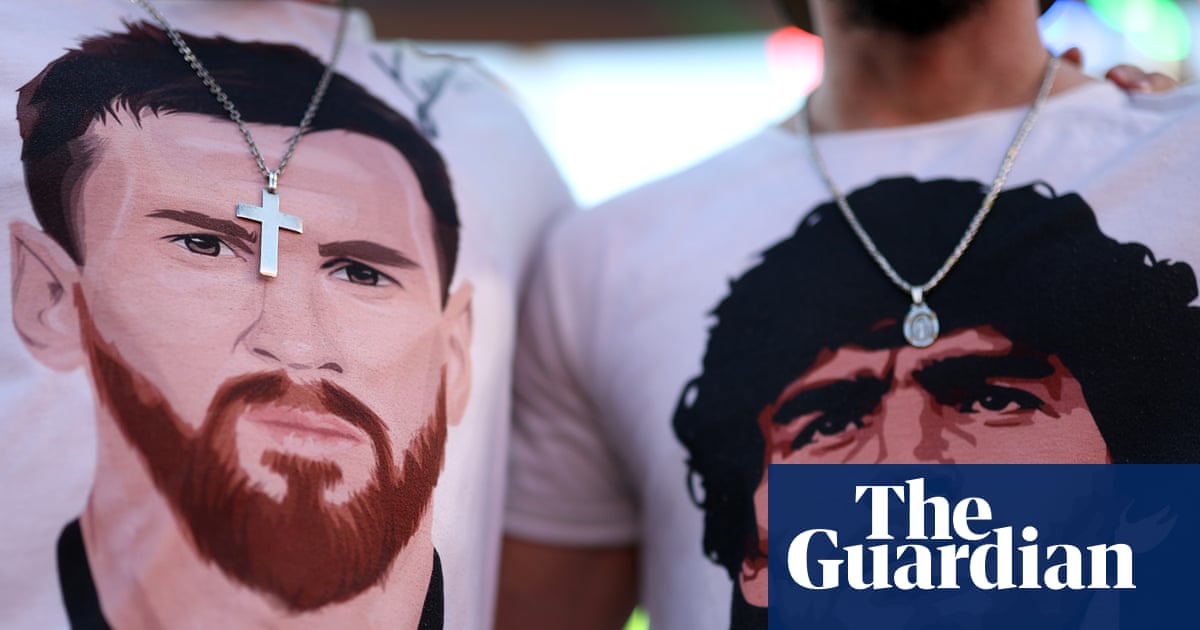
Beyond the Pitch: Argentina and England Set for Semi-Final Clash Steeped in History
When the Argentina national team entered the dressing room following their 3-1 victory over Switzerland, the celebration was defined by more than just a trip to the semi-finals. The squad, led by Lionel Messi, chanted “The Fourth Star,” the country’s unofficial World Cup anthem, specifically invoking the phrase, “For Malvinas, for Diego.”
The lyrics, which have permeated the tournament in Argentina, have acquired a heightened significance now that the FIFA World Cup semi-final has confirmed a repeat matchup between Argentina and England on Wednesday.
For the Argentine side, the fixture is an encounter with ghosts. Nearly four decades have passed since Diego Maradona’s “Hand of God” goal and his subsequent solo effort secured a victory over England in 1986-a match played in the shadow of the 1982 Falklands War. The islands, known in Argentina as the Malvinas, remain the subject of a sovereignty dispute between Buenos Aires and London under the framework of the United Nations Charter and decolonisation resolutions, and that unresolved argument continues to echo into the stadiums of 2026.
The Intersection of Sport and National Memory
The emotional weight of the fixture is rooted in a desire for historical vindication as much as sporting success. Pablo “Palmito” Quintana, the musician who authored “The Fourth Star,” notes that the song reflects a population that carries lingering pain and a refusal to forget its history, particularly the losses of conscripts and sailors in 1982.
Aldo Leiva, a veteran of the Falklands/Malvinas war and Peronist congressman, describes the 1986 victory as a “balm” for those who lived through the conflict. Leiva argues that while war lacks the structure of rules and referees, football provides a venue where Argentines felt they could find a form of symbolic justice, particularly regarding the sinking of the cruiser General Belgrano, which resulted in 323 deaths and remains contested in Argentine political discourse.
Journalist Víctor Hugo Morales, who provided the iconic commentary for the 1986 match, suggests that while players often insist these are “just matches,” the memory of the war remains central to the Argentine psyche. He notes that since 1986, the rivalry has carried a political and emotional weight that differentiates it from almost any other international fixture, binding together questions of territory, dignity and recognition.
Symbolism, Media Narratives and the Global Stage
The lead-up to Wednesday’s semi-final has seen Argentine media lean heavily into nationalist symbolism and historical reference. The television channel Crónica has utilized provocative framing for the match, including:
- “Argentina vs. the English ‘pirates’”
- “Messi, with an M for Malvinas”
- “Diego, give us a hand”
The sports daily Olé has highlighted a perceived “good omen,” noting that Argentina will compete in blue kits, mirroring the colours worn during the 1986 triumph in Mexico City. Tensions have further escalated on the ground; reports indicate that the club Godoy Cruz displayed banners stolen from English fans during the 2014 World Cup as a deliberate provocation, underscoring how fan culture can test the limits of FIFA’s disciplinary rules on political and inflammatory messaging inside stadiums.
For tournament organisers and national associations, such symbolism is not merely atmospheric. It shapes how security services plan for potential flashpoints between supporters, how broadcasters calibrate language for a global audience, and how both governments anticipate the diplomatic aftershocks of incidents that begin in the stands but quickly spill into official statements and parliamentary debate.
Political Stakes and International Reaction
The match arrives during a period of political friction. Argentina’s President Javier Milei has frequently praised Margaret Thatcher, the British prime minister during the 1982 war, putting him at odds with long-standing strands of Argentine political memory. According to Morales, an Argentine victory could be interpreted by some as a popular rebuke of Milei’s administration, even if the government itself insists on keeping football and foreign policy formally separate.
In the UK, the fixture has brought the Falklands conflict back into the headlines. The Daily Telegraph has highlighted comments from Argentine Foreign Minister Pablo Quirno, who described Falkland Islanders as an “artificially implanted” population, language that cuts directly against the principle of self-determination that London invokes in its formal position on the islands. Additionally, former England striker Gary Lineker faced criticism from media personality Mark Dolan after mentioning the name “Malvinas” on his podcast, a reminder that vocabulary alone can signal alignment with one or another side of a sovereignty claim.
Diplomats on both sides, already engaged in cautious exchanges over the South Atlantic, are watching closely. Any gesture on the pitch-a flag in the crowd, a slogan on a banner, a charged post-match comment-has the potential to trigger formal complaints or carefully worded communiqués, even as both foreign ministries insist the dispute should remain within established channels such as the UN Special Committee on Decolonization and bilateral talks.
Despite the surrounding noise, the Argentine players have attempted to maintain professional focus. Midfielder Leandro Paredes stated that while the players understand the national significance of the game, their primary objective remains the football, echoing the tournament’s official commitment to keeping political disputes outside the 90 minutes.
Semi-Final Match Fact Sheet
- Matchup: Argentina vs. England
- Stage: World Cup Semi-Final
- Date: Wednesday
- Venue Context: Played under the jurisdiction of FIFA’s Articles on political neutrality and anti-discrimination, with both associations subject to potential sanctions for supporter behaviour or on-field messaging.
- Historical Context: 1982 Falklands/Malvinas War; 1986 World Cup quarter-final in Mexico, featuring Maradona’s “Hand of God” and “Goal of the Century”.
- Argentina’s Path: Recent 3-1 victory over Switzerland; 3-2 victory over Egypt.
- Rams’ Nacua Faces Uncertain Week 7 Status Amid Injury Concerns and Impact on Fantasy Football
- Winnipeg Jets Navigate Season Without Hellebuyck as Heritage Classic Approaches
- Yseult to Make History as First French Female Artist to Perform at NFL Halftime Show at Stade de France (archysport.com)
- Women's Rugby League World Cup: England crush debutants Wales in Perth (globallypulse.com)
