
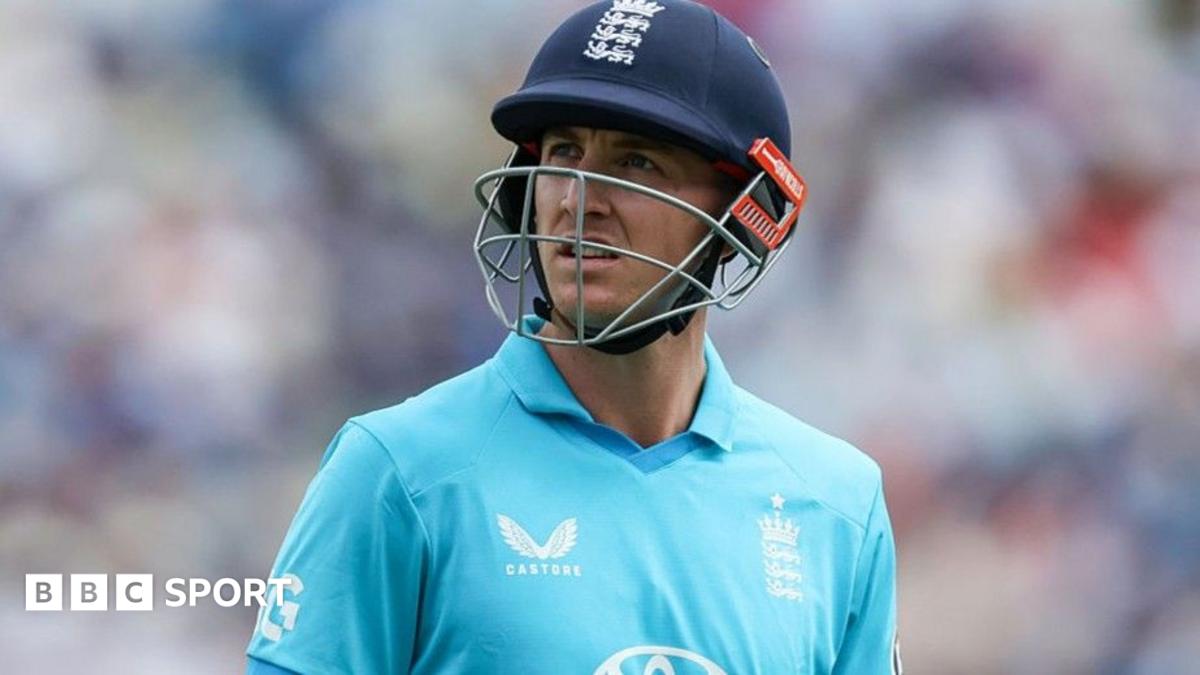
India Claim Six-Wicket Victory at Edgbaston to Take ODI Series Lead
India have taken a 1-0 lead in the three-match one-day international series after a comprehensive six-wicket victory over England at Edgbaston. The result marks a significant shift in momentum following England’s dominant 4-0 sweep of the T20 series, highlighting the impact of a reinforced Indian squad featuring the return of core veterans and signalling an early test of both teams’ planning ahead of the next global 50-over cycle.
| Match Detail | Score / Result |
|---|---|
| England | 258 (47.5 overs) |
| India | 262-4 (45.2 overs) |
| Result | India won by six wickets |
| Series Status | India lead 1-0 (3-match series) |
Coaching Transitions and Squad Depth
The defeat comes at a period of instability for the England setup. The match served as the first outing under Brendon McCullum’s reduced role as white-ball coach, occurring just two days after his departure as the Test coach. The loss underscores the ongoing challenges England faces in stabilizing their one-day format and in aligning selection, workload management, and leadership structures across formats.
While England found success in the shorter T20 format, the introduction of elite talent into the Indian side-including Rohit Sharma, Virat Kohli, Jasprit Bumrah, and Shubman Gill-altered the competitive dynamic. The depth of the Indian roster, underpinned by a centrally contracted core and strong domestic pathways, allowed them to dictate the pace of the game both with the ball and the bat and to absorb pressure moments that exposed England’s thinner bench strength.
England’s Volatile First Innings
England’s total of 258 was ultimately a rescue act rather than a declaration of intent. The innings was nearly derailed by a severe collapse, at one point losing three wickets for just three runs in six deliveries, leaving the hosts reeling at 107-6 and forcing a departure from their preferred high-risk, high-reward batting template.
A critical 111-run partnership between Joe Root and Liam Dawson prevented a premature finish. Dawson recorded 68, his highest score for England in any format, while Root anchored the innings with an unbeaten 76, marshalling the tail and stretching the game deep into the 48th over. However, a final stumble saw England lose their last four wickets for 30 runs, leaving them with a total that failed to exert sufficient pressure on the visiting side and raising questions over middle-order role clarity and strike-rotation against spin.
India’s Disciplined Chase
India’s victory was built on a strong start and clinical finishing that rarely allowed the required run rate to climb beyond control. Captain Shubman Gill led the charge with a serene 80 off 75 balls, combining orthodox strokeplay with selective aggression against pace. Although Gill was forced to retire due to cramp-which he later confirmed was not a hamstring injury-he is expected to be available for the second ODI in Cardiff, limiting the disruption to India’s top-order planning.
England briefly threatened a comeback when India slipped from 149-2 to 160-4, exploiting a short period of indecision after Gill’s departure. However, the lower order proved decisive. Axar Patel, who had already dominated with the ball taking 4-62, contributed an unbeaten 57. He was supported by Washington Sundar, who finished on 52 not out to secure the win. Their unbroken stand demonstrated India’s modern ODI template: deep batting, multiple spin options and left-right combinations designed to navigate fielding restrictions and match-ups mandated under the International Cricket Council’s ODI playing conditions.
Series Implications
With a 1-0 lead, India are now in a commanding position to secure the series, needing just one more win from the remaining two fixtures. For England, the result places immediate pressure on their white-ball strategy as they seek to avoid a home series defeat and justify recent selection and coaching calls in front of a domestic audience used to sustained success since their 2019 World Cup triumph.
The performance of the Indian all-rounders, specifically Axar Patel’s dual contribution, highlights a tactical advantage in squad balance that England struggled to match within the standard 50-over framework. For both boards, the series has significance beyond the scoreline: it feeds into central contracting decisions, investment in spin-bowling depth, and scheduling choices that must reconcile domestic leagues with international commitments governed by the men’s Future Tours Programme overseen by the ICC. A second successive defeat in Cardiff would not only hand India the series but intensify scrutiny on England’s longer-term ODI pathway and the institutional choices underpinning it.
Worth a look
- Irish EBF Median Sires Series Maiden Race Highlights Emerging Talent at Dundalk
- F1 Season Finale in Middle East Faces Uncertainty Amid Regional Conflict and Divergent Views
- Milwaukee's Roof, Not Tropicana's, Decides if This Series Is All-Indoor (daybreakwire.com)
- Brewers vs. Rays World Series Game 1 Ticket Prices Drop by $400 (archyde.com)
