
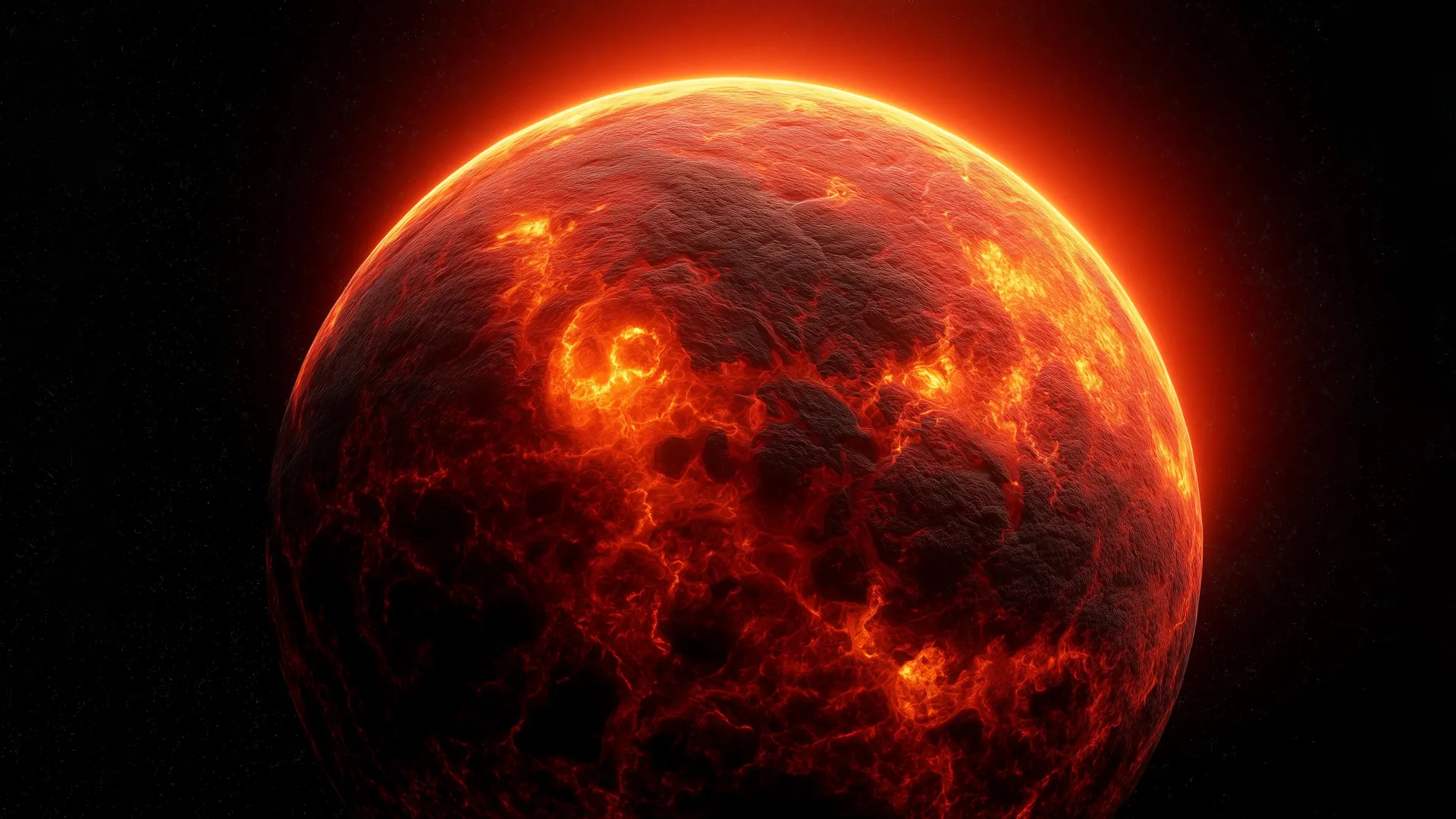
The detection of a hydrogen-rich atmosphere on 55 Cancri e marks a significant leap in exoplanetary science, leveraging the high-precision infrared capabilities of the James Webb Space Telescope (JWST). By analyzing the light filtered through the atmosphere of this super-Earth, situated 41 light years away, astronomers are now able to probe the chemical composition of worlds that were previously impenetrable to observation.
Infrared Spectroscopy and Atmospheric Analysis
Identifying the chemical makeup of a planet orbiting a distant star requires extreme sensitivity to infrared wavelengths. The JWST utilizes emission spectroscopy during planetary eclipses to isolate the light emitted by the planet from the overwhelming glare of its host star. This process allows for the identification of specific molecular signatures based on how different gases absorb and emit heat, turning tiny variations in infrared light into a chemical fingerprint of the atmosphere.
Initial theoretical models for rocky exoplanets typically predicted atmospheres dominated by carbon monoxide (CO) and carbon dioxide (CO2). However, the data from five separate eclipse observations reveals a more complex chemistry, characterized by abundant carbon monoxide and surprisingly high concentrations of hydrogen. That combination is inconsistent with a thin, purely rock-vapor atmosphere and instead points to a substantial, possibly long-lived envelope above the molten surface.
These atmospheric fluctuations suggest a dynamic system where the planet’s interior is actively interacting with its surface. The variations observed across the five eclipses point toward volcanic outgassing or the formation of transient clouds composed of vaporized minerals. These clouds may act as a temporary thermal shield, cooling the surface before the continued release of internal gases disperses them, reinforcing the view of 55 Cancri e as a continuously resurfacing world rather than a static ball of lava.
Geochemical Redox States and Magma Oceans
The presence of hydrogen provides a direct window into the planet’s internal geochemistry, specifically its redox state-the chemical balance between oxygen and hydrogen or iron. A hydrogen-rich atmosphere indicates a “reduced” interior, meaning there is a lower concentration of oxygen relative to other elements and potentially different mineral phases than those common in Earth’s mantle.
“Since secondary atmospheres of rocky planets are set by the composition of the interior and subsequent outgassing, the composition of their atmospheres is directly linked to their interior redox states. The preference for hydrogen-rich models, together with the steep inversions they produce, therefore suggests an interior with relatively low oxygen fugacity, consistent with outgassing from a reduced magma ocean.”
This relationship between the atmosphere and the core allows scientists to use the JWST instrumentation as a remote geological probe, effectively mapping the interior of a world without the need for physical samples. For space agencies and national science funders, this kind of result is precisely what underpins long-term investment in flagship observatories: it turns distant exoplanets into accessible laboratories for testing models of how rocky worlds form, evolve, and-on more temperate planets-might sustain life.
Comparative Planetary Thermal Dynamics
While 55 Cancri e is often categorized as a lava world, the mechanism driving its volatility differs fundamentally from volcanic bodies within our own solar system. The heat fueling the surface of 55 Cancri e is exogenous, derived from its extreme proximity to its parent star in a system where the planet orbits roughly 65 times closer to its star than Earth does to the Sun, leading to a dayside hot enough to sustain an ocean of molten rock.
| Feature | 55 Cancri e | Io (Jupiter Moon) |
|---|---|---|
| Primary Heat Source | Stellar Radiation (Extreme Proximity) | Tidal Heating (Gravitational Stress) |
| Atmospheric Profile | Hydrogen-Rich / Carbon Monoxide | Thin Sulfur Dioxide |
| Orbital Period | ~0.7 Days | ~1.77 Days |
| Thermal Distribution | Concentrated on Daylit Side | Global Volcanic Activity |
The comparison with Io underscores that similar surface expressions-lava lakes, explosive volcanism, transient atmospheres-can be driven by very different energy budgets. For planetary defense and climate-modeling communities on Earth, these extreme cases serve as boundary conditions that help test the robustness of our models across a much wider range of temperatures and compositions than the solar system alone provides.
Technical Specifications of Extreme Rocky Worlds
The discovery of 55 Cancri e has paved the way for the identification of other “lava planets” that challenge traditional models of planetary habitability and evolution. These worlds are typically tidally locked, meaning one side permanently faces the star, creating a stark dichotomy between a molten day-side and a potentially cooler night-side. Their short orbital periods also make them prime targets for repeated observations within a single mission lifetime.
- 55 Cancri e: 1.88 Earth radii, 8 Earth masses, 0.7-day orbit.
- K2-141 b: Orbital period of approximately 6.7 hours.
- TOI-561 b: Orbital period of approximately 10.5 hours.
- CoRoT-7 b: Orbital period of approximately 20.4 hours.
- L 98-59 d: Orbital period of 7.5 days; hypothesized global magma ocean.
- HD 63433 d: Orbital period of 4.2 days.
The ability to detect these atmospheres depends heavily on the stable observing environment near the Sun-Earth L2 Lagrange point, where JWST operates under an international framework shaped by national space policies and the scientific priorities articulated through bodies such as the NASA Science Mission Directorate. That combination of governance and engineering keeps the observatory thermally isolated from the heat of the Earth and Moon, maintaining the signal-to-noise ratio required to detect trace amounts of hydrogen and carbon monoxide across the vacuum of space.
As governments and space agencies debate the next generation of large telescopes-particularly missions explicitly designed to search for habitable, Earth-sized planets-55 Cancri e is emerging as a proof-of-concept: a hostile, lava-covered world that nonetheless demonstrates our capacity to read the atmospheres and interior chemistry of distant rocky planets. The techniques refined on this super-heated super-Earth will inform how regulators, funders, and mission planners prioritize future observatories aimed at answering a more familiar question: which of those rocky worlds might one day matter for life and, ultimately, for policy here at home.
Worth a look
