
DUBLIN –
Ireland is on course to miss the residential heat decarbonisation targets set out in the government’s Climate Action Plan, according to a new analysis by the Economic and Social Research Institute (ESRI), leaving large financing gaps for homeowners, shortfalls in heat‑pump deployment, and limited progress on district heating that together will constrain the market for low‑carbon heating and retrofit services through 2030.
The ESRI finds the programme is faltering on three headline goals-deep energy retrofits, heat‑pump roll‑out and district heating capacity-and that measured energy savings from efficiency upgrades are substantially below modelled expectations because householders often use higher comfort levels after upgrades. These dynamics compress the short‑term market opportunity for energy‑savings products while increasing the policy and financing burden on public authorities and regulated energy suppliers, and raise questions about whether Ireland can remain on track to meet binding EU‑wide climate and energy targets under the Fit for 55 package.
Targets, current progress and projected shortfalls
The Climate Action Plan-Ireland’s statutory roadmap for cutting greenhouse‑gas emissions-sets three principal targets for the residential sector by 2030. ESRI’s findings on current performance and projected outcomes are:
| Policy objective | 2030 ambition | Progress / ESRI projection |
|---|---|---|
| Deep energy efficiency upgrades to existing homes | 500,000 homes reaching BER B2 or higher by 2030 | 58,000 homes retrofitted by end‑2024 (11.5% of target); even with recent acceleration, ESRI projects completion one‑third short of target by 2030. |
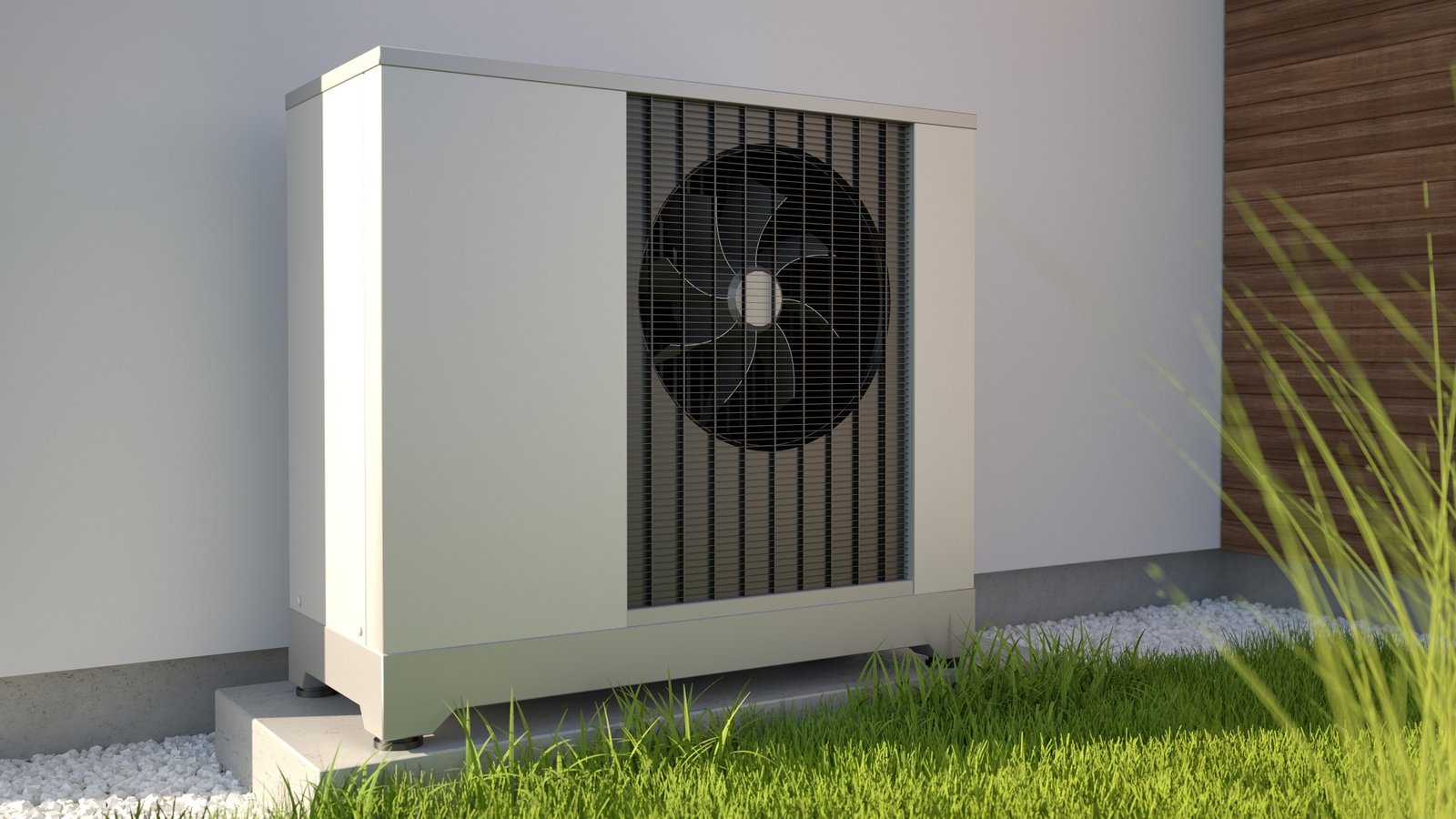
| Heat‑pump installations in existing dwellings | 400,000 installations by 2030 | Barely over 14,000 installations by end‑2024 (3.5%); ESRI projects about 51,400 by 2030 (under 13% of target) at current rates. |
| District heating supply to residential heat | 2.7 TWh/year of residential heat via networks (equivalent to ~187,000-314,000 homes) | Estimates point to roughly 60,000 homes connected by 2030 (20-32% of the target range). |
Under Ireland’s legally binding carbon budgets and sectoral emissions ceilings, the residential sector is expected to deliver a substantial share of the State’s overall 51% emissions‑reduction target for 2030, as set out in the Climate Action and Low Carbon Development (Amendment) Act. Failure to meet retrofit and low‑carbon heat milestones therefore has direct implications for compliance with those national limits as well as EU‑level obligations.
The State agency the Sustainable Energy Authority of Ireland (SEAI) estimates an average installation pace of about 75,000 deep retrofits per year is required to meet the retrofit target; the ESRI notes the 2024 delivery pace is roughly one‑third of that figure. The SEAI estimate is being referenced here as the benchmark driving required industry scale‑up.
Household economics and demand constraints
ESRI’s analysis quantifies substantial out‑of‑pocket costs for householders after State grants: median net costs for a deep retrofit range from approximately €16,378 for an apartment to about €42,900 for a detached house. Funded through a Government‑backed five‑year retrofit loan, ESRI gives illustrative monthly repayments of €294.05 and €770.06 respectively-figures that place decarbonisation squarely on household balance sheets just as higher interest rates and cost‑of‑living pressures squeeze disposable incomes.
The institute also documents uptake limits rooted in homeowner preferences and attitudes to disruption: more than 40% of homeowners are highly unlikely to undertake a deep retrofit or switch to heat pumps-21% say they have already completed the renovations they are prepared to undertake, and a further 23% are content with their current homes. Those demand constraints, combined with high median retrofit bills and the practical hurdles of construction work in occupied homes, compress the addressable market for retrofit contractors, heat‑pump suppliers and installers and will shape bidding behaviour in public grant programmes.
For the Department of the Environment, Climate and Communications and the Department of Housing, that points to a policy tension: even generous grant rates may not be sufficient on their own to shift a large cohort of reluctant homeowners, forcing a wider debate on regulation of building standards at point of sale or major renovation, and on how far the State is prepared to go in using planning, taxation or minimum‑energy‑performance rules to unlock additional demand.
Measured savings and implications for programme design
A central technical finding is that measured energy consumption shows very little variation across dwellings with different Building Energy Ratings (BER): average actual energy use can be similar for an A‑rated dwelling and a G‑rated dwelling. ESRI attributes this in part to householders increasing indoor comfort following upgrades-turning up thermostats or heating more rooms-which reduces the net carbon savings delivered by efficiency measures relative to theoretical model outputs.
This divergence between modelled and realised savings implies that policymakers and regulated utilities cannot assume linear emissions reductions from retrofit counts alone; measurement and verification frameworks, and the way grant criteria are structured, will need to reflect delivered savings rather than proxy metrics such as BER improvements alone. The gap also affects the carbon accounting that underpins Ireland’s progress toward renewable and emissions targets for heat, potentially forcing regulators and the Department of Public Expenditure to reassess the value‑for‑money case for existing grant schemes.
For energy regulators, the findings reinforce the need for metered‑savings approaches in utility obligations and for more sophisticated data‑sharing between SEAI, distribution system operators and the Central Statistics Office so that the real‑world impact of public spending on retrofits can be monitored across the decade.
District heating and fuel choice as complementary measures
Progress on district heating is limited: ESRI points to a likely connection level of roughly 60,000 homes by 2030 against a policy ambition equivalent to between 187,000 and 314,000 homes. Scaling networks requires concentrated urban demand, capital‑intensive infrastructure and long lead times for planning, grid connection and heat‑source contracts-factors that constrain near‑term expansion of networked heat relative to distributed measures such as heat pumps.
Given the deployment shortfalls, ESRI suggests a broader technology and fuel mix may need to be included in the policy response, including lower‑carbon liquid or gaseous fuels as a transitional option for households unlikely to retrofit before 2030. Any such shift would have to be squared with EU‑level rules on counting renewable and low‑carbon fuels in heating targets, and with Ireland’s own long‑term aim of phasing out fossil heating systems in favour of high‑efficiency electrification and sustainable heat networks.
Institutional roles and market consequences
The ESRI work places clear implementation implications on three institutional actors:
- The State-required to reweight grant targeting, loan terms and programme design to raise feasible uptake among constrained homeowner cohorts, while ensuring schemes remain consistent with Ireland’s statutory carbon budgets.
- Regulated energy bodies and suppliers-facing a shortfall in low‑carbon heat uptake that will affect demand forecasts, network‑reinforcement plans and system adequacy assessments in both electricity and gas.
- Industry-retrofit contractors, heat‑pump manufacturers and district‑heating developers will confront an uneven pipeline and financing pressures unless public demand‑signal mechanisms, such as multi‑year grant commitments and public‑sector anchor loads for heat networks, change.
The report’s cost figures and uptake limits imply persistent demand for retrofit finance products and a constrained credit risk profile for short‑term Government‑backed loans. These elements will shape contractor cashflow, supply‑chain ordering for heat‑pump components and the timing of capital deployment by district‑heating developers, as well as how banks and non‑bank lenders assess green‑mortgage and retrofit‑loan portfolios.
Senior Research Officer at the ESRI, Dr Muireann Lynch, said: “We think that there might be something to be said for trying to target grants and incentives a bit better. We should also be looking at alternative and complementary fuels and technologies and considering whether they should be included in the mix.”
A Government spokesman said:
“Ireland will fall short of our renewable energy targets up to 2030.
These targets are based on the share of renewable energy in gross final energy consumption in the electricity, heat and transport sectors.
Further analysis of available ‘options’ is being undertaken, including paying a financial contribution to renewable energy projects in other EU member states in return for a ‘statistical allocation’ of the energy produced.”
That reference to so‑called “statistical transfers” under EU law signals that Dublin is actively weighing cross‑border compliance mechanisms-effectively paying other member states to overachieve on renewables-in parallel with domestic measures.
The ESRI findings will inform procurement timetables for retrofit supply chains, influence the sizing of loan facilities for household retrofit finance and bear directly on planning assumptions for district‑heating projects. They also inform regulatory considerations for how delivered emissions savings are counted in national inventories and in sectoral renewable shares, a key input into budget negotiations and future iterations of the Climate Action Plan.
Two immediate operational implications for market participants are evident: the need to scale installer capacity and the requirement for grant and loan products that materially lower the household balance‑sheet impact of deep retrofits. District‑heating projects will confront a more limited near‑term customer base than originally modelled, increasing reliance on public capital or aggregation mechanisms to bridge network economics. For background on district heating technology and deployment considerations, readers can consult international analysis on district heating networks.
The Cabinet has been presented with projections showing the State met a 16% baseline renewable share in 2024 but is projected to miss interim renewable targets for 2025 and 2027, with an overall 2030 ambition of a 43% renewable share in gross final energy consumption. The Government spokesman added that “the priority will still remain supporting domestic renewable generation” and that further analysis will assess the potential value and cost‑effectiveness of mechanisms including cross‑border statistical allocations as an option to manage shortfalls, setting up difficult political choices later this decade over whether to pay other EU countries for green energy or redouble efforts to close Ireland’s own retrofit gap.
Worth a look
