
BEIJING – China’s economy expanded by 4.3% in the second quarter, missing government targets and marking one of the lowest quarterly growth rates since the National Bureau of Statistics began reporting official GDP figures in the early 1990s.
The figure falls short of the 4.5% to 5% growth target set by Beijing. Aside from the final quarter of 2022, when the country maintained strict Covid-19 lockdowns, this represents the weakest performance in decades.
The growth shortfall indicates a widening structural imbalance. While outbound shipments surged, the domestic market has failed to generate the consumption and investment necessary to sustain growth without heavy reliance on external demand. For policymakers, it underscores the difficulty of shifting away from a model that has long prioritised investment and exports over household consumption.
Export dependency and the automotive divide
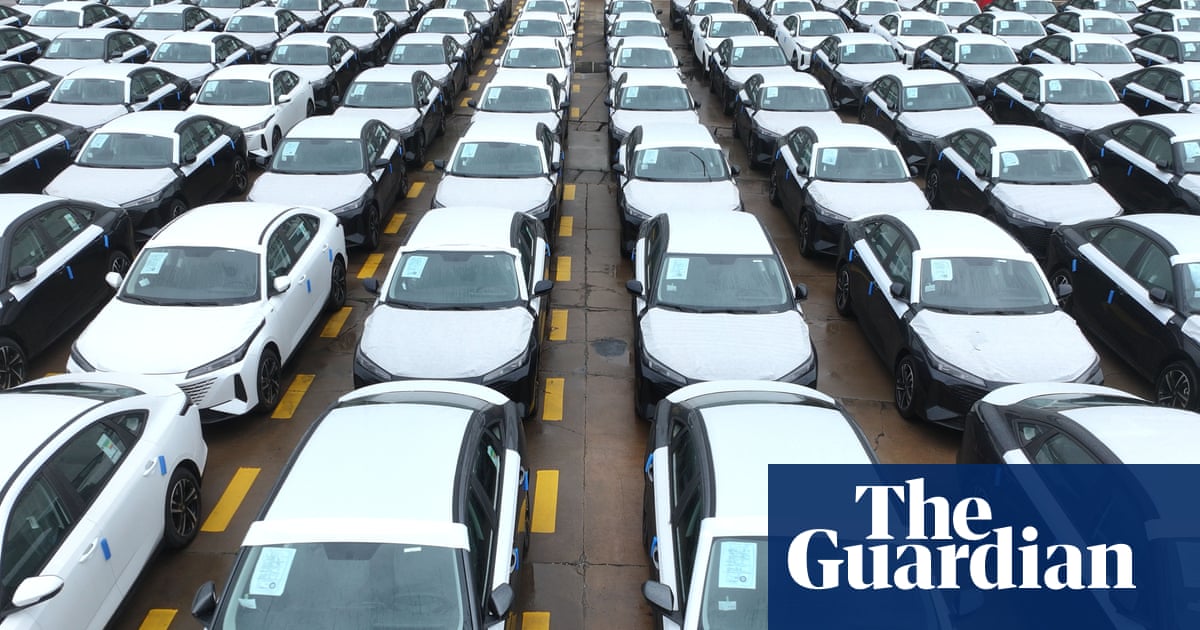
June customs data showed a sharp divergence between global and domestic performance. Outbound shipments increased by 27% in June, with monthly car exports exceeding 1m units for the first time, cementing China’s status as a leading automotive exporter.
However, this export success masks a severe contraction in internal demand. Domestic vehicle sales plummeted by more than 16% during the same period. While retail sales excluding vehicles grew by 3%, economists maintain that this level of consumption is insufficient to rebalance the economy toward the “internal circulation” that Beijing has pledged to prioritise.
Currently, exports account for approximately 20% of China’s gross domestic product. The reliance on foreign markets increases vulnerability to trade volatility and protectionist shifts in major economies, especially in sectors such as electric vehicles and batteries that are already drawing scrutiny from Western regulators.
| Metric | Performance / Value | Context |
|---|---|---|
| Q2 GDP Growth | 4.3% | Below 4.5%-5% target |
| June Exports | +27% | Driven by automotive shipments |
| Domestic Car Sales | -16% | Contrasts with >1m export units |
| Fixed-Asset Investment | -4% (Jan-May) | One of the steepest falls on record |
| H1 Overall Growth | 4.7% | Within target range |
Collapse in fixed-asset investment
The decline in internal growth is heavily linked to a contraction in fixed-asset investment, which includes spending on roads, bridges, industrial parks and other long-lived infrastructure. Between January and May, this investment declined by more than 4%, an unusual reversal for an economy that has relied on construction-led stimulus for much of the past four decades.
Historically, these projects were managed by provincial and municipal authorities and served as primary engines of economic expansion. This contraction is an extreme rarity in the history of the People’s Republic of China, with similar declines occurring only in 1961 and 1967, during periods of extreme economic stress.
The shift in the role of regional administration has become a critical point of failure for the current growth model. Heavily indebted local governments now face tighter central scrutiny over off-balance-sheet borrowing and land sales, limiting their capacity to launch new projects even as Beijing signals a desire for more targeted support. Under the country’s budget and fiscal framework, codified in part by the Budget Law of the People’s Republic of China, local officials have less room to rely on the debt-fuelled infrastructure spending that previously underpinned growth.
“The intensity and magnitude of this cumulative negative growth are unprecedented. Along with unemployment, the decline in investment must be given our utmost attention. If [these issues] are not addressed, all of China’s economic goals and tasks will face difficulties.”
The statement was made by Li Daokui, a professor of economics at Tsinghua University and adviser to Beijing’s senior leadership, who noted that local governments have transitioned from being engines of growth to becoming bottlenecks. His comments echo a broader debate within policymaking circles over how to revive investment without reigniting systemic financial risk.
Geopolitical headwinds and trade risks
Beijing is currently navigating a precarious trade environment. While the US-China trade relationship is in a detente phase, the current truce is set to expire in November. A resumption or expansion of tariffs would directly impact the manufacturers and exporters currently offsetting domestic weakness, particularly in higher-value manufacturing.
Global instability further complicates the outlook. The US-Israel war on Iran poses a risk to global demand for Chinese goods and could disrupt shipping lanes and energy markets critical to China’s manufacturing sector. Although China has mitigated immediate shocks through diversified energy sources and significant energy stockpiles, a broader global recession would impair the export-driven model.
The current economic framework is attempting to move toward a “dual circulation” strategy, aiming to bolster internal consumption while maintaining access to external markets governed by World Trade Organization rules. At the same time, China has been deepening its participation in regional trade agreements such as the Regional Comprehensive Economic Partnership to hedge against potential fragmentation of the global trading system.
Overall growth for the first half of the year stood at 4.7%. Because this figure remains within the official target range, the immediate pressure for large-scale, across-the-board state intervention may be mitigated. Instead, officials are expected to favour more calibrated support for strategic sectors, social housing and household incomes.
Analysts are now focused on a gathering of top Communist Party officials later this month, where the leadership is due to review economic performance and set broad policy guidance for the remainder of the year. Any signals on fiscal loosening, property-sector stabilisation or further opening to foreign investment will be closely watched by global markets and foreign governments assessing China’s growth trajectory.
