
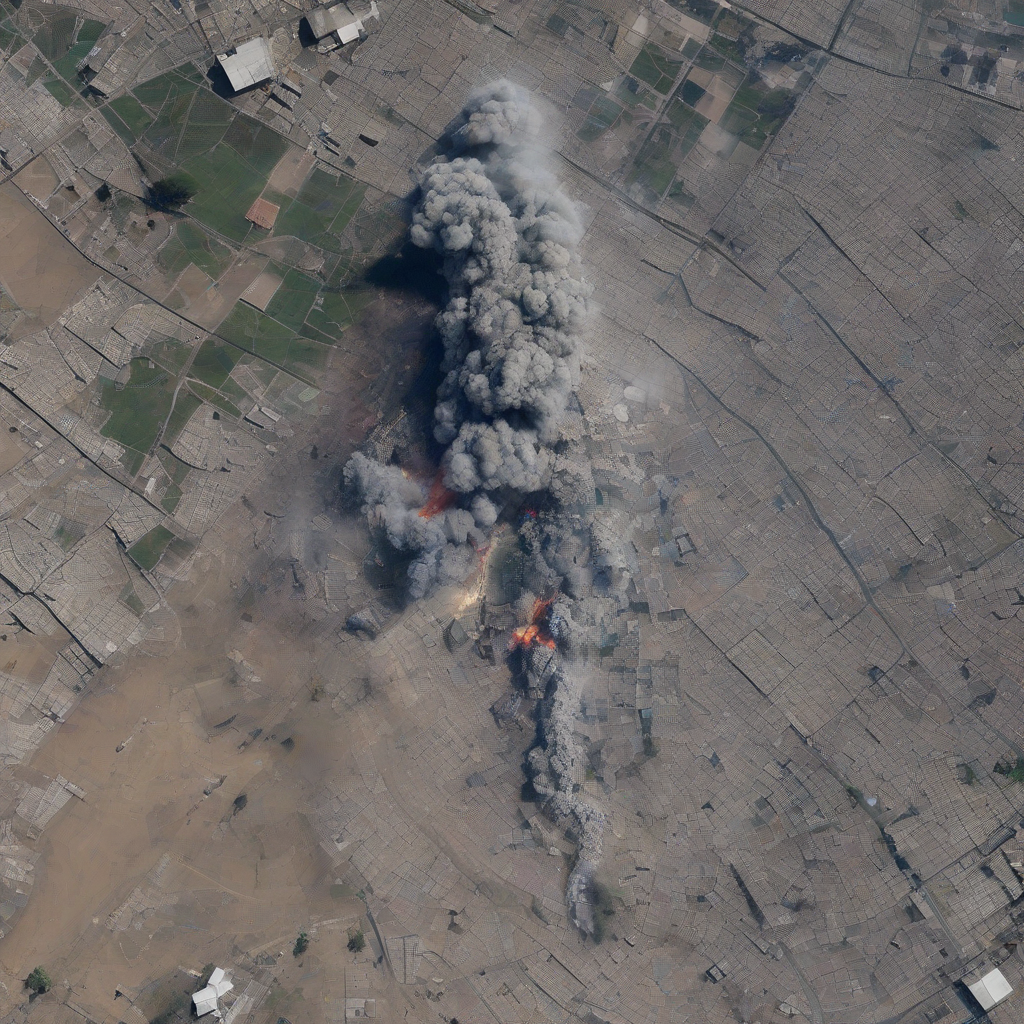
CARACAS – Powerful back-to-back earthquakes struck off the coast of Venezuela, killing at least 32 people and injuring 700 others as buildings collapsed and critical infrastructure failed.
The tremors-among the strongest to strike the nation in more than a century-paralyzed the capital and triggered emergency evacuations in cities as far away as Brazil’s Amazon, exposing the vulnerability of the region’s urban centers to high-magnitude seismic activity.
Seismic Data and Epicenters
The United States Geological Survey (USGS) reported two distinct, massive events occurring just seconds apart shortly after 6 p.m. local time, both along the complex boundary between the Caribbean and South American tectonic plates.
- First Earthquake: Magnitude 7.2 (initially reported as 7.1), depth of 22km, epicenter west of Morón on the Caribbean coast, approximately 168km west of Caracas.
- Second Earthquake: Magnitude 7.5, depth of 10km, epicenter 16km southwest of Morón, occurring approximately one minute after the first tremor.
Seismologists warned that the shallow depth of the second event significantly amplified shaking in densely populated coastal zones and the capital, and said strong aftershocks are likely in the coming days.
Damage in the Capital and Falcón State
In Caracas, the shocks caused widespread structural failure, particularly in older residential and commercial buildings. In the Altamira neighborhood, Interior Minister Diosdado Cabello described “alarming situations” involving collapsed homes and buildings. Residents reported seeing entire walls give way, leaving the interiors of apartments visible from the street, while dust columns rose over busy commercial districts.
“The building really shook from side to side. Unreal. The force was incredibly strong,” said Caracas resident Roberto Gamas. “We were walking and it was tossing us around. Everything in the apartment fell. Well, thank God we were able to get out.”
Another resident, Hector Ricci, described the onset: “It started off gently and then gradually grew, and in the end, we all had to leave our houses, go outside and gather together.”
In the state of Falcón, Governor Victor Clark reported that 32 people had been hospitalized. More than four hours after the initial quakes, Clark confirmed that 15 people remained trapped under debris as local rescue teams, supported by the armed forces and civil protection units, worked through the night using heavy machinery and hand tools.
Government Response and Infrastructure Failure
Acting President Delcy Rodríguez confirmed the death toll and ordered the closure of Simón Bolívar International Airport due to severe damage to runways and terminal infrastructure, effectively cutting off most international air links. She also announced the cancellation of school classes for several days and called upon all health care professionals to report to hospitals immediately as part of the country’s civil protection and disaster response framework, which is coordinated under the national system established by the Organic Law on Civil Protection and Disaster Management.
“We urge our population to remain calm,” Rodríguez said. “We urge unity.”
Rodríguez confirmed that international rescue teams were expected to arrive in the coming hours and thanked US President Donald Trump for his offer of assistance, framing the response as a humanitarian priority that would be coordinated through official diplomatic channels.
Interior Minister Diosdado Cabello urged citizens to remain outdoors to avoid further injury from aftershocks. He requested that motorists yield to emergency vehicles to facilitate rescue efforts. “We understand that some people may be desperate, but we are acting according to protocols to activate aid and rescue efforts to help those who need it most,” Cabello said on state television, noting that national guard units had been deployed to secure damaged areas and prevent looting.
The disaster was compounded by the loss of power and cellphone signals in parts of the capital, hindering communication for families and the millions of Venezuelans living in exile who were attempting to reach relatives. Emergency generators at key hospitals and command centers were activated, but officials warned that fuel shortages and damaged transmission lines could complicate sustained operations.
Regional Impact and Tsunami Alerts
The seismic energy was felt across several countries, prompting evacuations and alerts throughout the Caribbean and South America and triggering regional coordination through existing civil defense arrangements.
- Brazil: Buildings in Manaus, Belém, and Macapá in the Amazon region were evacuated, despite being approximately 1,700km from the epicenter. Local authorities reported no major damage but ordered precautionary building inspections.
- Colombia: Tremors were felt in the Caribbean and northeast regions. The Colombian Maritime Authority stated there was no risk of a tsunami for its coast and maintained normal port operations, while advising coastal communities to remain alert to official guidance.
- Caribbean Basin: The US Pacific Tsunami Warning Centre issued alerts for the Virgin Islands, and authorities in the Dominican Republic issued an alert for their island. A tsunami alert for Puerto Rico was quickly lifted after sea-level gauges showed no significant wave generation.
Regional disaster agencies said the episode would likely prompt renewed scrutiny of building codes, evacuation procedures, and the reach of early-warning systems in a part of the world not typically associated with such large earthquakes.
International Reaction
Global leaders and representatives expressed solidarity with the affected population and signaled readiness to support emergency efforts through bilateral and multilateral channels.
El Salvador President Nayib Bukele stated his country’s “heart is with the people of Venezuela during these difficult times.” From exile, opposition leader Maria Corina Machado wrote on X, “May strength, serenity, and solidarity prevail among us in the face of this difficult time.”
In New Zealand, Foreign Minister Winston Peters expressed “shock and sadness,” while the Ministry of Foreign Affairs and Trade (MFAT) confirmed they were monitoring two New Zealanders registered as being in the country and stood ready to provide consular assistance in line with its standard crisis-response guidelines, which are similar to those used for major disasters worldwide.
Diplomats in Caracas said the scale of the damage could require a prolonged international relief effort, involving search-and-rescue expertise, medical supplies, temporary shelters, and support for rebuilding critical infrastructure such as hospitals, roads, and power networks.
Tectonic and Policy Context
While Venezuela is situated near multiple fault lines, high-magnitude earthquakes are less frequent there than on the Pacific coast of Latin America. The country straddles the South American and Caribbean plates, unlike Mexico and Chile, which sit on the “Pacific Ring of Fire”-a tectonic belt responsible for approximately 90% of the world’s earthquakes.
Urban planners and engineers have long warned that rapid, often informal urbanization, combined with inconsistent enforcement of building standards, leaves cities like Caracas, La Guaira, and Maracay particularly exposed to seismic risk. The government’s response in the coming days-especially decisions on rebuilding codes, inspections of public housing projects, and investment in early-warning systems-will shape how quickly the country can reduce that vulnerability.
Rescue operations continue in Caracas and Falcón state as authorities monitor the region for further aftershocks and assess whether additional evacuations or structural safety closures are needed.
