
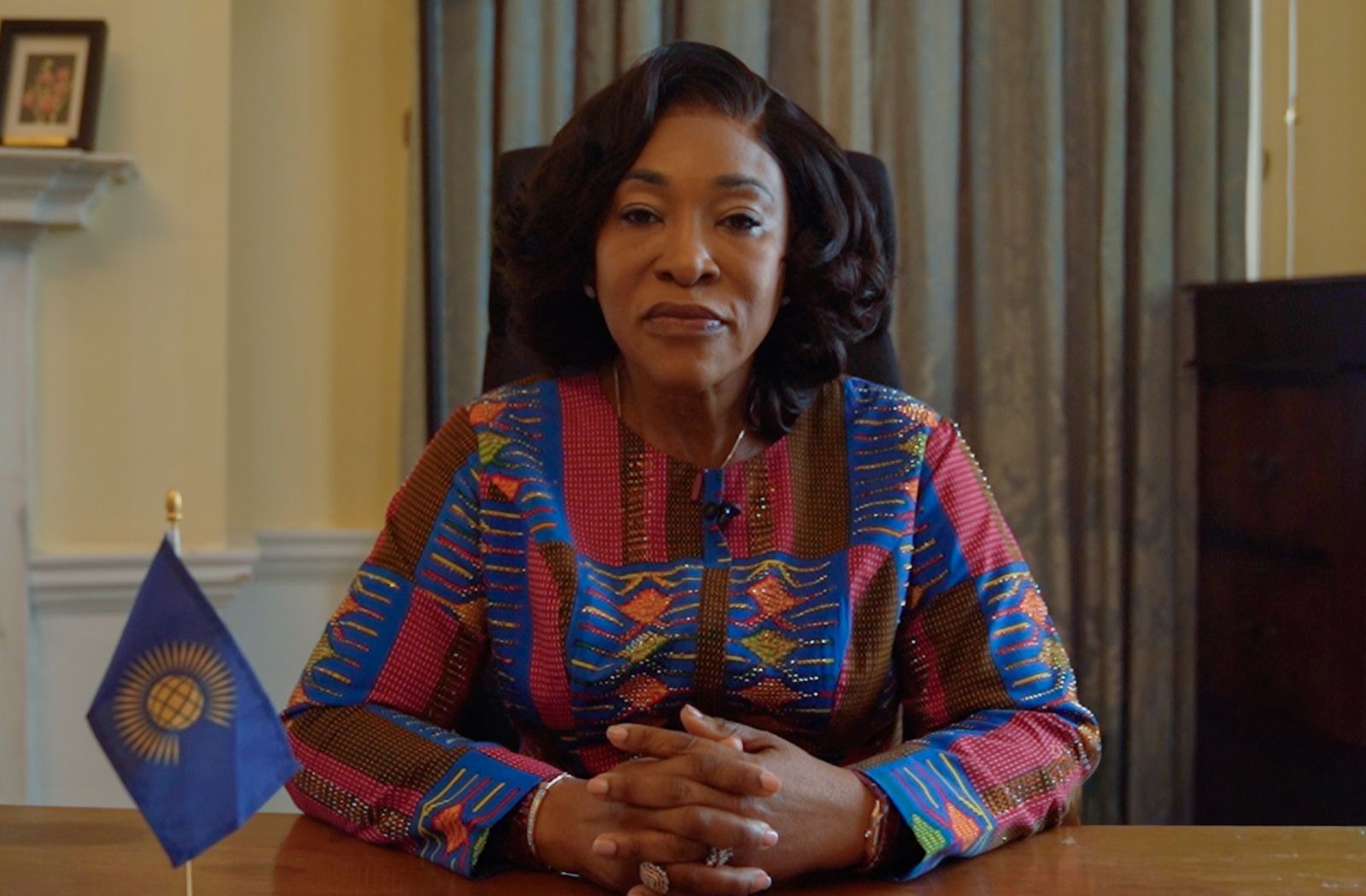
GENEVA — The 61st Session of the United Nations Human Rights Council opened its high-level segment on February 25, 2026 with Commonwealth Secretary-General Shirley Botchwey delivering her first address in the role, arguing that human rights must anchor economic and political cooperation across the Commonwealth and the wider multilateral system.
Botchwey told delegates in Geneva that conflicts, climate impacts, economic fragility, and democratic backsliding are weakening conditions for rights and trust in institutions. She linked the Commonwealth’s forthcoming agenda to that challenge and to preparations for the 2026 Commonwealth Heads of Government Meeting under the theme “Accelerating Partnerships and Investment for a Prosperous Commonwealth.”
“The Commonwealth’s message to this Council is one of partnership and purpose,” she said, committing the organization to supporting member countries in defending civic space, democratic integrity, the rule of law, and the lived realities of small states.
What Botchwey said the Commonwealth is doing
Positioning the Commonwealth as a connector between its 56 member states and the UN system, Botchwey outlined a set of practical measures she said are intended to translate principles into support for governments, parliaments, and independent institutions:
- Over the last four years, assistance to more than 40 member countries to engage with the Universal Periodic Review (UPR), implement accepted recommendations, and reduce treaty body reporting backlogs.
- A longstanding partnership with the Office of the High Commissioner for Human Rights and the Trust Fund for the Participation of Least Developed Countries (LDCs) and Small Island States.
- Use of the Commonwealth Small States Office in Geneva to amplify the representation of small states in multilateral forums.
- Backing for the establishment and strengthening of National Human Rights Institutions (NHRIs) in line with the Paris Principles, and collaboration with the Commonwealth Forum of National Human Rights Institutions to share learning and innovation.
- Development, with persons with disabilities and their representative organizations, of a Commonwealth Disability Inclusion Action Plan to embed inclusion in law, policy, and practice.
She framed the agenda as part of a broader strategy set by the Commonwealth and repeatedly linked rights to economic and social outcomes: “A prosperous future requires more than statistical growth; it requires societies grounded in dignity, inclusion, and justice.”
“Human rights are not an accessory to prosperity — they are a precondition for it.”
How the address fits the wider multilateral process
Botchwey rooted the Commonwealth’s stance in its Charter and in decisions by Heads of Government, pointing to a 2024 leaders’ meeting in Samoa where governments renewed their commitment to peaceful, just, and resilient societies built on universal, indivisible, interdependent, and interrelated rights. The Commonwealth’s position sits alongside the normative framework set out in the Universal Declaration of Human Rights, which underpins the work of the UN Human Rights Council.
The UPR she referenced is the Council’s peer-review mechanism through which every UN member state’s human rights record is examined at regular intervals, leading to recommendations that governments can accept, partially accept, or note, and then implement through legislation, policy, budget decisions, and institutional reform.
NHRIs established in line with the Paris Principles are intended to function independently at the national level as guardians of rights, providing advice to executives and legislatures, monitoring implementation, and giving individuals a pathway to seek redress. “A‑status” accreditation signals compliance with those standards and enables fuller participation at the UN, including speaking rights at the Human Rights Council.
The Trust Fund for the Participation of LDCs and Small Island States and the Commonwealth Small States Office in Geneva are designed to increase access for governments with limited diplomatic and technical resources to negotiations and reviews in Geneva-based institutions. For many finance and foreign ministries, that access shapes how they respond to recommendations on issues ranging from electoral law and policing to climate resilience and social protection.
Key lines from the speech
Botchwey’s remarks mixed diagnosis and prescription, presented as the Commonwealth’s view of how multilateral institutions should respond to overlapping crises:
- “Our family of nations is home to one third of humanity, and human rights are our bedrock.”
- “If we allow global fractures to widen, human rights will be among the first casualties. If we stand together, they can be our strongest source of resilience.”
- “We will continue to defend civic space, democratic integrity, and the rule of law.”
- “Let us demonstrate that multilateralism holds firm – and that human rights remain the compass by which we navigate an uncertain world.”
Diplomats in Geneva will now test those commitments as the Council moves into negotiations over resolutions, country situations, and mandates that can influence domestic political space and reform trajectories in member states.
Timeline and reference points
- February 25, 2026: First address by Botchwey to the Human Rights Council’s high-level segment in Geneva.
- 2024: Commonwealth leaders meet in Samoa and renew commitments to peaceful, just, and resilient societies grounded in universal human rights and to strengthening implementation of the Commonwealth Charter.
- Past four years (as stated): Commonwealth technical assistance to more than 40 members on UPR engagement and treaty body reporting, aimed at closing compliance gaps between international obligations and domestic practice.
Disability inclusion highlighted
Botchwey said leaders have reaffirmed a commitment to the rights of persons with disabilities and that the Commonwealth is working with persons with disabilities and representative organizations on a Disability Inclusion Action Plan. For many member states, that intersects with their obligations under the UN Convention on the Rights of Persons with Disabilities and with national efforts to align social protection, education, health, and employment policies with inclusive standards.
She presented the initiative as part of building “societies that are resilient because they are rights-respecting; prosperous because they are inclusive; and peaceful because justice is real and trusted.” The plan, she indicated, is intended to guide lawmakers and public administrators in embedding accessibility and non-discrimination into mainstream decision-making rather than treating disability as a standalone file.
Small states and representation
Emphasizing the role of small states in the system, Botchwey cited the Commonwealth Small States Office in Geneva as a practical means to “amplify the voices of countries which are too often unheard in global fora,” describing it as an investment in an inclusive and credible multilateral order. For administrations with only a handful of diplomats, shared infrastructure in Geneva can determine whether they are present in rooms where draft resolutions are negotiated, special procedures are reviewed, and technical standards with budgetary implications are set.
The Human Rights Council’s 61st session is in progress in Geneva following the high-level segment held on February 25, 2026, with Commonwealth delegations expected to test how far Botchwey’s call to treat human rights as a “precondition” for prosperity will be reflected in the resolutions, mandates, and monitoring decisions that emerge from the weeks ahead.
Worth a look
