
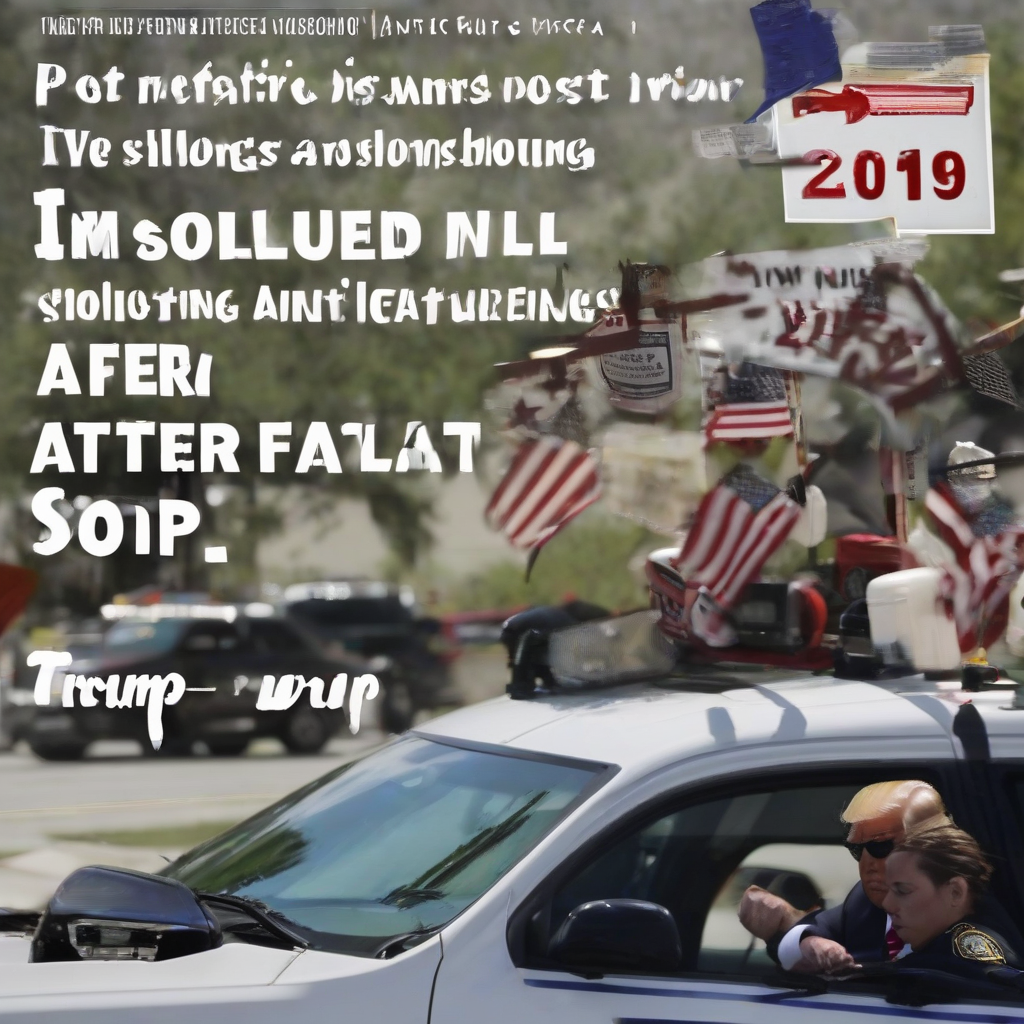
WASHINGTON – President Donald Trump is opposing a temporary suspension of vehicle stops by the Immigration and Customs Enforcement (ICE) agency following a series of fatal encounters between federal agents and motorists.
The conflict arises as administration officials recently instructed officers to halt most vehicle stops after two deadly shootings occurred within a single week.
The policy shift highlights a growing divide between the White House’s enforcement priorities and internal Department of Homeland Security (DHS) safety concerns.
Presidential Directive on Enforcement
President Trump expressed support for the agency’s tactics via his social media site, asserting that ICE is “doing a GREAT job, one that has to be done.” His remarks effectively undercut the internal pause on most vehicle stops and signaled to agents that the White House expects aggressive enforcement to continue.
The president argued that vehicle stops are essential for removing criminals from the country, claiming they were permitted entry under the previous Democratic administration. His comments reflect a broader administration strategy that emphasizes visible immigration enforcement, even as internal reviews raise questions about officer safety protocols and rules of engagement during traffic operations.
“we must be strong, tough, and smart, and we CANNOT give up one of ICE’s most important and effective Crime Fighting tools, THE TRAFFIC STOP!” Trump wrote. “Once we do, we are playing right into the criminal’s hands.”
Trump further advised ICE agents to remain “judicious, fair and smart, and go back and do your very important job,” implicitly inviting officers to treat the internal suspension as temporary and subject to his direction.
Fatalities and Tactical Failures
The suspension of vehicle stops followed a cluster of deaths involving immigration officers that intensified scrutiny of ICE tactics and training standards:
- Maine: An ICE officer shot and killed Johan Sebastián Durán Guerrero, a 25-year-old Colombian national, during an attempted vehicle stop.
- Houston: A motorist was shot and killed by an ICE officer during an enforcement operation on a public roadway.
- Florida: A 28-year-old man died after being struck by a tractor-trailer while fleeing from immigration and other federal officers.
These events follow previous fatal encounters last winter involving Alex Pretti and Renee Good in Minnesota, adding to a pattern of vehicle-related deaths tied to immigration enforcement operations.
At least 10 deaths have occurred during encounters with immigration agents since the launch of the current deportation campaign, with at least four of those involving vehicles. While ICE does not routinely publish a comprehensive tally of use-of-force incidents, the accumulation of cases has prompted calls from lawmakers and civil rights groups for clearer national standards governing road-based operations.
John Sandweg, a former acting director of ICE under the Obama administration, recently estimated that there have been approximately 18 traffic stop shootings during the current crackdown, underscoring how vehicle encounters have become one of the riskiest points of contact between agents and the public.
Operational Conflict and Warrant Disputes
ICE officials have reported increasing difficulty making arrests at residences. The agency attributes this to immigration advocates who advise individuals to remain inside their homes unless officers present a warrant signed by an independent judge – a distinction grounded in Fourth Amendment search-and-seizure protections and long-standing case law on entry into private homes.
Currently, ICE predominantly utilizes administrative warrants, which are signed by ICE officers rather than judicial authorities under the civil enforcement powers granted by the Immigration and Nationality Act. This operational hurdle has led agents to increase arrests in public spaces and during traffic stops, where they have broader authority to question individuals about immigration status and execute civil detainers.
Policing experts have cautioned for decades that shooting into moving vehicles creates significant danger and should be avoided. Many large police departments bar officers from firing at moving cars except in narrowly defined circumstances, arguing that bullets rarely stop a vehicle but often increase the risk to bystanders.
Investigation into Maine Shooting
The death of Johan Sebastián Durán Guerrero has sparked protests, diplomatic concern from Bogotá and international condemnation. Advocacy groups stated that Guerrero, who had a wife and daughter, was authorized to work in the United States and had no record of violent crime, framing the incident as a test of how the U.S. applies its own use-of-force standards to noncitizens.
Discrepancies have emerged regarding the details of the shooting:
- DHS Statement: The agency stated an officer fired while “fearing for public safety” after Guerrero attempted to flee in a vehicle.
- Sen. Angus King’s Account: The independent senator stated that DHS Secretary Markwayne Mullin told him the officer fired after the driver tried to use the vehicle as a weapon.
- Targeting: King further noted that officers were attempting to serve an arrest warrant for someone else, not for Guerrero, raising questions about intelligence coordination and on-scene identification.
Colombian President Gustavo Petro described the incident as a “targeted killing ‘at the hands of the U.S. government,’” accusing officers of treating Guerrero as “an inferior being without rights.” His remarks added a diplomatic layer to what had been an internal law-enforcement controversy, putting additional pressure on U.S. officials to deliver a transparent accounting of the events.
The investigation is complicated by the fact that the officers involved were not equipped with body cameras. Photos of the scene showed bullet holes in the vehicle’s windshield, and civil rights lawyers have already begun urging DHS to mandate cameras for federal immigration agents in the field, aligning ICE practices with the body-worn camera policies now common in local policing.
Political and Legal Responses
U.S. Sen. Susan Collins (R-Maine) urged DHS Secretary Markwayne Mullin to “cease all non-urgent vehicle stops.” While Collins stated that ICE needs improvement, she argued that eliminating the agency would decrease national safety, positioning herself between calls for abolition and the president’s demand for unrestrained enforcement.
Maine Secretary of State Shenna Bellows, a Democratic candidate challenging Collins, referred to the officers involved in the Maine shooting as “thugs” during a vigil in Lewiston. Her remarks highlight how the case has quickly become a flashpoint in a closely watched Senate race, with both parties framing the episode as a test of leadership on law enforcement and civil rights.
Border czar Tom Homan stated that officers will be held accountable if investigations prove they acted illegally or inappropriately, but emphasized that agents “have to make split-second decisions” in the field. DHS officials say the ongoing inquiries will examine whether existing use-of-force policies for immigration operations – including those conducted on public roads – should be revised.
At the same time, families of the dead and immigrant-rights organizations are pressing for clearer public reporting on ICE shootings and for Congress to assert stronger oversight, including potential conditions on funding for vehicle-based operations.
The DHS Inspector General is currently conducting an investigation into the Maine shooting in cooperation with the FBI, while the Maine attorney general’s office continues its own inquiry. The overlapping reviews will determine not only whether criminal charges or disciplinary actions are warranted, but also whether federal guidance on traffic stops by immigration officers should be brought in line with the tighter standards that govern many local police departments – a question that goes to the heart of how the United States balances border enforcement, civil liberties and public safety on its roads.
Keep reading
- Urban Infrastructure Resilience: How European and Asian Megacities Are Adapting to Extreme Climate Oscillations in 2026
- UN General Assembly 2026 Framework on Autonomous Systems: International Diplomacy Faces Algorithmic Governance
- Trump endorses embattled Netanyahu ahead of Israeli election (globallypulse.com)
