
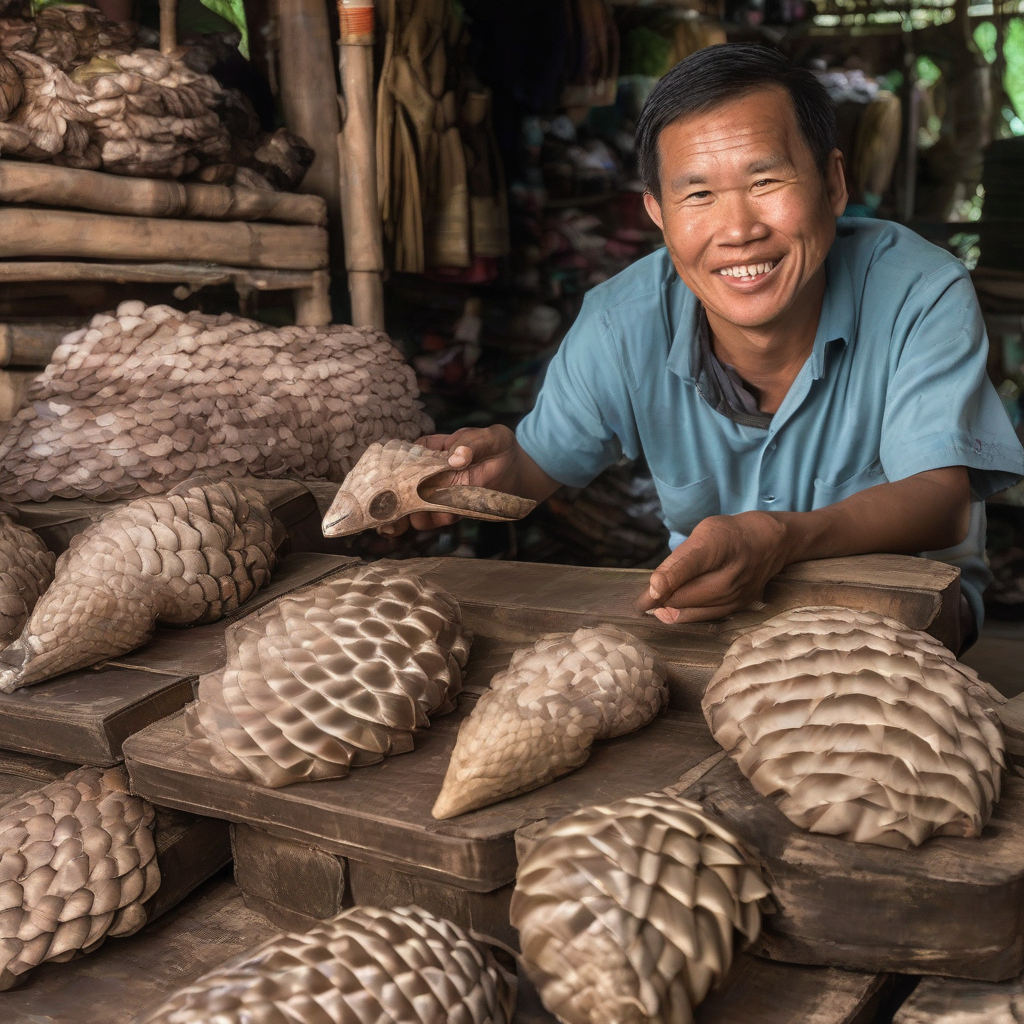
VIENTIANE – Organized crime networks are operating a sophisticated illegal wildlife trade within Laos, utilizing disguised storefronts and “cultural centers” to sell products banned globally.
The trade has seen a significant surge driven by a boom in Chinese tourism, facilitated by new high-speed infrastructure connecting the landlocked Southeast Asian nation to China.
Investigation into these operations reveals a system where legal products, such as tea and coffee, mask the sale of ivory, reptile skins, and parts from critically endangered species.
Fronts for the Illegal Trade
Many of the businesses involved are Traditional Chinese Medicine (TCM) shops or centers marketed almost exclusively to Chinese tourists, often operating in tourist zones with little visible integration into the local Lao community. These locations are frequently heavily fortified with CCTV, electric gates, and tightly controlled entry systems designed to keep out law enforcement and non-Chinese-speaking visitors.
While the ground floors may appear to sell cigarettes, tea, or travel trinkets, restricted upper floors and back rooms contain glass cases filled with prohibited items available only to selected customers.
These include ivory bracelets, ivory chopsticks, and complete crocodile hides. Some shops also stock tiger bones, which are banned globally under the Convention on International Trade in Endangered Species of Wild Fauna and Flora (CITES), to which Laos is a party and therefore legally bound.
Conservation practitioners say the model allows criminal networks to exploit regulatory gaps: many premises are registered as cultural venues or wellness centers, placing them in a gray area between tourism and retail and complicating routine inspection by understaffed local authorities.
The Pangolin Extinction Crisis
Pangolins, the world’s most-trafficked mammal, are primary targets for these networks and are now at the center of an extinction emergency in Southeast Asia. These shy, nocturnal anteaters are the only mammals exclusively covered in keratin scales.
The species’ natural defense mechanism-curling into a tight ball when threatened-makes them exceptionally easy for poachers to capture, turning a survival strategy into a liability in the face of organized hunting.
- Poaching rate: One pangolin is estimated to be poached every three minutes.
- Decadal loss: More than 1 million pangolins have been poached in the past 10 years.
- Comparative scale: Poaching numbers exceed those of rhinos, elephants, and tigers combined.
The demand is driven by the use of scales in TCM and the consumption of meat as a status symbol at banquets and private clubs. However, there is no scientific evidence that pangolin products treat any medical condition, including cancer or inflammation, a point increasingly emphasized by public-health and conservation bodies across the region.
Jeremy Phan, director of the Lao Conservation Trust for Wildlife, reports a disturbing increase in pangolins appearing in the center of Vientiane, far from their forest habitat along Laos’s borders and upland areas.
“It was ‘very unusual’ two years ago to find a pangolin in the city, ‘whereas recently we’ve been getting more and more’,” Phan said, describing a pattern that suggests active trafficking routes running straight into the capital’s restaurants and black-market suppliers.
His team recently rescued a three-week-old pangolin from a Vientiane restaurant; its mother was almost certainly killed for the illegal trade. Because pangolins reproduce slowly, with low birth rates, each animal removed from the wild represents a disproportionate blow to already collapsing populations, making enforcement and cross-border cooperation particularly urgent.
Infrastructure and the ‘New Silk Road’
The growth of this trade is linked to China’s Belt and Road Initiative, a massive global infrastructure project designed to connect China with other nations through ports, pipelines, and rail. In Laos, the program has rapidly transformed mobility and tourism while outpacing the capacity of wildlife and customs authorities to monitor new flows of people and goods.
The Laos-China railway, completed in 2021, serves as a critical artery for this movement.
- Distance: Over 600 miles (965km) from Kunming, China, to Vientiane.
- Traffic: More than 73 million passengers since opening.
- Impact: Low-cost travel has increased the volume of budget tour groups entering Laos, frequently on tightly scripted itineraries dominated by Chinese-owned businesses.
Lao officials have publicly welcomed the line as a pillar of economic development, but regional analysts warn that without effective customs screening, transparent concession agreements, and regular joint inspections with Chinese authorities, the same infrastructure can be repurposed by criminal networks moving high-value wildlife products at scale.
Tourist Coercion and Financial Scams
Chinese activist and performance artist Brother Nut went undercover on one of these low-budget tours to document the trade, providing a rare first-hand account of how the scheme targets tourists while bypassing local regulatory oversight.
He discovered that some tour operators offer trips for as little as 100 yuan (£11) for four nights, using the low price to lure tourists into “cultural centers” that act as fronts for wildlife trafficking and aggressive sales pitches.
Brother Nut describes a pattern of coercion where elderly tourists are pressured into buying illegal goods they do not want and may not fully understand.
“During the tour there were two times when the guide forced the gates [of the store] shut, and we did feel a bit scared,” he said.
Tour leaders reportedly mislead visitors by claiming these products are legal in Laos and that purchases support the local economy, obscuring both the criminal nature of the trade and its impact on endangered species.
Brother Nut stated, “Actually, none of the money went to local Lao people. All the payments were made through WeChat Pay or Alipay, and the money ended up in the hands of the people running the scam.”
He estimates one tour group alone spent approximately 100,000 yuan (more than £11,000) at these businesses, all processed via digital platforms that move funds directly out of Laos and complicate any potential financial investigation.
The trade remains a clear violation of CITES, the international agreement that prohibits the sale of pangolin body parts and tiger bones worldwide. Under that framework, Laos and China are both obligated to clamp down on cross-border trafficking, tighten oversight of tour operators and special economic zones, and share enforcement intelligence. Conservation advocates say the country’s credibility as an emerging tourism hub-and the integrity of flag-ship infrastructure projects such as the railway-will increasingly be judged by whether authorities act on those commitments and demonstrate that economic integration does not come at the cost of pushing species like the pangolin to extinction.
Related reading
