
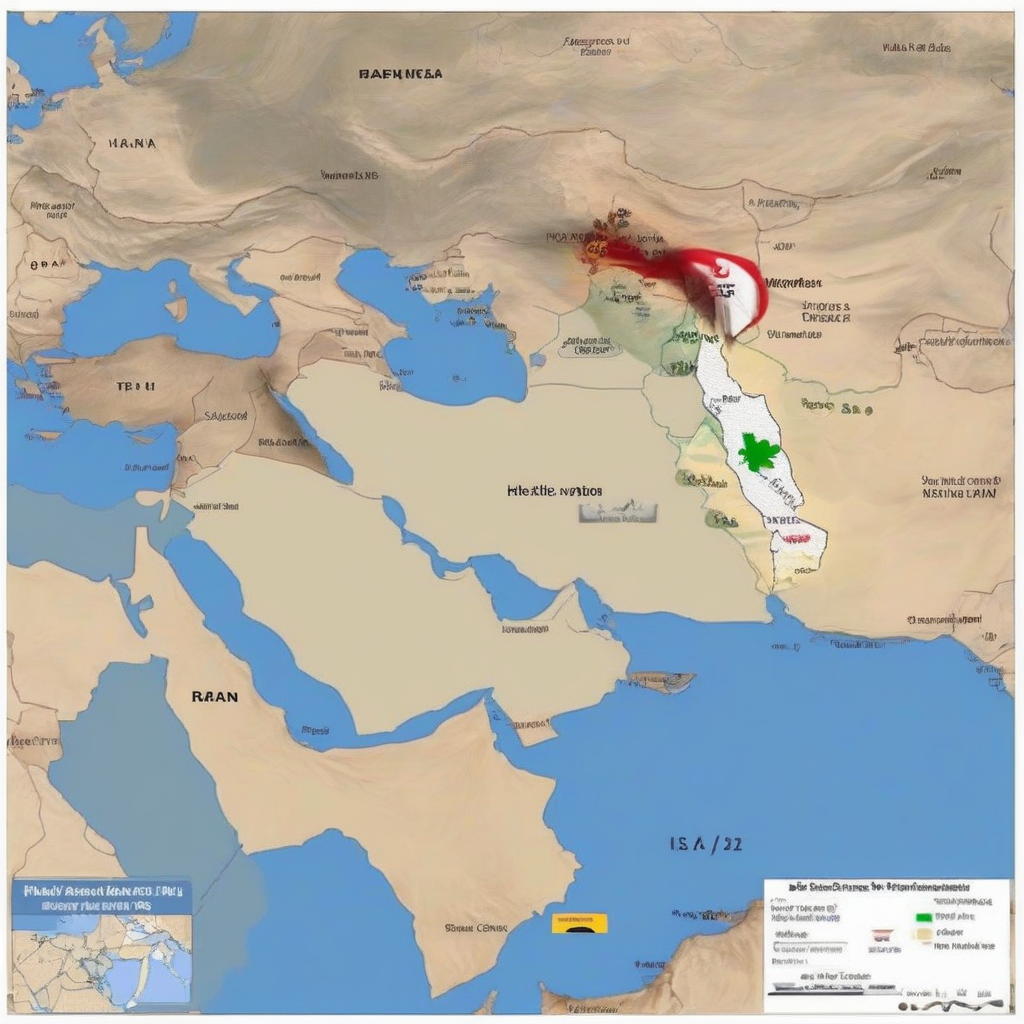
DOHA – The United States military launched a massive aerial campaign against Iran on July 12, 2026, striking approximately 140 military targets in response to an Iranian attack on a civilian container ship in the Strait of Hormuz.
The escalation has triggered a regional crisis, with Iran launching retaliatory missile and drone strikes across Bahrain, Kuwait, Qatar, and the United Arab Emirates, while declaring the Strait of Hormuz closed until further notice.
The sudden surge in violence follows the collapse of a tenuous interim ceasefire and signals a significant widening of the conflict between Washington and Tehran.
US strikes target 140 Iranian sites
United States Central Command confirmed via X that the operation targeted Iranian missile and drone launch sites, naval capabilities, ammunition storage facilities, communication networks, and coastal surveillance locations, describing the strikes as intended to degrade Iran’s capacity to threaten commercial shipping and US forces in the region.
The strikes were concentrated in several southern provinces and one western province, underscoring a focus on Iran’s Gulf-facing military infrastructure:
- Bushehr
- Hormozgan
- Khuzestan
- Sistan and Baluchestan
- Lorestan
US Defence Secretary Pete Hegseth described the operation as a necessary response to Iranian aggression, stating on social media, “Iran made a poor choice. Now they pay.” The Pentagon has not yet provided a full battle damage assessment or casualty figures.
The military action was triggered after the Islamic Revolutionary Guard Corps (IRGC) attacked a Cyprus-flagged container ship. US Central Command reported the vessel suffered significant engine room damage and an onboard fire, forcing the crew to abandon ship. One civilian crew member remains missing, and maritime safety authorities say the incident underscores the vulnerability of commercial traffic in one of the world’s most critical energy chokepoints, through which a substantial share of globally traded oil and gas passes.
Regional retaliation and civilian casualties
Iran responded by launching a wave of missile and drone attacks targeting multiple US allies in the Persian Gulf, raising fears of direct spillover into the domestic security of Gulf monarchies that host key US military installations.
In Qatar, the Ministry of Interior reported that three people, including one child, were injured by falling debris resulting from interception operations. The ministry confirmed the injured are receiving medical care but did not specify the location where the debris fell, and Qatari officials urged residents to follow civil defence instructions.
The IRGC claimed it targeted the US strategic air base at Al Udeid in Qatar with ballistic missiles, asserting it destroyed a command and control facility and a fighter jet maintenance center. US and Qatari authorities have not publicly confirmed damage to the base, which plays a central role in US air operations across the Middle East.
Simultaneous attacks were reported across the region:
- Kuwait: The military reported confronting “hostile aerial targets within Kuwaiti airspace” and stated that explosions heard by the public were the result of air defence interceptions. Authorities indicated that investigations were under way to determine whether any debris had fallen in populated areas.
- Bahrain: Missile alerts sounded across the island kingdom, which houses the US Navy’s Fifth Fleet, prompting temporary disruptions to commercial activity and renewed scrutiny of the security of US naval facilities.
- United Arab Emirates: The government issued public warnings of incoming missile and drone attacks, using its national alert systems to urge residents to seek shelter and avoid sharing unverified footage on social media.
Gulf officials say their air defence responses are being coordinated closely with US forces under existing bilateral defence agreements, reflecting how military decisions in Washington and Tehran are now directly shaping internal security conditions and risk assessments in neighbouring states.
Maritime blockade and diplomatic collapse
The IRGC navy stated it struck and disabled a second vessel in the Strait of Hormuz, claiming the ships had jeopardized maritime security by using unauthorized routes and switching off their systems. Shipping industry sources warn the incidents could trigger higher insurance premiums and rerouting of tankers, with potential knock-on effects on energy prices.
Tehran has officially closed the Strait of Hormuz “until further notice” and threatened to target additional enemy bases in the region if it faces further strikes. Iran’s declaration directly challenges long-standing international expectations of freedom of navigation, as reflected in the United Nations Convention on the Law of the Sea, and sets up a potential legal and diplomatic confrontation over the status of this vital waterway.
The military escalation coincided with a sharp breakdown in diplomacy. US President Donald Trump suggested that a previous interim deal was “over,” without specifying whether Washington views any remaining commitments as still binding.
Iran’s chief negotiator, Mohammad Bagher Ghalibaf, responded on X, stating, “The era of one-sided deals is OVER.” He added, “We told you: keep your word or pay the price. Reality is knocking.” The exchange effectively signalled that the existing talks framework, brokered in part by regional mediators, has collapsed for now.
Regional diplomats say the crisis is testing established de-escalation channels and the capacity of Gulf states to act as intermediaries between Washington and Tehran, just as they confront domestic pressure to protect critical infrastructure, energy exports and expatriate communities.
Vows of revenge and regional tension
The current violence is further fueled by internal Iranian political shifts. In a state television address, Iran’s new supreme leader, Mojtaba Khamenei, vowed to avenge the killing of his father during the opening strikes of the war on February 28, tying the latest attacks to a broader narrative of resistance and sacrifice that shapes Tehran’s strategic posture.
Khamenei stated that such revenge “is the will of our nation and must certainly be carried out.” His remarks are likely to carry significant weight within Iran’s security establishment, where the supreme leader oversees the IRGC and sets red lines for both negotiations and military operations.
This escalation occurred despite a meeting on July 11 between the foreign ministers of Iran and Oman. While Oman stated that both nations agreed to continue talks regarding the Strait of Hormuz at technical and political levels, the agreement failed to prevent the subsequent military exchanges, underscoring the limits of quiet shuttle diplomacy once hard security red lines are crossed.
The United Kingdom Maritime Trade Operations (UKMTO) is currently investigating the status of the abandoned Cyprus-flagged vessel, which was reported as being nine nautical miles east of Oman. The advisory body has urged commercial ships transiting the area to exercise extreme caution and report any suspicious activity, as naval coalitions and flag states consider additional protective measures under existing maritime security mandates such as the US-led patrols in and around the Gulf.
With global energy markets already on edge, policymakers in Western capitals and Gulf governments are now weighing how to contain a conflict that has leapt from negotiating rooms into critical shipping lanes, air bases and the domestic security of frontline states. Early signals from Washington suggest additional economic and diplomatic steps against Iran are under review alongside the military campaign, even as allies press for renewed mediation efforts. For readers seeking a broader sense of the global security backdrop, the crisis is unfolding against long-standing concerns about the vulnerability of maritime chokepoints in the international trading system, including other straits and canals under growing geopolitical strain.
Related reading
- Urban Infrastructure Resilience: How European and Asian Megacities Are Adapting to Extreme Climate Oscillations in 2026
- UN General Assembly 2026 Framework on Autonomous Systems: International Diplomacy Faces Algorithmic Governance
- Trump says U.S. will not attack Iran before midterm election (globallypulse.com)
