
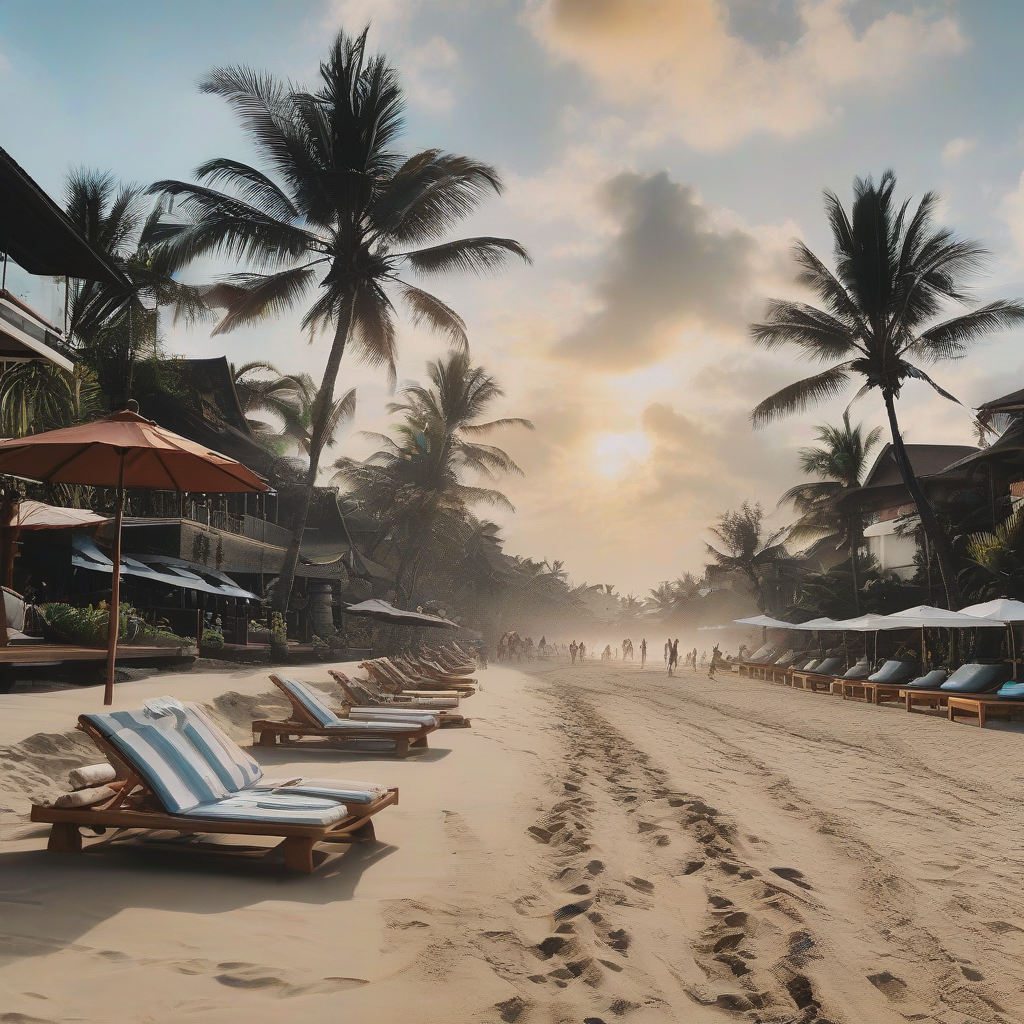
CANGGU – Canggu has solidified its position as a primary destination for international travel in Bali, defined by a dense concentration of boutique hospitality, world-renowned beach clubs, and a specialized wellness infrastructure.
As the region expands its visitor demographic in 2026, the area is facing a growing tension between its identity as a tranquil retreat and its reality as a high-traffic tourism hub. For travelers, the ability to maintain a calm itinerary now depends heavily on strategic location choices and the selection of full-service amenities over independent rentals.
The region has undergone a rapid structural transformation, evolving from a traditional farming and fishing village into a world-class resort destination. This mirrors a broader shift in Badung Regency, where agricultural employment has steadily given way to tourism-centered work and real estate development, and where provincial and local authorities are now grappling with how to keep growth within formal spatial-planning and tourism rules.[Regulation of the Province of Bali No. 1/2020] This growth has introduced systemic challenges, including significant traffic congestion and high-density queues at popular venues, which have become characteristic of the local visitor experience.
Accommodation Dynamics and Noise Mitigation
The choice of lodging has become a critical factor in determining the noise level and overall stress of a stay. While private villas are a common choice in Bali, they often present risks for those seeking tranquility due to a lack of professional noise mitigation and unpredictable neighboring occupancy. The distinction is increasingly relevant as national tourism law and provincial regulations require that commercial accommodation be properly licensed and sited in zones formally designated for tourism use, a framework that local officials say they intend to enforce more consistently in high-pressure areas such as Canggu.[Law No. 10/2009 on Tourism]
Many independent villas are situated in close proximity to loud nightlife venues or high-traffic tourist corridors, often without on-site staff to manage acoustic disturbances. For visitors, that can translate into a mismatch between marketing promises of “secluded” stays and the lived reality of late-night music, scooter noise, and construction in rapidly densifying neighborhoods.
In contrast, high-end boutique hotels are increasingly utilized as buffers against the surrounding urban chaos. Properties such as COMO Uma Canggu are positioned away from the primary resort core, reducing exposure to beach club noise and crowded thoroughfares. These locations allow guests to remain within Canggu’s tourism orbit while avoiding some of the most congested chokepoints, particularly at peak commuting and sunset hours.
Other established properties, including Hotel Tugu, utilize expansive garden layouts to create physical distance between guest quarters, minimizing the impact of neighboring activity. These full-service hotels provide a managed environment where staff maintain a specific culture of calm and provide on-site services that remove the necessity for guests to navigate local traffic for every meal, workout, or spa visit. In parallel, they are often better placed to comply with evolving local expectations on noise levels and trading hours, giving them a stake in ongoing negotiations between community leaders, nightlife operators, and the tourism authorities over how to keep Canggu’s entertainment economy compatible with residential life.
Wellness and Low-Impact Leisure
Despite the rise of high-intensity fitness trends, including run clubs and high-octane gyms, the region maintains a significant infrastructure for slow-paced wellness and recovery. This wellness layer has become a counterweight to Canggu’s party reputation, attracting longer-stay visitors, remote workers, and families looking for daily routines that are less dependent on nightlife and more aligned with yoga studios, retreat-style spas, and healthy cafes.
For those avoiding the high-energy atmosphere of mainstream beach clubs, specific venues offer a different operational model:
- The Lawn: An Ibiza-style lounge focusing on ambient beats, acoustic music, and poolside leisure, where daybeds, curated playlists, and sunset views are designed to extend stays without the intensity of a full-scale nightclub environment.
- Serenity Eco Guesthouse and Yoga: A center for grounded, low-impact yoga and stretching, with a programming focus that leans into breathwork, restorative classes, and vegetarian food rather than late-night events.
- Udara Bali Yoga Detox and Spa: A specialized facility for detox and yoga practices that positions itself as a retreat space, emphasizing structured schedules, limited group sizes, and multi-day programs.
The availability of these services allows visitors to balance the inherent noise of the resort district with structured environments designed for sensory reduction. It also aligns Canggu more closely with Bali’s stated goal of promoting “quality and sustainable tourism,” in which higher-spend, longer-stay guests are encouraged to distribute their time and money beyond a narrow strip of beach clubs and bars.
Canggu continues to operate as a dual-speed destination, where high-density commercial activity exists alongside curated pockets of seclusion. How that balance evolves will depend not only on traveler behavior and investor appetite but also on how consistently local zoning, licensing, and noise rules are applied on the ground in what has become one of Bali’s most contested stretches of coastline.
Worth a look
