
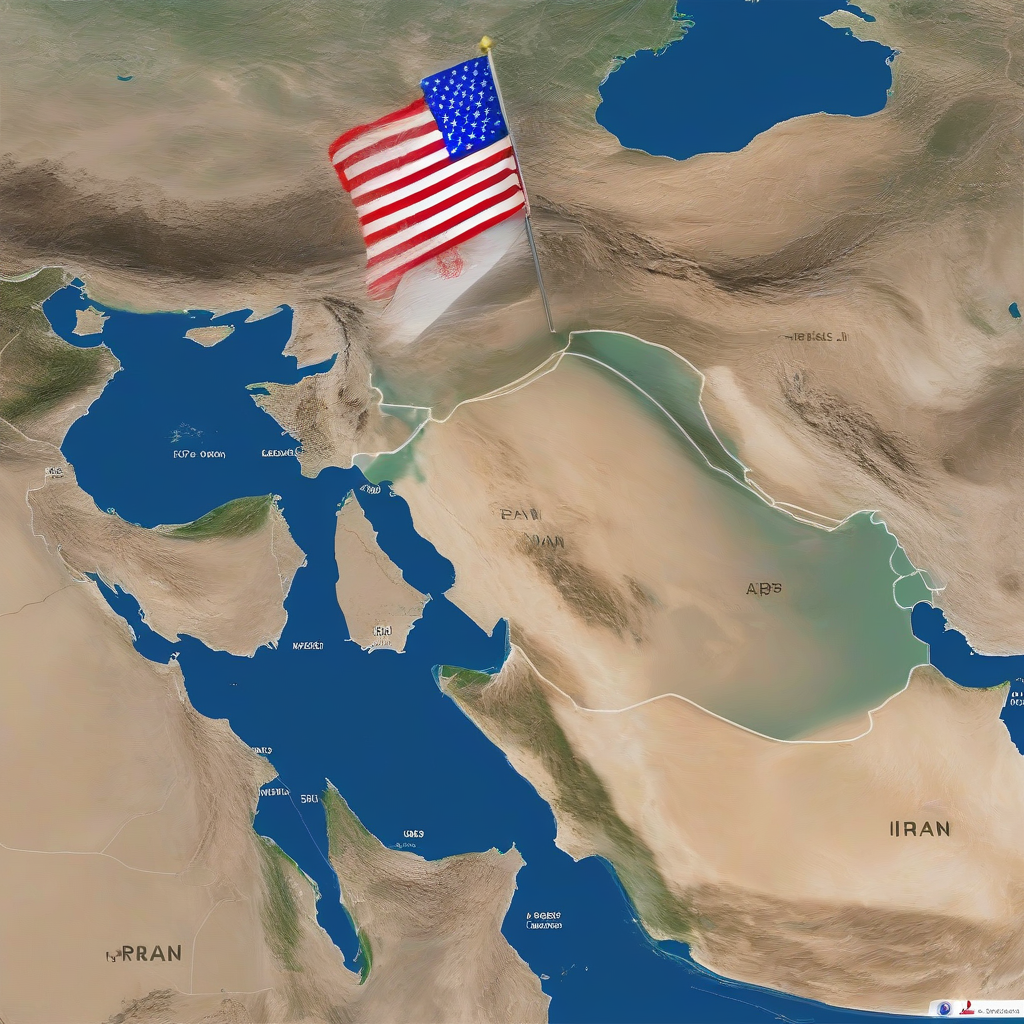
WASHINGTON – Donald Trump has threatened to strike Iranian power plants next week unless Tehran returns to the negotiating table, as the United States reimposed a naval blockade on Iranian ports and conducted a second consecutive night of airstrikes.
The escalation marks a significant collapse of an interim agreement reached in mid-June, which had intended to facilitate a 60-day window for negotiations regarding Iran’s nuclear program.
The renewed hostilities have triggered immediate volatility in global energy markets and a series of retaliatory strikes across the Middle East, extending the conflict into Bahrain, Kuwait, and Jordan.
Energy Infrastructure Threats and Naval Blockade
In an interview with Fox News’ Trey Yingst, Trump indicated that energy infrastructure is now a primary target for U.S. forces, framing the threat as leverage to force Tehran back into compliance with Western demands over uranium enrichment and ballistic missile activity.
“I’ll save the energy targets for last, but ultimately we’ll hit energy targets,” Trump said.
The U.S. President added that American negotiators have communicated directly with their Iranian counterparts to warn them, “you better make a deal,” a message that U.S. officials say is being delivered in parallel through European intermediaries and regional allies.
Simultaneously, the U.S. military has reinstated a blockade on Iranian ports near the Strait of Hormuz. The blockade was first implemented in mid-April before being lifted in mid-June following the signing of the interim deal. While Trump initially proposed a 20 per cent fee for ships passing through the strait upon the blockade’s return, he dropped the plan following requests from Persian Gulf allies and concerns from trading partners that such a levy could violate core principles of the global trading system under the General Agreement on Tariffs and Trade.
Defense officials describe the current action as a “maritime security operation” intended to enforce existing U.S. sanctions and interdiction authorities, while Iran has condemned it as an act of war and a unilateral attempt to control one of the world’s most sensitive chokepoints.
Regional Military Engagements
U.S. Central Command confirmed that overnight operations targeted several strategic sites within Iran, including:
- Missile and drone facilities
- Naval assets
- Coastal defence systems
Reports from Fars News, citing the deputy governor of Khuzestan province, indicated that U.S. projectiles also struck a wheat storage silo in Hoveizeh County, raising fresh concerns among humanitarian agencies about potential disruptions to Iran’s civilian food supply.
Iran’s Revolutionary Guard responded by launching attacks against U.S. military installations in three neighboring countries. The Guard stated it targeted command-and-control, logistics, fuel, and military equipment facilities belonging to the U.S. Fifth Fleet in Bahrain.
In Kuwait, the Guard claimed to have destroyed a U.S. logistics facility in Mina Abdullah. Further strikes were directed at the U.S. base at Azraq in Jordan, specifically targeting aircraft hangars, in what Iranian state media described as an effort to degrade U.S. strike capabilities in the region.
The Jordanian military confirmed its air defences intercepted at least three ballistic missiles allegedly fired from Iran during the early hours of July 15. Jordanian engineering teams have since secured the sites where debris fell, and officials in Amman said they are coordinating closely with U.S. counterparts under existing defence cooperation agreements to assess whether additional protective measures are required.
Global Energy and Economic Impact
The conflict has centered on the Strait of Hormuz, a critical shipping route through which one-fifth of the world’s oil passes and whose security is routinely cited in discussions of international freedom of navigation obligations under the U.N. Convention on the Law of the Sea.
Oil prices rose during choppy trading on Wednesday, as traders weighed the risk of a prolonged disruption to Gulf exports and the possibility of emergency stock releases by major consuming nations:
- Brent (international benchmark): $85.77 per barrel (up 1.2%)
- West Texas Intermediate (U.S. benchmark): $80.14 per barrel (up 1%)
Iran’s Revolutionary Guard has declared that the Strait of Hormuz will remain closed until “the end of America’s evils,” adding that “the export of oil and gas from the region will be either for everyone or for no one.” Energy analysts warn that even a temporary closure could force governments to activate contingency plans, from drawing down strategic petroleum reserves to imposing emergency fuel-conservation measures on industry and transport.
In response to the instability, Dubai is planning the construction of a new port and terminal designed to bypass Iranian control over the strait, part of a longer-term strategy among Gulf states to diversify export routes for crude and liquefied natural gas. Shipping in the region has been disrupted since initial U.S.-Israeli strikes on Iran on February 28, with insurers raising premiums and some carriers rerouting vessels around the Arabian Peninsula despite higher costs and longer transit times.
Maritime Casualties
The escalation has resulted in civilian casualties at sea, underscoring the risks to commercial traffic transiting contested waters. A family has confirmed the death of an Indian national who went missing following an attack on the commercial vessel GFS Galaxy off the coast of Oman.
The Indian foreign ministry previously reported that 10 of the 11 Indians on board the vessel were rescued. New Delhi has called for “maximum restraint” and is seeking assurances from both Washington and Tehran that flag-state protections and long-standing norms governing the safety of merchant shipping will be respected.
U.S. forces continue to maintain the naval blockade as the deadline for potential strikes on Iranian power plants approaches next week, even as diplomats in European capitals and Gulf monarchies scramble to revive channels that could pull both sides back from a wider regional war.
Keep reading
- Urban Infrastructure Resilience: How European and Asian Megacities Are Adapting to Extreme Climate Oscillations in 2026
- UN General Assembly 2026 Framework on Autonomous Systems: International Diplomacy Faces Algorithmic Governance
- Trump endorses embattled Netanyahu ahead of Israeli election (globallypulse.com)
