
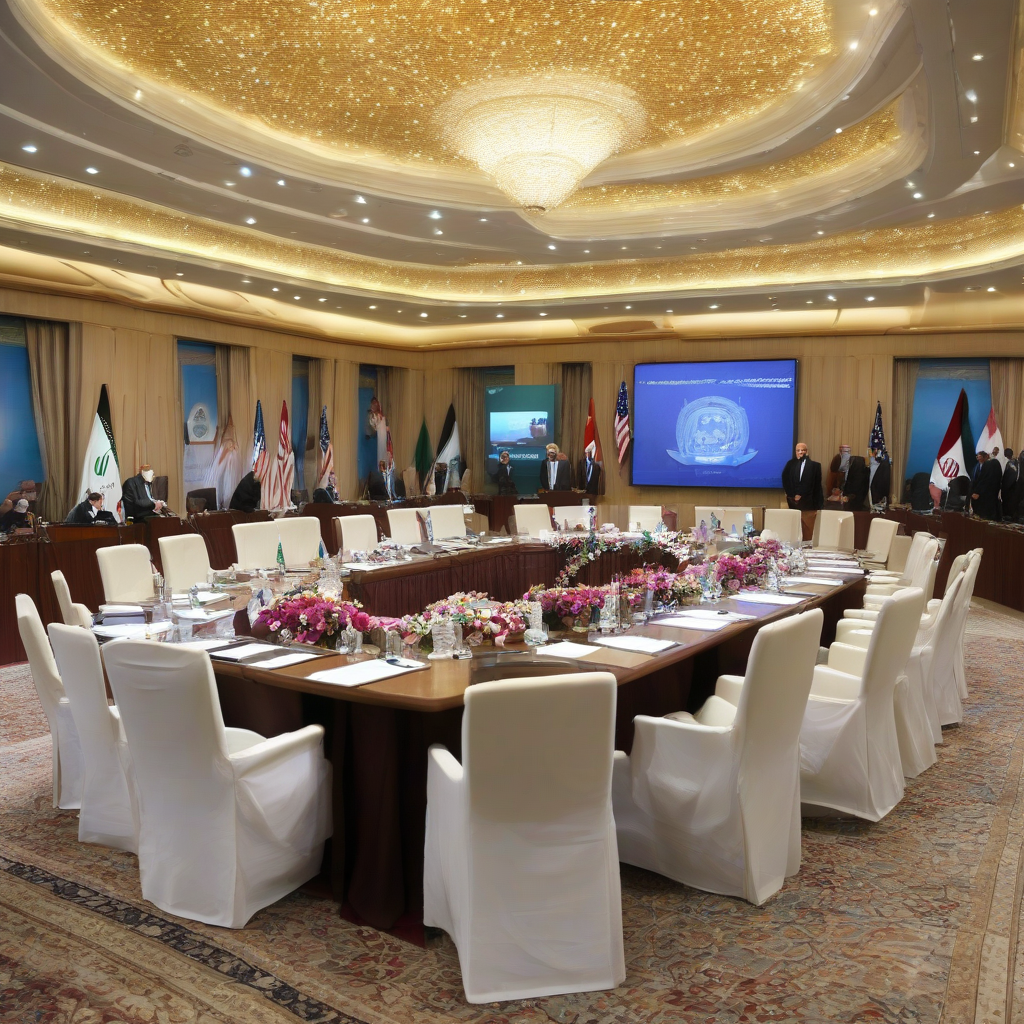
DOHA – Iran and the United States concluded a round of indirect negotiations on July 1 without a clear path toward a lasting peace agreement. The talks ended as Tehran prepares for a multi-day state funeral for the late supreme leader Ali Khamenei, who was killed by airstrikes during the first day of the war.
The sessions, held over two days in Doha, focused on technical issues rather than broad diplomatic settlements. Negotiators primarily discussed the unfreezing of Iranian funds and the management of maritime traffic in the Strait of Hormuz, both of which are central components of an initial agreement between the two nations and touch directly on US sanctions policy and Iran’s access to the global financial system.
The diplomatic process remains fragile, characterized by contradictory accounts of progress and a backdrop of heightened military warnings. While the White House has signaled optimism regarding nuclear constraints, regional sources indicate that such issues were absent from the current round of discussions, underscoring the gap between public messaging and the narrow, procedural nature of the Doha track.
Doha Negotiation Framework
The talks were facilitated by mediators from Qatar and Pakistan, with American and Iranian delegations meeting separately. Deputy Foreign Minister Kazem Gharibabadi led the Iranian delegation. Doha, which has positioned itself as a crisis mediator in recent years, again provided neutral ground and logistical support to keep the channel between Washington and Tehran open.
Despite the presence of high-level US officials in the region, Jared Kushner and top envoy Steve Witkoff did not attend the sessions, according to a source who spoke on condition of anonymity. Their absence reinforced the technocratic character of this round, which focused on implementation details of the June ceasefire memorandum rather than new political concessions.
The outcomes of the meetings were described differently by the parties involved:
- Qatar’s Foreign Ministry: Reported “positive progress” on the memorandum that halted the war in June, stating the talks built upon a previous summit in Switzerland and were aimed at consolidating the ceasefire’s enforcement mechanisms.
- US President Donald Trump: Stated that the “denuclearisation of Iran is moving along well” and that the two sides are making progress on limiting the nuclear programme, tying the Doha talks rhetorically to broader US non-proliferation goals.
- Technical Sources: Indicated that the nuclear programme was not discussed during these specific sessions, which instead centred on payments channels, shipping guarantees, and verification procedures.
- US Vice-President J.D. Vance: Clarified that the nuclear issue would be addressed at a later stage, once the initial agreement’s security and economic provisions are in place.
Diplomats say this dissonance reflects competing domestic pressures: leaders in Washington and Tehran need to project momentum, while negotiators on the ground are still working through the detailed annexes that will eventually determine whether the ceasefire can harden into a durable framework.
Funeral Timeline and National Security
The diplomatic pause coincides with the state funeral for Ali Khamenei, a pivotal moment in Iran’s internal power transition. The Qatar Foreign Ministry confirmed that the next round of talks will occur after the burial on July 9, effectively binding the negotiating calendar to Iran’s mourning period and elite reshuffle.
The schedule for the funeral processions is as follows:
- July 4: Processions begin in Tehran, with senior political, military, and clerical figures expected to attend under tight security.
- Interim: Additional ceremonies planned for Qom and Iraq, reflecting Khamenei’s stature within the transnational Shiite clerical network.
- July 9: Burial in the hometown of Mashhad, formally closing the state mourning period and clearing the way for resumed diplomacy.
To secure these events, the head of Iran’s Civil Aviation Organisation announced on July 1 that temporary airspace restrictions would be implemented over several cities, including Tehran and Mashhad. The measures, coordinated with Iran’s armed forces, are intended to reduce the risk of aerial attacks or sabotage during the leadership transition.
Iranian military officials have issued stern warnings during this period of transition. On July 2, Ali Abdollahi, commander of the Khatam al-Anbiya Central Headquarters, released a statement via state media:
“We warn the enemies of Iran, especially the US and the Zionist regime (Israel), to avoid any miscalculation and to think about the harsh retaliation our armed forces would make to any threat and aggression against our country.”
This warning followed comments by Israeli Defence Minister Israel Katz, who stated that the current Supreme Leader, Mojtaba Khamenei, was “marked for death.” In response, Iranian Foreign Minister Abbas Araghchi stated on July 1 that Tehran would provide an “immediate and powerful response” to any threats against its leadership, framing such threats as violations of Iran’s sovereignty and of the protections afforded to heads of state under international law.
Strait of Hormuz, Shipping Rules and Global Oil Markets
A primary friction point remains the Strait of Hormuz, a waterway that handled roughly one-fifth of global oil and liquid natural gas prior to the outbreak of war in February and is governed by the transit passage regime under the UN Convention on the Law of the Sea. Iran’s push for “international recognition” of its control over the waterway sits uneasily alongside those global navigation rules, adding a legal dimension to the military standoff.
Although the initial deal between the US and Iran calls for the resumption of shipping, the status of the strait is unstable. The two countries exchanged strikes following an Iranian attack on a cargo ship. Two senior Iranian sources stated that Tehran is determined to secure international recognition of its control over the waterway, noting that Iran intends to assess tolls on shipping starting in mid-August, once the agreed toll-free period expires. Western officials fear such tolls, if enforced unilaterally, could amount to de facto sanctions on third-country shipping.
The operational reality of the strait remains inconsistent. On July 1, Iranian state media reported that a foreign container ship ran aground in shallow waters outside the designated shipping route, highlighting the practical risks of navigating partially reopened lanes amid intermittent military patrols and unresolved mine-clearance operations.
Vandana Hari, founder of Vanda Insights, described the reopening of the strait as “patchy, unpredictable and not fully transparent,” a characterization that has filtered directly into risk calculations by insurers, commodity traders, and central banks monitoring inflation.
The economic impact of the tension was evident in oil markets, though prices fell to a four-month low following President Trump’s comments that the two sides had “come a long way,” leading analysts to cut price forecasts for the first time since the war began. For policymakers in major importing countries, the shift eases immediate pressure on fuel subsidies and inflation management, but market participants say any incident in the strait could rapidly reverse the trend.
International Intervention and Security Commitments
While several European nations have offered assistance in clearing mines from the Strait of Hormuz to facilitate safer passage, Germany has distanced itself from the effort. Germany’s Defence Minister Boris Pistorius stated he does not expect his country to participate, citing a lack of cooperation from Iran and a desire to avoid entanglement in enforcement operations that could exceed a narrow mandate of mine clearance.
European officials say any expanded mission would likely require a formal mandate under existing collective security structures, such as the North Atlantic Treaty framework, to clarify rules of engagement, command arrangements, and the legal basis for protecting commercial shipping. For now, ad hoc coalitions remain limited in scope and depend on coastal states’ consent.
The next meeting between US and Iranian negotiators is scheduled to take place following the burial of Ali Khamenei on July 9. Whether the talks then broaden beyond technical files to address nuclear constraints and regional security guarantees will determine if the current ceasefire can evolve into a more comprehensive diplomatic settlement.
Related reading
- Urban Infrastructure Resilience: How European and Asian Megacities Are Adapting to Extreme Climate Oscillations in 2026
- UN General Assembly 2026 Framework on Autonomous Systems: International Diplomacy Faces Algorithmic Governance
- Navi Pillay wins 2026 Nobel Peace Prize for international law work (globallypulse.com)
