
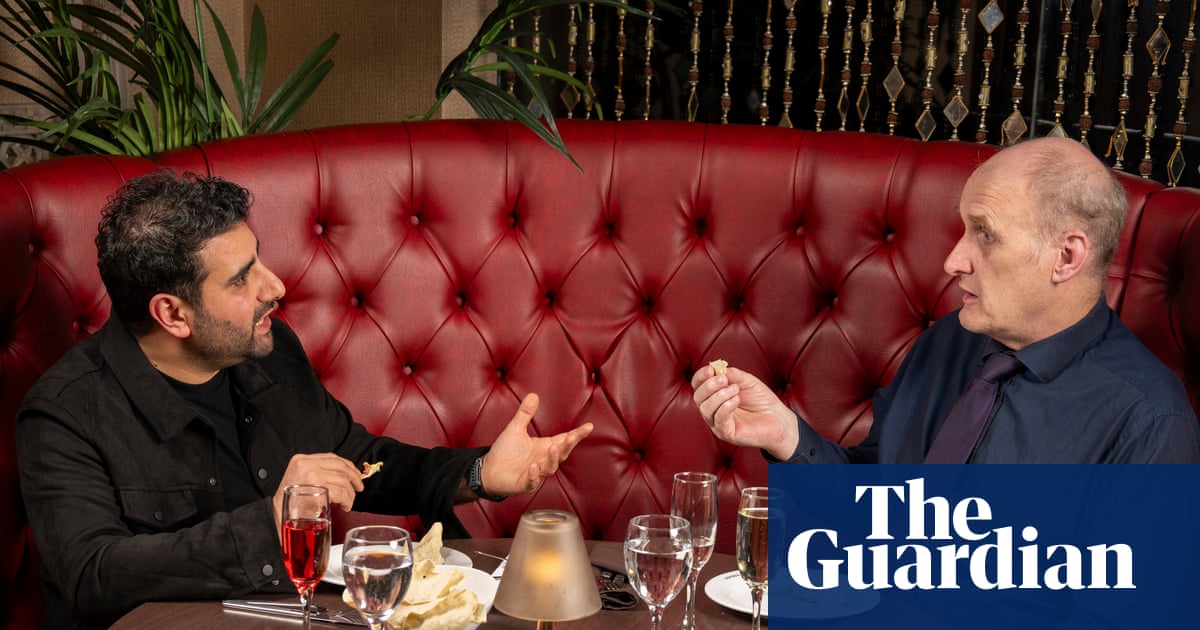
BIRMINGHAM – Two Birmingham residents with sharply different politics shared a meal at Indian restaurant Itihaas and debated immigration, religion and public life in an exchange that lasted “until closing time,” according to both participants.
The conversation paired Amrit, 32, an immigration solicitor who has “always” voted Labour but is now leaning toward the Green Party or Jeremy Corbyn’s Your Party “if it gets its act together,” with Jon, 67, who runs a small IT support company and backed the Conservatives “since Margaret Thatcher” before switching to Reform in 2024.
The exchange matters because their remarks mirror fault lines that often surface in British political discussion: immigration policy, portrayals of minority communities, and trust in information sources. All views described below are the participants’ own words from the dinner.
Who they are and how the meeting unfolded
– Amrit: immigration solicitor; 32; Birmingham; runner who once logged at least a mile a day for a year, narrowly missing falls “into the Birmingham canal” on icy days. As a practitioner in the UK’s rules‑based migration system, he spends his working life interpreting the Immigration Rules for clients navigating visas, asylum and settlement.
– Jon: runs a small IT support company; 67; Birmingham; previously worked on a damage management team at the HSBC building on Bishopsgate days after the 1993 IRA bombing, recalling colleagues teasing him for saying, “God, it looks like a bomb’s hit it.”
“We talked until closing time,” Amrit said. Jon described arriving after “the longest Uber journey – bloody 25 minutes to go five miles.” Over several hours, the pair moved from small talk to questions about who feels at home in modern Britain, what counts as evidence, and whether institutions can still be trusted.
Immigration, identity and disputed claims
Amrit said of his dinner companion: “He thinks Muslims want to take over.” He added that Jon “kept saying, ‘I bring receipts,’ but I didn’t feel he presented them,” and recalled asking, “Have you read the Qur’an?” to which “He said no.”
Jon responded that Amrit argued “in any era, you’ve always got the out-group,” a parallel he said he could see, adding: “these days we have access to way more information independently.” For him, online sources and social media clips felt more immediate and trustworthy than broadcasters or official statistics; for Amrit, that “independent” information needed to be weighed against the law, court findings and data.
On grooming-gang narratives, Amrit said: “There are reports of grooming and sexual abuse in Sikh gurdwaras, allegations of abuse and murder in a Hindu temple in India, we’ve seen it with Catholic priests. But when it comes to talking about grooming gangs in Rochdale, the narrative is completely set around Islam.” He argued that focusing on a single religion risked turning systemic child protection failures into a culture war.
Jon said: “A significant number of new mayors are Muslim. My local MP has campaigned to get our government to fund a bloody airport in Pakistan. It’s real, but they won’t publish it.” He presented this as evidence of a political class captured by minority interests. [The claim that MPs were seeking government funding was quickly debunked by news outlets, and no such expenditure appears in official spending plans.] For Amrit, that episode illustrated how quickly misinformation can harden into certainty once it circulates online.
Public figures, criminal records and principles
Amrit said: “I said Tommy Robinson is a criminal. He asked why I thought that. I said, ‘Because he’s been convicted of crimes.’ If somebody finds themselves in court, the conviction is based on what the evidence suggests.” For him, that was an example of why court judgments and due process should carry more weight than social media feeds.
Jon took the opposite view: “I’m Team Tommy. He was once a member of the BNP and they wouldn’t let his mates in because they weren’t white, and he realised this wasn’t what he had in mind. He’s the roughest bugger, but he has principles.” Jon framed Robinson as someone willing to challenge what he sees as establishment blind spots on extremism and grooming, even if that means breaking rules.
The discussion circled back to the wider question of who belongs. Jon said at one point:
“Immigration and emigration is actually a good and healthy thing. But Islam is an exception to that rule.” – Jon
Amrit pushed back that singling out one faith as a “problem” cut against the multi‑faith, equal‑treatment principles that underpin British public life, from anti‑discrimination law to local‑authority equality duties.
What they ate – and how it set the tone
Amrit ordered “butter paneer, the vegetarian substitute for butter chicken,” with extra paneer, rice and naans: “It was tasty, hits the spot every time.” He joked that he often ends up ordering the same dish when political arguments get heated because “it’s comforting and familiar in a conversation that isn’t.”
Jon had “lamb, poppadoms and rice, and the spinach thing – I should know the names, I’m married to a bloody Asian! It was really good, I’ll have to consider a trip back.” The easy teasing about food and family sat alongside far sharper disagreements, underscoring how ordinary social rituals can coexist with profound divides over national identity and policy.
How each participant summed up the night
Amrit: “One takeaway is that it’s good to actually listen to what people are saying on the other side of the fence. Unfortunately, I thought what Jon said came down to conspiracy theories. But I think it was great to have connected with a person with different political views.” As someone who deals daily with Home Office decisions and tribunal appeals, he said he was struck by how far Jon’s sense of Britain’s direction of travel sat from the legal realities he works with.
Jon: “He maintained his composure and manners. I’m sure every day in his job he hears stories, whether they’re true or not, of woe and despair. So I could surround him with facts and put a roof on it, and he’d still swear he could see the light.” For Jon, personal observation and anecdote remained more persuasive than institutional sources, even when those institutions were the courts or Parliament.
Final status: Amrit said he “would probably even meet him for a coffee again – though I probably wouldn’t bring up Islam!” Both men left without changing their minds on immigration or faith, but with a clearer view of how the same headlines and policies can produce starkly different stories about who Britain is for.
