
Miami Grand Prix: McLaren Momentum Challenges Mercedes Pole Streak Ahead of Qualifying
Following the conclusion of the Formula 1 Sprint event, the focus shifts to the critical qualifying session for the Miami Grand Prix. With the grid for the main race at stake, the session arrives at a pivotal moment in the season’s technical development curve and in the broader competitive reset under Formula 1’s current regulatory era, overseen by the Fédération Internationale de l’Automobile (FIA).
McLaren Seeking Breakthrough
Lando Norris enters qualifying with significant momentum. After securing both the Sprint pole position and the Sprint victory, Norris is positioned as a primary contender for the top spot. A grand prix pole would mark his first of the season for McLaren, signaling a potential shift in the competitive hierarchy and validating the team’s latest upgrade package on a representative, high-profile street circuit.
The ability to convert Sprint success into a main event pole is essential for McLaren to establish consistency. In a sport where track position heavily influences race strategy, securing the front row would allow Norris to dictate the pace of the Grand Prix from the outset and give McLaren strategic control over tyre choice, pit windows and how aggressively they defend against undercuts from Mercedes, Ferrari and Red Bull.
Mercedes’ Early Dominance Under Pressure
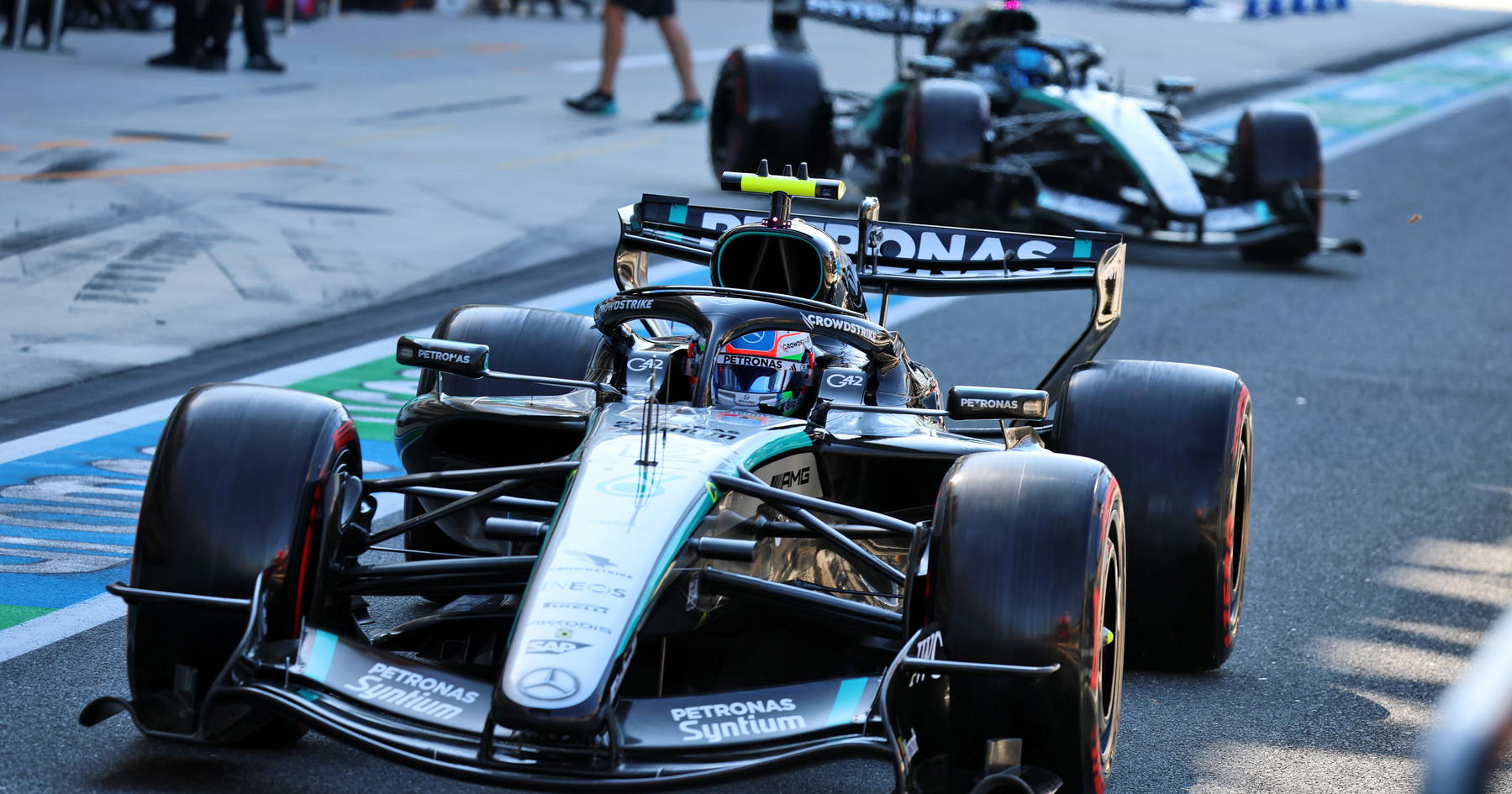
Until this weekend, Mercedes has held a firm grip on qualifying performance. George Russell and Kimi Antonelli have split all three grand prix poles recorded so far this season, demonstrating the raw pace of the Silver Arrows in single-lap trim and underlining how effectively the team has interpreted the current technical regulations.
However, the dynamics in Miami suggest a change in form. Early data indicates that the Mercedes W17 is currently trailing both McLaren and Ferrari in terms of pace, particularly in the medium- and low-speed sections where mechanical grip and ride quality over kerbs are decisive. This dip in relative performance creates an opening for other teams to break the Mercedes streak and forces Mercedes’ trackside leadership to consider more aggressive set-up and energy deployment decisions heading into qualifying.
The Pole Position Contenders
While Norris and the Mercedes drivers are central to the narrative, several other factors could influence the final qualifying order. The fight for pole will likely involve a diverse group of challengers, shaped not only by raw pace but by how each team adapts to evolving track temperatures and surface evolution across the session:
- Charles Leclerc: Seeking to leverage Ferrari’s current pace advantage over Mercedes and convert promising long-run simulations into a decisive one-lap statement.
- Lewis Hamilton: A perennial threat in qualifying who remains a key factor for the front row, particularly if Mercedes unlocks a narrow operating window for the W17’s tyres in Q3.
- Max Verstappen: Operating an upgraded Red Bull package designed to reclaim the competitive edge and test whether recent development directions can close the gap exposed by McLaren’s and Ferrari’s Miami form.
The impact of the Red Bull upgrades will be a primary point of analysis. If the technical adjustments provide the necessary grip and stability for the Miami circuit, Verstappen could disrupt the current McLaren-Ferrari-Mercedes struggle and reassert Red Bull’s authority in qualifying trim. Any step forward here will also be closely watched by rival technical departments as they calibrate their own development roadmaps under cost-cap constraints.
Competitive Implications
Qualifying in Miami is more than a battle for prestige; it dictates the tactical approach for the entire race on a circuit where overtaking opportunities, while present, are tightly linked to tyre life and energy deployment on the long straights. With the official Formula 1 championship standings evolving, the points delta between the top teams is narrow. A poor qualifying performance can force a driver into a reactive strategy, relying on pit-stop gambles, alternative tyre sequences and safety-car timing rather than outright pace.
For Norris, a pole would solidify his current form and position him as a credible, consistent threat in the title conversation rather than a sprint specialist. For Mercedes, it would be a necessary defense of their early-season dominance and an important signal that their development path remains directionally sound despite the Miami setback. For Verstappen and Red Bull, it serves as a litmus test for their latest aerodynamic and mechanical updates-and a measure of how quickly they can respond within the governing framework that now binds spending, design freedom and competitive balance across the grid.
Related reading
