McKenzie insists Rwanda’s F1 deal is not a defeat for South Africa as Africa’s Grand Prix future takes shape
South Africa’s Minister of Sports, Arts and Culture, Gayton McKenzie, has delivered a firm response after Formula 1 confirmed Rwanda as the host of a new African Grand Prix on a 10-year contract, stressing that the East African nation’s breakthrough does not mean South Africa has lost out.
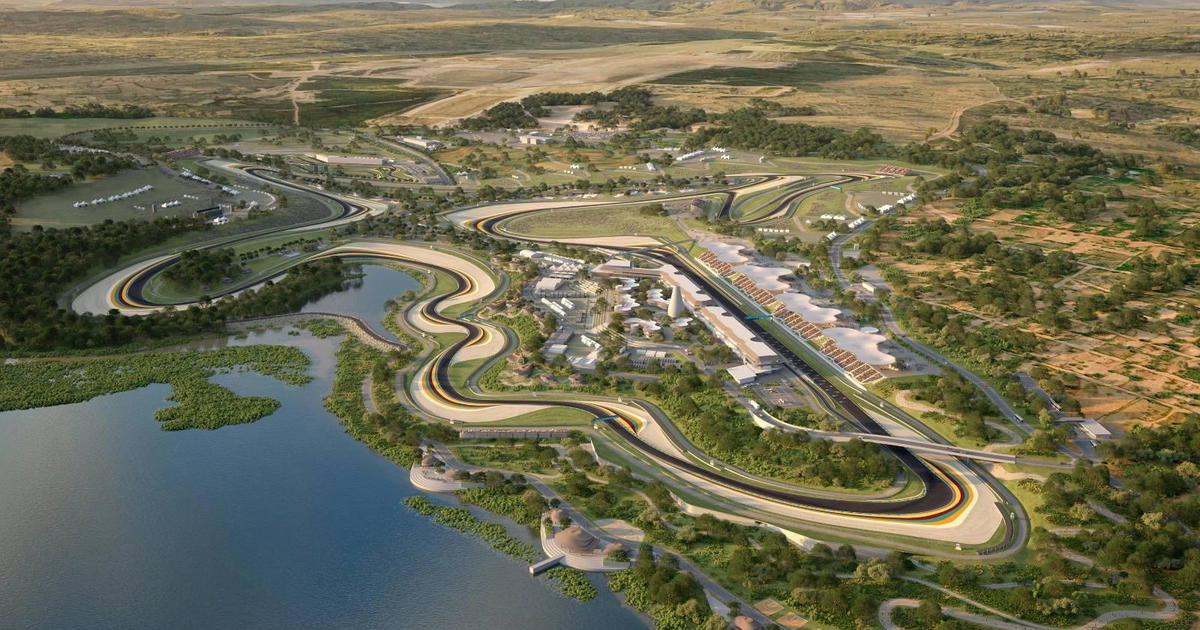
Formula 1 announced that it has signed a decade-long agreement to race in Rwanda from the early 2030s, with the event to be held at the planned RISE Motordrome in Bugesera, around 40 kilometres south of the capital Kigali. The purpose-built venue, designed by Tilke Engineers & Architects alongside Alexander Wurz’s WurzDesign, is being developed to meet FIA Grade 1 standards and will sit adjacent to Rwanda’s new international airport, positioning the project squarely within the global single-seater series’ expansion strategy.
South Africa has been pursuing its own return to the F1 calendar for several years. A previous push to revive the historic Kyalami circuit as a grand prix venue collapsed ahead of the 2023 season when promoters failed to meet Formula One Management’s financial guarantees. The Kyalami setback has loomed over discussions about bringing top-tier single-seater racing back to the country, which last hosted a world championship grand prix in the early 1990s under the regulatory framework overseen today by the Fédération Internationale de l’Automobile (FIA).
‘This is not a raffle’: McKenzie congratulates Rwanda while defending South Africa’s bid
Speaking during a media briefing, McKenzie directly congratulated Rwanda on securing its long-term slot while firmly rejecting the notion that South Africa had been “beaten” to an African grand prix.
“I want to congratulate Rwanda for being awarded a spot on the F1 calendar in a year in the 2030s,” McKenzie said. “Now, we in South Africa, we’re very happy that Rwanda has been awarded a spot, and I want to talk directly and congratulate the president of Rwanda, the Rwandanese [people], and the minister, who is a very good friend of mine. I would like to congratulate her.
“So I’ve seen many comments of people saying, ‘Oh, South Africa was beaten, South Africa was beaten.’ So, I want to address that issue. This is not a raffle. I’m going to repeat that. This is not a raffle.
“Rwanda has applied years before I even thought I would be a minister of sport, agriculture. Rwanda has done the work. We came on board. I was appointed, and I followed what F1 wanted us to do. Now, applying for a spot on the F1 calendar, we are not in competition.”
McKenzie’s intervention underlines a key point in F1’s modern scheduling: races are negotiated individually with Formula One Management and must satisfy commercial, infrastructural and regulatory requirements rather than being allocated on a simple first-come, first-served or rotational basis. Rwanda’s long-term agreement demonstrates that investment in a Grade 1-standard permanent facility and surrounding infrastructure can be decisive in securing a place on the calendar.
South Africa targets late-2020s return ahead of Rwanda debut
McKenzie stressed that South Africa remains intent on securing its own grand prix before Rwanda’s planned early-2030s debut, and that the government is now working with a defined commercial group to satisfy Formula 1’s demands.
“Now they say Rwanda has beaten us,” McKenzie added. “No, Rwanda has not beaten us. We as South Africans are looking still at 2028, 2029. Rwanda has done what they needed to do.
“We are South African. We have spoken to the most important people, which are the sponsors.
“We’ve got MTN. We’ve got Betway. We’ve got Discovery, we’ve got Canal+, and the big one I can’t announce because it’s going to be at our function of one of the biggest banks, is partnering with us, which I can’t mention now because we’re going to have another function where we’re going to announce it.”
The minister’s list of prospective backers highlights how heavily modern grands prix depend on private and corporate funding as much as on government support. For South Africa, assembling a credible sponsorship consortium is central to avoiding a repeat of the Kyalami collapse, when guarantees to Formula One Management could not be met and a planned return fell away.
Two parallel African projects with different timelines
Rwanda’s 10-year deal and South Africa’s target window of 2028-2029 place two African projects on distinct but potentially complementary tracks. From a competitive and commercial standpoint, a successfully delivered Rwandan Grand Prix would:
- Re-establish a regular African presence on the Formula 1 calendar for the first time in decades.
- Demonstrate that a purpose-built Grade 1 facility, integrated with a new international airport, can meet F1’s logistical requirements in a developing motorsport market.
- Create a point of reference for safety, event organisation and fan experience standards on the continent under FIA oversight.
For South Africa, a late-2020s race would serve a different role. The country has a historic association with grand prix racing and an established motorsport culture. A successful bid would:
- Restore a venue in a region with a strong fan base and existing circuit expertise.
- Offer teams and promoters a second African stop within a season, subject to calendar capacity and commercial agreement.
- Provide a platform for local and regional drivers, series and sponsors to align more closely with the top tier of single-seater racing, even if F1 driver selection remains strictly performance-based and controlled by teams.
While McKenzie insists the two bids are not in direct competition, both projects will be judged against the same regulatory and commercial thresholds. Rwanda’s long-term agreement illustrates what is required; South Africa’s next task is to demonstrate that its own package is sustainable, fundable and fully compliant with the standards set by Formula 1 and the FIA.
Calendar politics, infrastructure and the broader African motorsport picture
In recent years, F1 has expanded aggressively into new markets, balancing long-time European venues with races in the Middle East, Asia and the Americas. Each new grand prix places further pressure on calendar space, which is constrained by logistical limits, climate considerations and the demands placed on teams and drivers over a long season.
Against that backdrop, an African foothold has been widely viewed within the sport’s governance structures as strategically important but operationally complex. The RISE Motordrome project, alongside Rwanda’s new airport, offers Formula 1 and the FIA a clean-sheet facility designed around current safety regulations and event requirements. South Africa, in contrast, is working from an established motorsport base and must show that any chosen venue can be upgraded and financed on a sustainable basis after the disappointment of Kyalami’s aborted return.
McKenzie’s emphasis on sponsors such as MTN, Betway, Discovery and Canal+ illustrates how the bid is being framed as a partnership between government, private capital and broadcasters. For international stakeholders, clarity on that structure, and on long-term contractual stability, will be as important as fan demand or historical prestige.
Implications for teams, drivers and fans
If both projects proceed as outlined, teams could face a future calendar that includes one or more African stops, with clear competitive and commercial implications:
- Teams and drivers would have to integrate African travel into already demanding global logistics, potentially altering pre- and post-race preparation schedules.
- Manufacturers and sponsors with existing footprints in African markets would gain a high-visibility platform, likely intensifying local activations, junior driver programmes and fan outreach tied to the events.
- For African fans and regional championships, the presence of a world championship grand prix can lift interest in grassroots and feeder series, even though driver selection for Formula 1 itself remains determined by performance, licensing and team decisions rather than by event location.
For now, Rwanda holds a signed 10-year agreement for a race at the RISE Motordrome from the early 2030s, while South Africa is working to assemble the financial and institutional backing needed for a separate late-2020s bid. McKenzie’s message is that these are parallel efforts rather than a zero-sum contest-and that South Africa still expects to see Formula 1 return to its shores before Rwanda lights up the grid for the first time.