
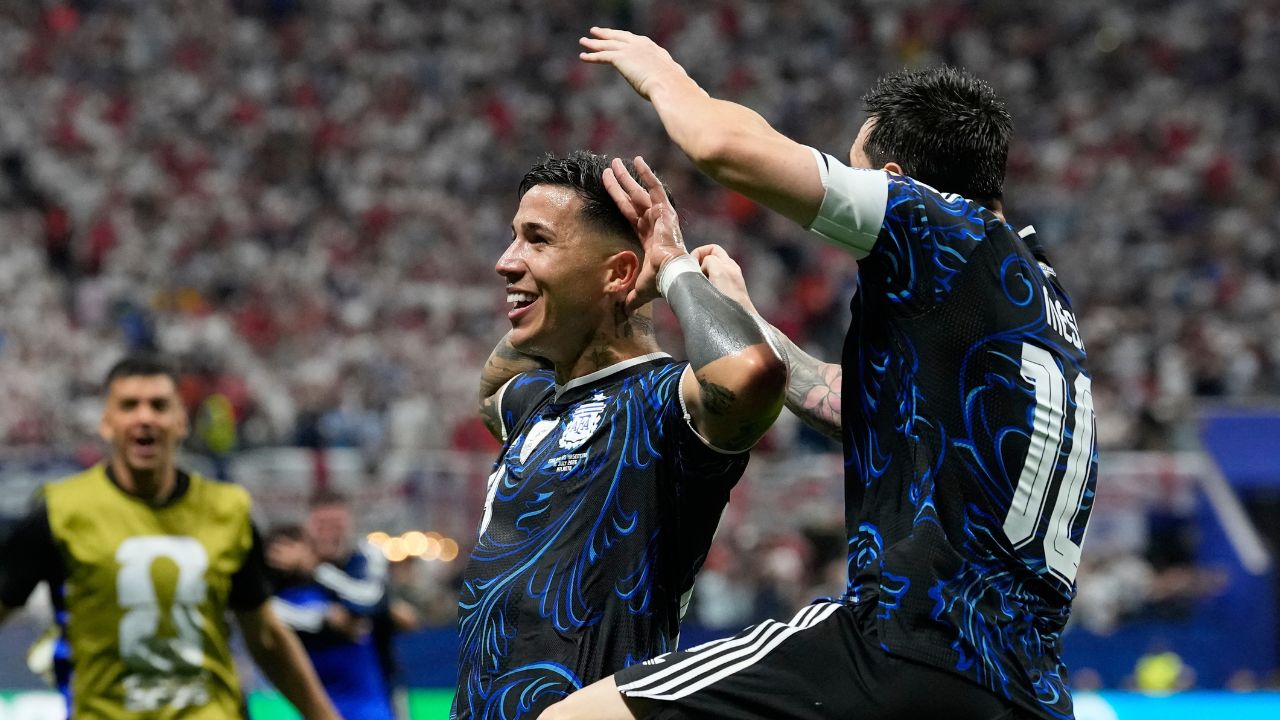
Argentina Edge England in Dramatic Semifinal to Secure World Cup Final Berth
A cagey, high-friction opening encounter transformed into a tactical battle of attrition on Wednesday in Atlanta, as Argentina overcame a second-half deficit to defeat England 2-1. The victory propels the world champions into the final, while England is left to contemplate a tactical collapse that cost them a historic opportunity to end a World Cup drought dating back to 1966.
The first half was defined by physical intensity rather than clinical finishing, recording 19 fouls and zero shots on target. This stalemate reinforced pre-match analytical models that predicted a low-scoring affair likely to be decided in extra time, underlining how little daylight there was between two sides ranked among the tournament favorites.
- Result: Argentina 2, England 1
- England Scorer: Anthony Gordon (55′)
- Argentina Scorers: Enzo Fernandez (72′), Lautaro Martínez (90’+2)
- Key Playmaker: Lionel Messi (2 assists)
- Venue: Atlanta, USA
Tactical Shift and the Gordon Breakthrough
Within the framework of the expanded 2026 tournament overseen by the FIFA Statutes, semifinals are designed as neutral-venue showcases, and this one followed the script of a contest decided on the finest of margins.
The deadlock broke ten minutes into the second half when Anthony Gordon capitalized on a defensive lapse by Nahuel Molina at the back post to give England a 1-0 lead. For the first hour, England’s pressing game was highly effective, with Gordon, Morgan Rogers, and Declan Rice coordinating to create the separation necessary to break through the Argentine lines and disrupt Argentina’s buildup from deep.
However, the momentum shifted as Argentina adapted to the press. Bypassing England’s increasingly passive low block with a relentless series of crosses into the penalty area, Argentina began to dictate the tempo and push England deeper. This pressure eventually culminated in an emphatic strike from Enzo Fernandez, who equalized following a short corner routine that pulled England’s markers out of position.
The winning goal arrived two minutes into added time, when substitute Lautaro Martínez found the net, securing Argentina’s place in the final and highlighting the team’s documented resilience in late-game scenarios. This follows a pattern seen earlier in the tournament against Egypt and Switzerland; nine of Argentina’s last 11 goals in this competition have been scored after the 79th minute, a trend that speaks to both conditioning and in-game management from the touchline.
The Tuchel Debate: Defense vs. Aggression
The aftermath of the match focuses heavily on the decision-making of England manager Thomas Tuchel and, by extension, the strategic direction set by the Football Association’s technical leadership. After establishing a lead, England transitioned into what Tuchel described as a defensive posture, prioritizing the preservation of the 1-0 scoreline over the pursuit of a second goal.
The tactical pivot began with the removal of goal-scorer Anthony Gordon in favor of defender Ezri Konsa, shifting the formation to a back five and effectively ceding territory. In the final 10 minutes, Tuchel further reinforced the defense by introducing Nico O’Reilly and Dan Burn. This “siege mode” resulted in a deep low block that became increasingly exploitable under Argentine pressure, with England struggling to relieve pressure or maintain meaningful possession.
The decision to leave Arsenal’s Bukayo Saka on the bench and the late, ineffective introductions of Marcus Rashford and Ivan Toney have raised questions regarding England’s inability to secure a second goal to kill the game. Within a national setup that has invested heavily in an attacking identity, these tactical choices now place Tuchel’s tenure under scrutiny as the Football Association looks toward Euro 2028 and reviews whether its high-performance strategy is being reflected on the pitch.
Speaking after the match, Tuchel maintained his position: “I analyzed the match and I did it a certain way so that’s my responsibility. In the moment, no regrets. The team gave everything and we were very, very close.” The coming weeks will determine whether that stance satisfies decision-makers at Wembley, who must balance continuity with mounting public and media pressure.
The Inevitability of Lionel Messi
At 39, Lionel Messi remains the central axis of the Argentine attack and, crucially, the team’s problem-solver when matches tighten. By providing the assists for both goals, Messi exploited the space afforded to him by an England defense that struggled to contain him in the game’s closing stages, especially once England’s wide players were pinned back in defensive roles.
Messi’s statistical dominance throughout the FIFA World Cup is evident, leading the tournament in several key creative metrics. According to performance data provider WhoScored, Messi has completed more dribbles (24), created more chances (25) and created more big chances (8) than any other player at the 2026 World Cup. He’s either scored or assisted in every Argentina game at this tournament, a level of consistency that continues to shape Argentina’s tactical approach around maximizing his touches in decisive zones.
Individual Standouts
- Enzo Fernandez: The Chelsea midfielder combined physicality with technical brilliance, scoring the crucial equalizer to bring Argentina back into the match and repeatedly stepping into advanced positions to overwhelm England’s midfield pairing.
- Lautaro Martínez: The Inter Milan striker demonstrated his opportunistic nature, scoring the winner shortly after entering the match as a substitute and punishing England’s failure to clear yet another dangerous delivery into the box.
Road to the Final
Argentina now advances to face Spain in the final this Sunday at the New York New Jersey Stadium, a showpiece that will test Argentina’s late-game resilience against Spain’s possession-based control. Spain will likely seek to avoid the mistakes made by England, specifically the decision to grant Messi significant time and space in the final third and to retreat too early into a defensive shell.
England will travel to Miami for a third-place consolation match against France, while the English media and fans continue to debate the tactical direction of the national team under Tuchel. For the FA, the semifinal defeat is more than a missed sporting opportunity: it is a stress test of a long-term high-performance program and talent pathway that has been carefully built over the past decade, and which must now be reviewed without panic but with clear-eyed accountability.
Related reading
