
Tour de France crash fallout: key sprinters out, several teams counting the cost after Stage 12 pile-up
The medical consequences of the high-speed crash in the final kilometre of Stage 12 of the Tour de France are beginning to reshape the race, as teams confirm withdrawals and detail injuries from the incident in Chalon-sur-Saône.
The crash, which occurred as the peloton accelerated to launch the sprint around 350 metres from the finish line, involved riders from multiple teams and left visible damage across the road. While the official results did not fully reflect the chaos, with affected riders given the same time as the main bunch because the fall happened within the final 5km, several competitors have already been ruled out as non-starters for Stage 13.
Crash inside 5km rule cushions time loss, not physical damage
Under race regulations overseen by the Union Cycliste Internationale, riders delayed by a crash in the final 3-5km of flat or sprint stages are typically awarded the same time as the group they were part of when the incident occurred. That framework was applied in Chalon-sur-Saône, meaning the general classification and sprint timings did not show the full sporting cost of the pile-up.
However, the rule does nothing to mitigate the physical impact. Team medical updates issued after the stage confirmed a series of injuries ranging from heavy abrasions to broken collarbones, and those diagnoses are now directly influencing team strategies for the remaining days of the race.
Key withdrawals: Gaviria and Berckmoes out with collarbone fractures

Caja Rural-Seguros RGA – Fernando Gaviria
Caja Rural-Seguros RGA confirmed that Fernando Gaviria will abandon the Tour de France after medical tests revealed a fracture of his left collarbone. The Colombian sprinter suffered a heavy fall in the Stage 12 sprint after being cut off as the race opened up. He hit the ground hard, sustaining a significant impact that left him in intense pain in the collarbone area.
For Caja Rural-Seguros RGA, the loss of Gaviria removes a leading finisher for the remaining flat stages and alters their tactical options in the bunch sprints. In a race where opportunities for smaller teams are often concentrated into a handful of days, losing a designated sprinter at this point changes the balance of risk and reward for the rest of the squad.
Lotto-Intermarché – Jenno Berckmoes and Liam Slock
Lotto-Intermarché have also been hit hard. The team reported that Jenno Berckmoes crashed heavily in the sprint and has suffered a broken collarbone, forcing him to leave the race. He is scheduled to undergo surgery in Belgium.
Teammate Liam Slock was likewise involved in the same incident. Initial assessments found abrasions on both elbows and on his right hip. He is expected to continue in the Tour, subject to how he responds overnight and in subsequent checks.
For Lotto-Intermarché, the combination of a withdrawal and a battered support rider weakens their depth for both breakaway attempts and lead-out roles. Even when time gaps are neutralised by the 5km rule, cumulative injuries can erode a team’s capacity to influence stages and protect its leaders.
Teams managing riders under close observation

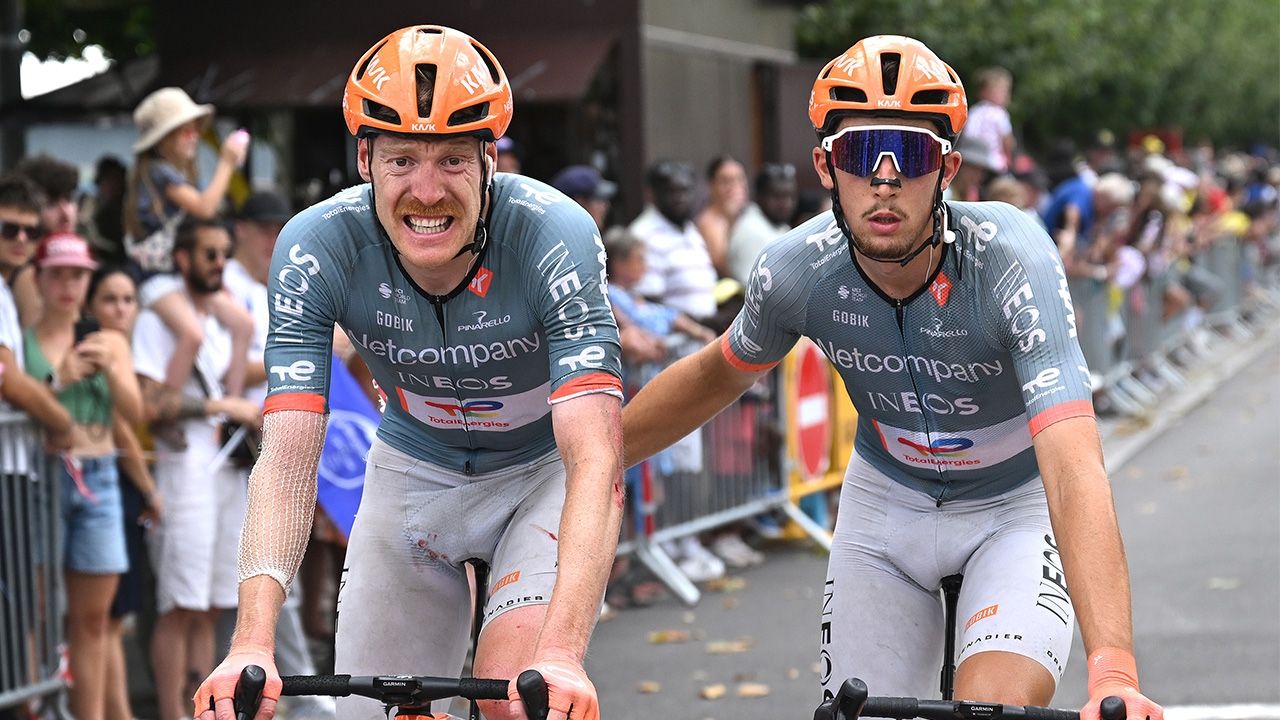
Netcompany Ineos – Dorian Godon
Netcompany Ineos reported that Dorian Godon crashed in the sprint after a rider fell in front of him, leaving him with skin abrasions and muscular back pain. Examinations by the Tour de France race doctor and the team’s medical staff found no evidence of concussion.
Godon will be monitored at least twice a day under concussion protocols, reflecting the heightened focus within the sport on head injury management. For Netcompany Ineos, keeping a rider under observation rather than immediately withdrawing him preserves flexibility for upcoming stages, but also demands careful, ongoing assessment as fatigue and accumulated trauma build through the race.
Picnic PostNL – Pavel Bittner
Picnic PostNL confirmed that Pavel Bittner was caught in the large crash in the finale, ending any chance of a result on the stage. At this stage, he is reported to be “ok”, and there has been no indication from the team that he will not continue.
Even when riders appear to escape serious structural damage, the combination of road rash, stiffness and disrupted preparation can affect sprint trains and positioning in subsequent days, especially if more flat or rolling stages follow quickly.
Uno-X Mobility bruised but still in the race

UNO-X Mobility – Søren Wærenskjold, Jonas Abrahamsen and Anthon Charmig
UNO-X Mobility saw three riders caught up in the late crash: Søren Wærenskjold, Jonas Abrahamsen and Anthon Charmig all went down before the sprint in Chalon-sur-Saône.
The team reported that all three sustained multiple cuts and abrasions. Immediate examinations did not identify any injuries requiring X-rays, and the riders will continue to be monitored closely, with concussion assessments carried out where appropriate.
For a team built around aggressive riding and breakaway presence, the impact is less about time lost on Stage 12 and more about how much physical resilience the riders have retained. Even relatively minor trauma can limit a rider’s ability to shoulder wind on the front, respond to accelerations or contest intermediate opportunities in the days that follow.
Stage 13 start list shaped by overnight medical reports
The immediate implication of the Chalon-sur-Saône crash is a reduced peloton for Stage 13, with riders such as Gaviria and Berckmoes already confirmed as non-starters due to collarbone fractures. Others remain under close supervision, with teams balancing medical prudence against the competitive demands of a three-week race.
From a sporting perspective, the loss of sprint specialists and key support riders will alter the dynamics of upcoming flat and transitional stages. Sprint trains may be shortened or reconfigured, and some teams may pivot from pure sprint ambitions to breakaway tactics if their lead-out structures have been compromised.
The incident also underlines how much the Tour de France hinges on risk management in the final kilometres of high-speed stages. While time protection rules help shield overall contenders from arbitrary time losses, they cannot shield teams from the longer-term attrition that follows a major crash. As medical updates continue to emerge, the true cost of Stage 12 will be measured not just in withdrawals, but in how diminished squads are able to respond as the race moves into its decisive phases.
For readers seeking a broader overview of the race context in which this incident occurred, the Tour de France remains the central event on the men’s road calendar, with its structure and safety protocols embedded within the wider framework of Grand Tour organisation and international cycling governance.
Keep reading
