
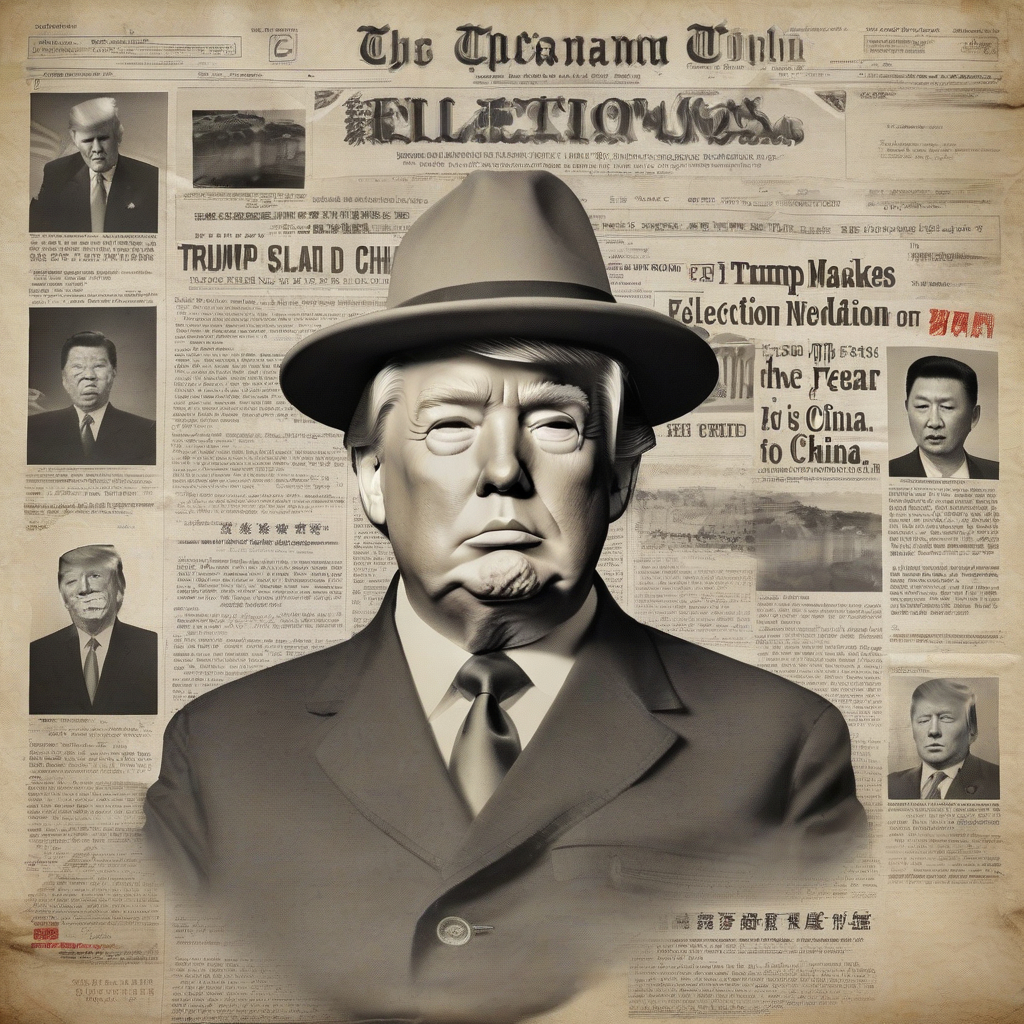
WASHINGTON – Donald Trump accused the Chinese government of interfering in the 2020 U.S. presidential election during a televised address from the White House, alleging that the nation’s electoral infrastructure is “dangerously exposed” to foreign hacking and exploitation.
The address focused on the integrity of the U.S. electoral process and a perceived cover-up by intelligence agencies, coming as political opponents warn the president is attempting to influence the upcoming congressional midterm elections. The speech marked the latest escalation in a years-long dispute over the legitimacy of the 2020 result and the proper scope of federal authority over how states run elections under the U.S. Constitution and the federal framework that governs congressional election administration.
Allegations of Electoral Vulnerability
During the 25-minute speech delivered in the East Room, the president stated that the U.S. electoral system falls “catastrophically short” of standards of fairness and trust.
“No country can be great without fair and honest elections,” Trump said. “If there can be no trust, there can be no greatness. Unfortunately, the system we have falls catastrophically short of that standard.”
To address these concerns, the president repeated calls for the passage of the Save America Act, legislation that would require strict voter ID and expand federal oversight of voter registration systems. The proposal would put Washington at the center of debates that have largely played out in state legislatures and courts over the past decade, pitting expansive voter access measures against more restrictive identification and eligibility rules.
“Addressing this crisis of election security demands that Congress must pass the Save America Act,” he said. “How easy is that to do? Unless you want to cheat.”
Intelligence Disputes and the “Deep State”
The president announced the immediate declassification and release of intelligence documents intended to reveal vulnerabilities in election infrastructure, including voting machines, voter registration databases, and systems used to transmit unofficial results from counties to state capitals.
These claims contradict previous findings from his own first administration. John Ratcliffe, the former Director of National Intelligence, previously concluded that the 2020 election was the most secure in U.S. history and that while foreign governments sought to influence public opinion, there was no evidence that foreign actors changed vote tallies or prevented ballots from being counted.
Trump attributed this discrepancy to a years-long cover-up by intelligence agencies, whom he described as “the deep state.”
“Those responsible for sounding the alarm instead kept the information secret and hidden,” he said. “They did not disclose to me as president or to anyone else and, to the best of our knowledge, they did not inform Congress.”
The president framed the move as a corrective to what he called a culture of secrecy inside the intelligence community, even as current and former officials have warned that selective declassification of raw material, outside normal review processes, can strip findings of context and chill cooperation with allies.
Administration Personnel and Document Release
The drive to release these documents has been led by two key figures:
- Bill Pulte: The Acting Director of National Intelligence and a presidential ally with no prior intelligence experience. Pulte previously led the federal housing finance agency and has argued that the intelligence community needs what he calls “outsider accountability.”
- John Solomon: A former journalist and current White House special adviser who has become a prominent media defender of the president’s claims about the 2020 election.
Speaking to reporters following the address, Solomon acknowledged that the released documents contained no evidence that foreign actors flipped a single vote in the 2020 election. Instead, he said, they were intended to show that foreign intelligence services “tested” U.S. systems and probed for weaknesses in ways the public had never been told.
The admission undercut the president’s most sweeping suggestions of direct manipulation while still fueling his argument that the public was misled about the scale of attempted interference.
Diplomatic and Political Responses
The Chinese embassy in Washington issued a denial prior to the speech. Spokesperson Liu Chang stated, “China has never and will never interfere in the presidential elections of the US.” Beijing has regularly rejected U.S. intelligence assessments alleging malign cyber activity and information operations targeting American politics.
Democratic leadership characterized the speech as an attempt to spread misinformation ahead of the midterm elections and to erode confidence in the nonpartisan machinery of U.S. democracy, including state and local election officials, career civil servants and federal judges appointed by presidents of both parties.
“Tonight, Americans heard the president once again repeat claims about our elections that have been investigated for years and repeatedly rejected by the Intelligence Community, the FBI, DHS, DOJ, bipartisan state election officials, audits, recounts, and the courts,” said Senator Mark Warner, vice-chairman of the Senate Intelligence Committee. “The facts have not changed.”
Kamala Harris, the former vice-president and 2024 Democratic candidate, also denounced the claims on social media.
“Here is what you need to know: The 2020 election was not stolen; we won and he lost,” Harris wrote. “The Save Act is voter suppression. It is part of a larger agenda of conservatives trying to steal power from the people.”
The clash underscored a widening partisan divide over how to interpret the dozens of court rulings, recounts and audits that followed the 2020 vote, and over the role of federal agencies charged with election security, such as the Cybersecurity and Infrastructure Security Agency, whose public assessments have repeatedly affirmed the integrity of that election.
Geopolitical Updates on Iran
The address briefly touched upon the ongoing conflict with Iran. The president stated, “We are … winning big in Iran, and you will see the fruits of that labor very, very shortly.”
This follows recent military strikes ordered by the president to loosen Tehran’s grip on the strait of Hormuz, a chokepoint through which a significant share of the world’s seaborne oil supply typically passes. The waterway has been largely closed to commercial shipping since the start of the war on February 28, contributing to a rise in global energy costs and renewed calls from U.S. allies for a coordinated maritime security response.
Administration officials have argued that pressure on Iran is necessary to restore freedom of navigation and deter further attacks on tankers, but they have offered few details about endgame conditions or how the campaign intersects with stalled diplomatic efforts over Iran’s nuclear program.
Media Broadcasts and White House Operations
Several major networks, including NBC, ABC, and CNN, declined to air the address on their primary broadcast channels, citing concerns that the content was inflammatory or politically partisan ahead of a federally regulated election season. The decision highlighted the growing tension between news organizations’ obligations to cover a sitting president and their standards on amplifying unsubstantiated claims about the electoral process.
Trump responded by calling for the revocation of their broadcast licenses. Under U.S. law, broadcast licenses are issued and renewed by the Federal Communications Commission, which has historically resisted efforts by presidents of either party to punish news outlets over critical coverage.
The networks provided live coverage via their streaming services, and some ABC affiliates aired the speech, creating a patchwork of access that mirrored earlier fights over how much live airtime to grant presidential remarks repeating false or unsubstantiated claims.
The event was also marked by internal White House turmoil:
- The president’s long-term teleprompter operator was placed on administrative leave.
- The operator is alleged to have placed nearly $100,000 in bets on a prediction market regarding the speech’s content.
- Press Secretary Karoline Leavitt confirmed a new operator was assigned for the address.
The president has directed the Office of National Intelligence, the Department of Justice, the FBI, and the CIA to investigate the alleged cover-up of election intelligence, with orders to fire those involved and file criminal charges if appropriate. Any such effort would test long-standing norms intended to insulate law enforcement and intelligence agencies from direct political retaliation, even as they remain formally accountable to the executive branch and Congress.
Keep reading
