
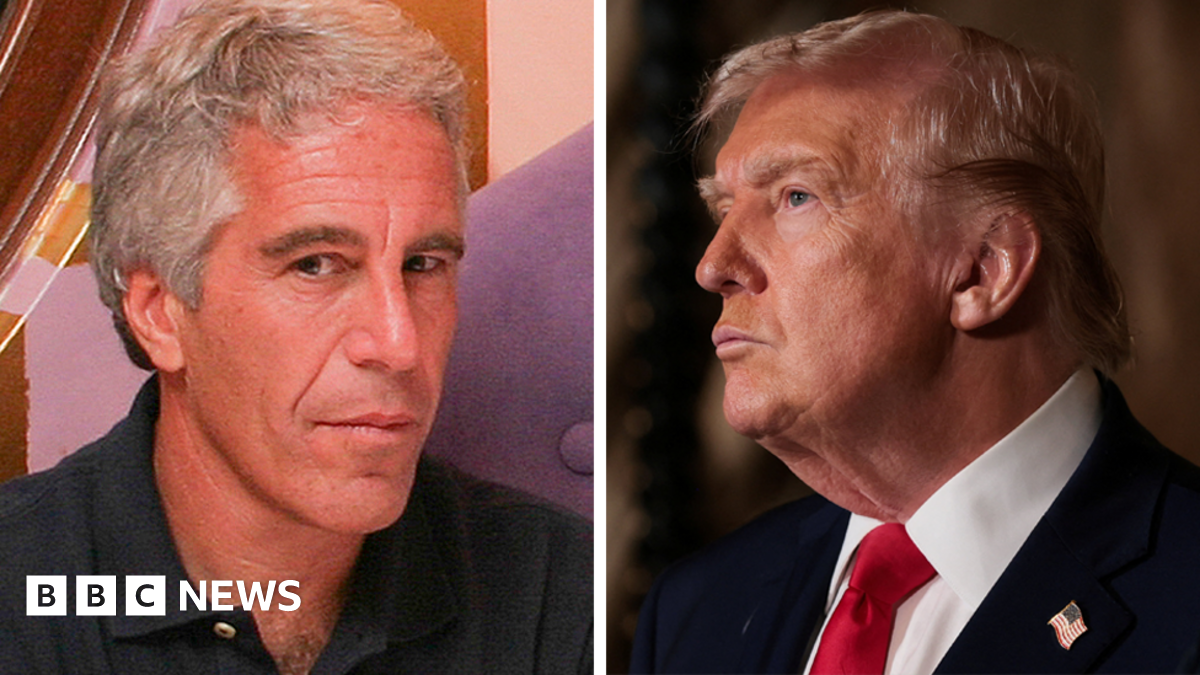
An email dated January 7, 2020, disclosed in U.S. Department of Justice records, states that Donald Trump was listed as a passenger on at least eight flights on Jeffrey Epstein’s private jet between 1993 and 1996, including at least four flights on which Ghislaine Maxwell was also present.
The message, part of an email chain titled “RE: Epstein flight records,” also says Trump is listed as having traveled “with, among others and at various times, Marla Maples, his daughter Tiffany, and his son Eric.” The sender and recipient are redacted; a signature block at the bottom identifies “assistant US attorney, Southern District of New York,” with the name removed. The email appears to summarize information drawn from underlying flight manifests that are not included in the message itself.
“Donald Trump traveled on Epstein’s private jet many more times than previously has been reported (or that we were aware).”
According to the same email: “He is listed as a passenger on at least eight flights between 1993 and 1996, including at least four flights on which Maxwell was also present. He is listed as having traveled with, among others and at various times, Marla Maples, his daughter Tiffany, and his son Eric.” It adds: “On one flight in 1993, he and Epstein are the only two listed passengers; on another, the only three passengers are Epstein, Trump, and then-20-year-old” – with the person’s name redacted. “On two other flights, two of the passengers, respectively, were women who would be possible witnesses in a Maxwell case.”
The email does not allege criminal conduct by Trump, nor does it describe the purpose of the trips, the departure and arrival locations, or who paid for the flights. It reflects an internal assessment by a federal prosecutor, with key details withheld under disclosure rules that govern ongoing or related investigations.
Maxwell’s 2022 sentence and Trump’s prior statements
In 2022, Ghislaine Maxwell was sentenced in federal court in New York to 20 years in prison for crimes including conspiracy to entice minors to travel to engage in illegal sex acts and sex trafficking of a minor, offenses prosecuted under U.S. sex trafficking laws such as 18 U.S.C. § 1591 (Sex trafficking of children or by force, fraud, or coercion), which sits within the broader framework of Chapter 77 of Title 18 of the United States Code. Her conviction followed a high-profile jury trial that examined how Epstein and Maxwell used private air travel, multiple residences, and a network of associates to facilitate abuse of underage girls over many years.
Trump was a friend of Epstein’s for years in New York and Palm Beach social circles, but he has said they fell out in about 2004 – years before Epstein was first arrested – and that they had not been close for a long time before Epstein’s 2019 federal sex-trafficking indictment. Trump has consistently denied any wrongdoing in relation to Epstein, including after Epstein’s death in custody, and his presence on the flights does not by itself indicate criminal conduct or knowledge of specific offenses. No charges have been brought against Trump in the Epstein or Maxwell cases.
The email forms part of a Justice Department document release on Epstein records and includes several redactions, including the sender, recipient, and one passenger’s name referenced in the 1993 flight. The material was released as part of ongoing public and media efforts to obtain Epstein-related files from the Department of Justice and federal courts, including through the Freedom of Information Act and related transparency litigation.
For readers, the disclosure highlights how often political, business, and entertainment figures intersected with Epstein’s private travel network in the 1990s, and it underscores the continuing scrutiny of how federal authorities documented and later revisited those connections. That scrutiny has extended from the original non-prosecution agreement approved by federal prosecutors in Florida to later reviews by the Justice Department’s internal watchdog and congressional oversight committees, all of which operate against the backdrop of longstanding federal commitments to crime victim rights and public accountability in high-profile abuse cases.
- Urban Infrastructure Resilience: How European and Asian Megacities Are Adapting to Extreme Climate Oscillations in 2026
- UN General Assembly 2026 Framework on Autonomous Systems: International Diplomacy Faces Algorithmic Governance
- Jay Clayton named White House AI czar by Trump to lead task force (globallypulse.com)
- Bijan Robinson’s Strong Start: Is the Falcons Star Pacing for NFL Records? (archysport.com)
