
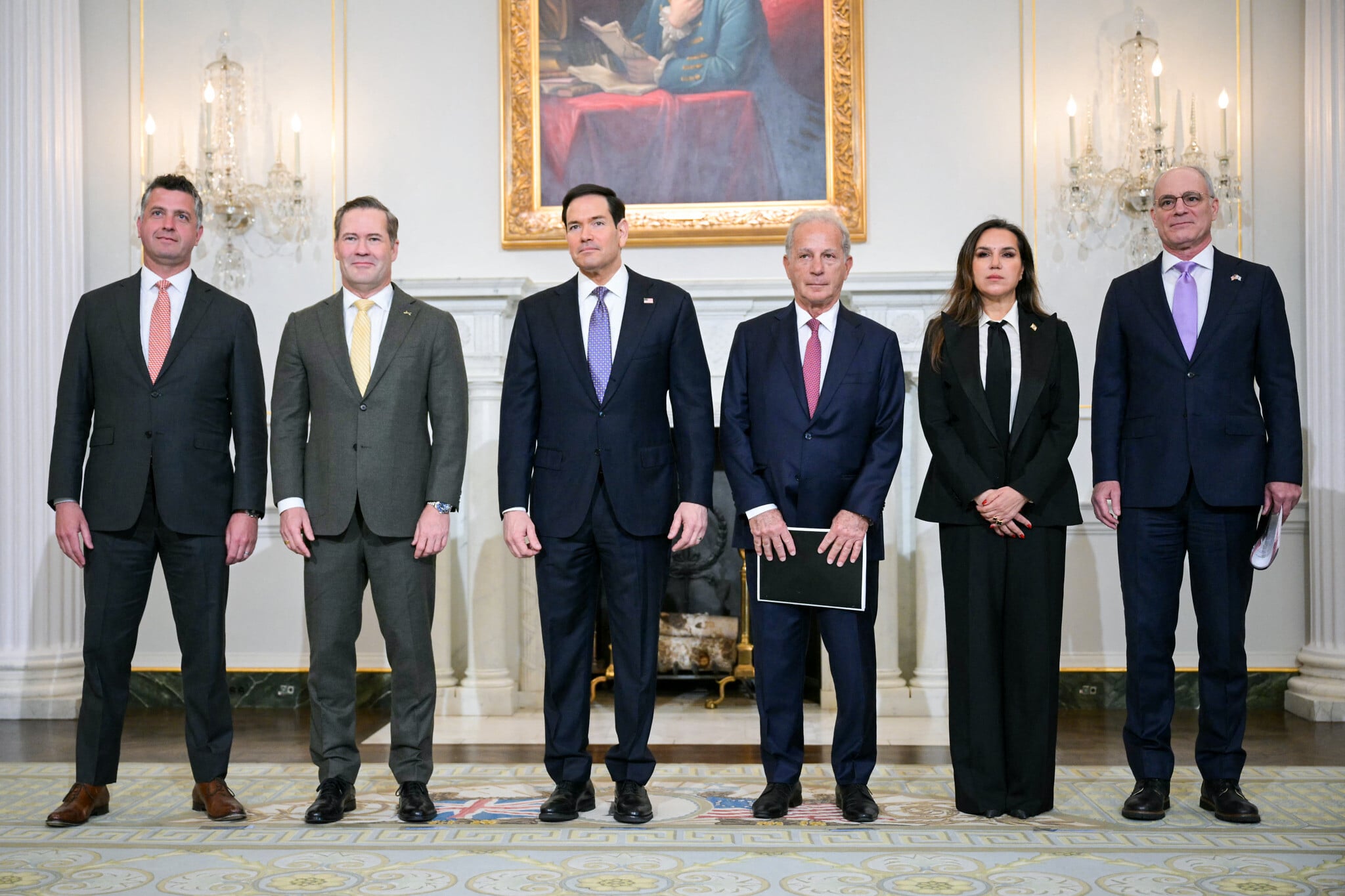
WASHINGTON – Direct diplomatic talks between Israeli and Lebanese officials at the U.S. State Department have revealed a profound divergence in objectives, with the two sides fundamentally disagreed on whether a ceasefire must precede or follow the disarmament of Hezbollah.
The summit, brokered by the United States, represents a rare instance of direct engagement between the two longtime adversaries. However, the optimistic rhetoric emanating from Washington and Jerusalem clashes sharply with the immediate, survival-driven demands of the Lebanese government in Beirut. The impasse underscores the fragility of regional stability and the enduring influence of Tehran over the Levant’s security architecture.
The talks occur against a backdrop of escalating hostilities along the “Blue Line,” the UN-recognized border that has remained a flashpoint of asymmetric warfare for decades. While the U.S. seeks a comprehensive regional settlement, the immediate priorities of the participants remain miles apart.
“The hope today is that we can outline the framework upon which a permanent, lasting peace can be developed so that the people of Israel can live in peace and the people of Lebanon can live, not just in peace but in the prosperity and security that they deserve,” U.S. Secretary of State Marco Rubio said on Tuesday following the sessions.
For the Israeli delegation, the definition of “peace” is inextricably linked to the removal of Hezbollah’s military infrastructure from southern Lebanon-a goal aligned with the long-stalled implementation of UN Security Council Resolution 1701, which mandates that the area between the Blue Line and the Litani River be free of any armed personnel and weapons other than those of the Lebanese government.
“There is a mutual Israel and Lebanese interest to dismantle Hezbollah and forge a real peace between Lebanon and Israel,” a senior Israeli official told The Times of Israel. “That is what we will be concentrating on.”
This vision of a normalized future was echoed by Ambassador to Washington Yechiel Leiter, who described a long-term goal of a “clearly delineated border between our countries, and where the only reason we’ll need to cross each other’s territory will be in business suits to conduct business or in bathing suits to go on vacation.”
The Ceasefire Deadlock
Lebanese officials, conversely, view the Israeli demand for disarmament as an unrealistic prerequisite for dialogue. For Beirut, the primary objective is the immediate cessation of Israeli airstrikes and ground operations, which they argue is necessary to create the political space for any serious internal debate over Hezbollah’s future.
Before the meeting, Lebanon’s President Joseph Aoun expressed his hope that “an agreement will be reached on a ceasefire in Lebanon, with the aim of initiating direct negotiations between Lebanon and Israel, which will be handled by a Lebanese negotiating team to put an end to hostile actions.”
The Lebanese delegation has framed the Washington talks not as a peace summit, but as a preliminary attempt to stop the bloodshed and stabilize the border. Culture Minister Ghassan Salame emphasized that the current phase is merely “an ambassadorial level” meeting, signaling that Beirut is not yet prepared to elevate the talks to the level of a formal political process.
“Our intent is to press during that meeting tomorrow for a pause in violence,” Salame told Al-Monitor, adding that Beirut is seeking a 15-day pause in fighting as a condition for considering broader negotiations.
The disconnect was codified in the subsequent joint statement. While Lebanon “reaffirmed the urgent need” for a full cessation of hostilities, the U.S. and Israel notably omitted any mention of a ceasefire, focusing instead on the disarmament of Hezbollah and Israel’s right to self-defense. For Israeli officials, any premature ceasefire risks entrenching Hezbollah’s current positions and leaving northern communities vulnerable to renewed rocket fire.
“Lebanon is saying, the road to a peace runs through a ceasefire, and Israel is saying the road to peace runs through disarmament,” said David Makovsky of the Washington Institute for Near East Policy.
The Iranian Linkage
While all three parties publicly maintain that the Israel-Lebanon track is independent of the broader U.S.-Iran diplomatic efforts, analysts and officials acknowledge that the former is functionally dependent on the latter, given Hezbollah’s longstanding role as one of Tehran’s most capable regional proxies.
Lebanon’s Foreign Minister Youssef Raggi attempted to distance the two files during talks with his German counterpart, stating, “This track has in practice reinforced the separation between the Lebanese file and the Iranian track.”
However, the reality of Lebanon’s internal power structure makes this separation largely cosmetic. Hezbollah operates as a “state within a state,” possessing military capabilities that far exceed those of the Lebanese Armed Forces (LAF). The group maintains its own command structure, arsenal, and social services network, and the Lebanese government lacks the coercive power to disarm it without risking a catastrophic internal conflict. Internationally, Hezbollah is designated as a terrorist organization, in whole or in part, by the United States and several European and Arab states, further complicating any accommodation with the movement.
- The Pakistan Summit: Direct U.S. talks with Iran in Pakistan recently concluded without a follow-up agreement, highlighting the stalemate over Tehran’s regional proxies and its insistence that such issues remain off the negotiating table.
- The Proxy Doctrine: Iran continues to refuse discussions regarding its support for Hezbollah in Lebanon and Hamas in Gaza, arguing that its alliances are part of a broader “axis of resistance” against Israel and Western influence.
- Internal Pressure: The Aoun government faces significant domestic backlash, as direct talks with Israel are viewed by many Lebanese factions as a concession without tangible gain on security, reconstruction, or economic relief.
A Beirut-based analyst told The Times of Israel that the two theaters are inextricably tied: “You can’t find a workable solution in Lebanon without trying to find a workable solution in Iran.”
Strategic Leverage and Risks
The current stalemate leaves the Lebanese government in a precarious position. President Aoun must “sell” the diplomatic process to a skeptical public, a task made nearly impossible by ongoing Israeli bombardment and the perception that Beirut has limited leverage both over Hezbollah and over the terms of any eventual deal.
“As long as the bombing continues, it’s very hard for us to sell the idea of sitting with Israel,” Salame noted.
Israel, however, remains convinced that only a fundamental shift in Tehran’s posture-or a significant weakening of the Iranian regime-will lead to a sustainable border. In Israeli and some U.S. policy circles, that calculus has translated into calls for a far more assertive approach toward Iran’s regional activities.
Potential triggers for such a shift include:
- The implementation of a comprehensive blockade of Iranian ports to deplete the regime’s financial reserves.
- Direct U.S. military strikes on Iranian energy infrastructure to cripple its ability to fund the “Axis of Resistance.”
Such measures would carry significant legal, economic, and regional-security implications, and U.S. officials have so far signaled a preference for calibrated sanctions and coercive diplomacy over open confrontation.
Without a broader regional catalyst, the prospects for a breakthrough in Washington remain slim. Israel is unlikely to cease operations while Hezbollah remains a potent threat on its northern border, and the Lebanese government cannot disarm Hezbollah without Iranian consent or a total collapse of the group’s regional support.
For now, the Washington talks highlight the gap between aspirational diplomacy and on-the-ground realities along the Blue Line. The U.S. State Department has not scheduled a follow-up meeting between the Israeli and Lebanese delegations, leaving the ceasefire-versus-disarmament dilemma unresolved and the risk of further escalation uncomfortably high.
Worth a look
