
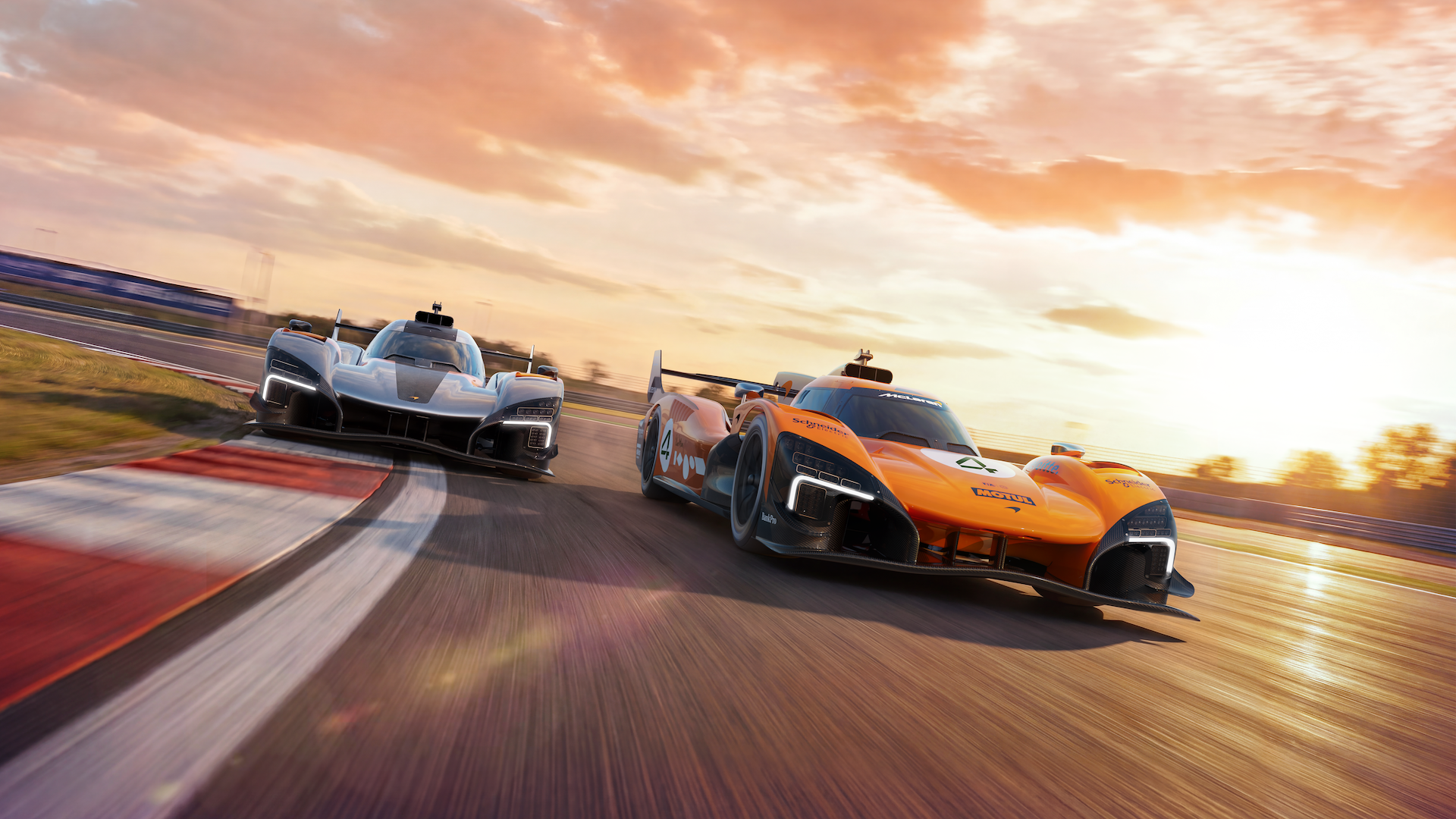
McLaren Targets Triple Crown with MCL-HY Hypercar Reveal
McLaren has officially unveiled the MCL-HY FIA Hypercar, marking the manufacturer’s strategic return to the premier class of sports car racing. The vehicle is engineered to compete in the FIA-sanctioned World Endurance Championship (WEC) and the 24 Hours of Le Mans starting in 2027, placing the brand back at the centre of endurance racing’s top regulatory framework.
The entry into the Hypercar category is a calculated move to position McLaren as one of the few entities capable of pursuing the Triple Crown of motorsport. By adding a WEC presence to its existing operations in Formula 1 and the NTT IndyCar Series, the organization now possesses the necessary infrastructure to contest victories at the Monaco Grand Prix, the Indianapolis 500, and the 24 Hours of Le Mans in a single, integrated factory programme.
Technical Specifications and Regulatory Framework
Developed under joint ACO and IMSA LMDh (Le Mans Daytona h) regulations, the MCL-HY is designed to balance headline performance with the extreme efficiency and cost controls required for modern endurance racing. The LMDh framework, which governs eligibility for both the WEC Hypercar class and the IMSA GTP class in North America, mandates a standardized hybrid system and spec chassis suppliers while allowing manufacturers to develop their own combustion engines and bodywork. In practice, it is a ruleset that blends technical freedom with the budget caps and parity tools now common across elite international sport.
MCL-HY Race Car Key Data:
- Chassis: Lightweight carbon fibre monocoque
- Powertrain: Twin-turbocharged V6 race engine paired with a hybrid MGU system
- Output: Up to 520kW (707PS) delivered to the rear axle
- Minimum Weight: 1,030kg
The development of the car represents a structural integration between McLaren Racing’s aerodynamic and engineering divisions and McLaren Automotive’s design and production teams, aligning the programme with the company’s broader road-car strategy on electrification, lightweighting and aero efficiency. Internally, the MCL-HY is being positioned as a halo project that can influence both competition policy inside McLaren and future high-performance road models.
Development Timeline and Driver Lineup
McLaren will initiate a rigorous testing phase in May 2026. This period is critical for refining the vehicle’s balance, energy management strategy and reliability before final homologation in the winter of 2026, when the car will be locked into the regulatory cycle governing the 2027 season. The programme is designed to support the simultaneous evolution of the race car and a commercial track derivative, allowing engineering decisions to flow in both directions.
The 2026 test programme will feature a blend of established works talent and emerging drivers, reflecting McLaren’s push to deepen its factory driver pool across series:
- Works Driver: Mikkel Jensen
- Driver Development Programme (DDP): Gregoire Saucy and Richard Verschoor
- Development Specialist: Ben Hanley (United Autosports)
Beyond pure performance, the test and development phase will feed into safety and compliance reviews with series organisers, as endurance prototypes are subject to detailed scrutiny on crash structures, hybrid safety protocols and energy deployment under the WEC sporting and technical codes.
The MCL-HY GTR and Project: Endurance
Parallel to the race programme, McLaren is introducing the MCL-HY GTR, a track-only variant available to VIP clients and core brand partners. Unlike the WEC car, the GTR omits the mandated LMDh hybrid system to provide a lower dry weight and a more direct driving experience, targeting customers who want prototype-level performance without the operational complexity of running a hybrid system. It is powered by a 2.9-litre twin-turbocharged racing engine producing approximately 730PS.
The vehicle is the centrepiece of “Project: Endurance,” a commercial initiative that bridges the gap between client ownership and professional racing. Deliveries for the GTR are scheduled to begin in late 2027. The programme includes:
- A two-year, six-event international track driving programme.
- Access to professional driver coaching, dedicated pit crews, and race engineering support.
- Direct immersion into the WEC operation leading up to the 2027 24 Hours of Le Mans, giving clients structured access to a factory prototype environment usually reserved for manufacturers and their works entries.
For McLaren, Project: Endurance also functions as a strategic engagement tool in a tightening regulatory climate, where governing bodies are increasingly focused on how factory programmes interact with customer racing, hospitality and high-net-worth client offerings at major global events.
Heritage and Strategic Intent
The MCL-HY’s reveal includes a test livery inspired by the McLaren M6A, referencing Bruce McLaren’s original ambitions for a Le Mans challenger and visually tying the car back to the team’s formative North American sports car campaigns. This connects the 2027 effort to the company’s historical dominance in the Can-Am series of the late 1960s and early 1970s, as well as the 1995 victory at Le Mans with the McLaren F1 GTR – a customer-entered car that won the race outright under the prevailing GT regulations of the time.
Zak Brown, CEO of McLaren Racing, emphasized the significance of this expansion, noting that the company now has three race cars ready for the world’s most prominent series and under a single executive structure. James Barclay, Executive Director of McLaren Endurance Racing, stated that the project returns customers to the driving seat of an outright Le Mans challenger, mirroring the relationship established during the F1 GTR era and aligning with how top-level teams now use regulated customer programmes to sustain long-term investment in factory racing.
In bringing the MCL-HY to the grid under the current Hypercar regulations, McLaren is not only chasing sporting milestones but also signalling that it intends to remain a policy-shaping voice in how future endurance rules balance technology, sustainability and manufacturer access to the world’s most watched long-distance races.
Related reading
