
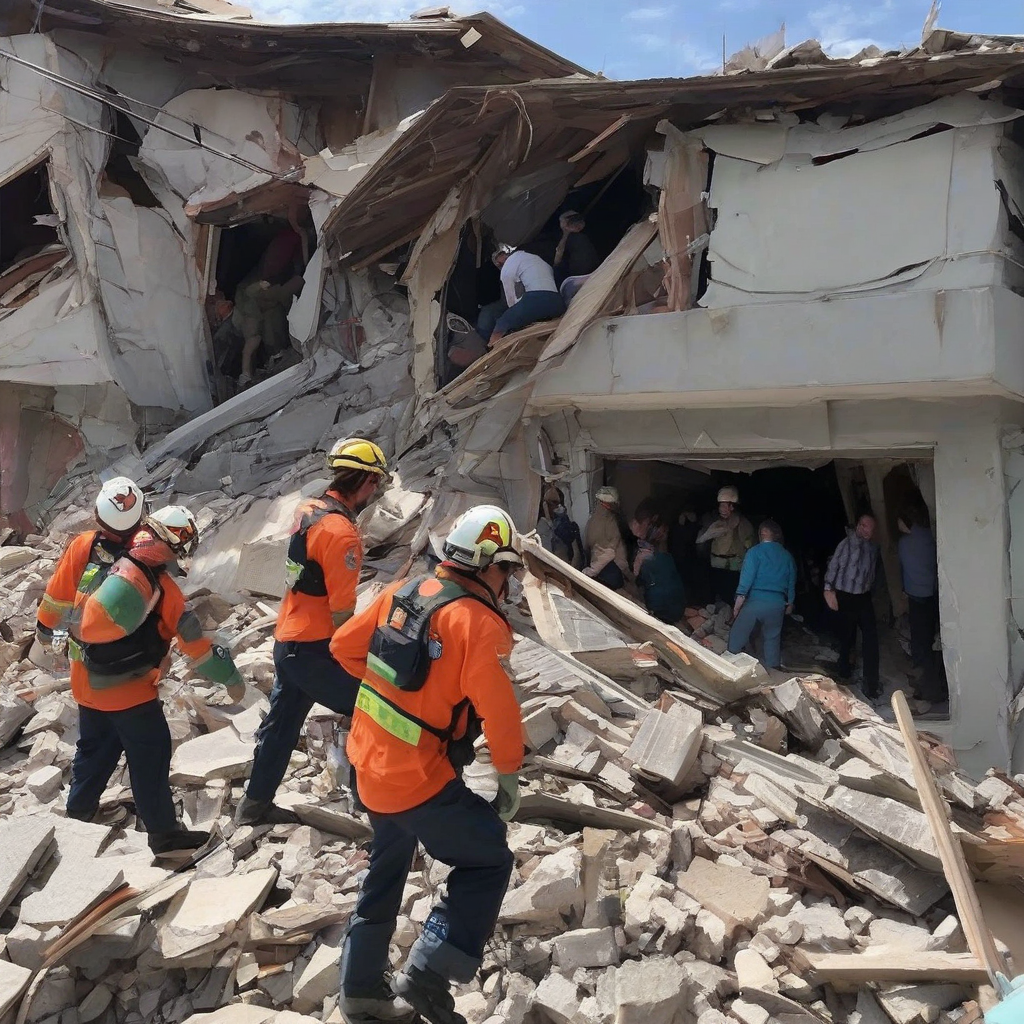
LA GUIRA – Hundreds of international rescuers are working to extract a 43-year-old security guard trapped for eight days under a collapsed building following twin earthquakes that have killed nearly 2,300 people in Venezuela.
The operation to reach Hernan Gil, who is buried inside his security booth under a seven-story building in Catia La Mar, has become a focal point of the recovery efforts in a coastal region almost entirely razed during the June 24 catastrophe.
The disaster strikes a nation currently in a fragile political transition six months after the United States ousted leader Nicolas Maduro, leaving the country to navigate extreme infrastructure decay and diplomatic pressure from Washington regarding access to oil and natural resources.
International Rescue Operation
Rescue teams from seven countries-Venezuela, Chile, the United States, Portugal, Costa Rica, El Salvador, and Mexico-have worked around-the-clock for three days to reach Gil. As of July 2, rescuers reported they were within one metre of his position, though progress remains slow to prevent the collapse of surrounding damaged structures in the densely built coastal corridor linking La Guaira to Caracas.
“This is a rather complicated structure to access,” said Cristian Vera, the leader of the Chilean rescue team. “It wasn’t easy to reach the exact spot where the victim was located.”
For Gil’s wife, Gusbimar Gonzalez, the global response is unprecedented. “This is truly a miracle,” Gonzalez said. “I’m completely amazed because it’s the first time I’ve seen so many countries come together like this to save a single person.”
While the search for Gil offers a rare glimmer of hope, the broader reality in the hardest-hit city of La Guaira is bleak. Search teams have begun marking collapsed buildings with the letter “D” for “deceased,” indicating that the sites have been fully searched and no signs of life were found – a system meant to prioritize scarce personnel and equipment as officials transition from rescue to recovery.
“Time isn’t wasted in a place where there is no expectation of recovering people alive,” said Javier Rodes, the coordinator of a Spanish rescue team.
Casualties and Structural Damage
The twin earthquakes, measuring 7.2 and 7.5 on the Richter scale, represent the most powerful seismic events to hit the region in over a century. Preliminary satellite data published by NASA indicates that the quakes likely damaged or destroyed 58,870 buildings, including hospitals, schools and key transport links serving the main port and airport.
National Assembly President Jorge Rodriguez reported on July 1 that the human cost has escalated significantly:
- Confirmed deaths: 2,295
- Injured: More than 11,000
- Homeless: Approximately 13,000
- Missing: 50,000 (United Nations estimate)
Interim President Delcy Rodriguez declared seven days of national mourning for the victims and said a special legislative session would consider emergency measures on reconstruction and housing.
“The country’s soul is torn apart by the human losses,” Rodriguez said.
Survival rates for those trapped under rubble typically drop sharply after 72 hours, according to international disaster-response guidelines. While a three-year-old boy was found alive on June 30, six days after the initial quake, many families have lost hope. In the town of Caraballeda, Jose Rafael, whose son remains missing, stated, “No one is coming out of here, alive or dead.”
Humanitarian Crisis and Civil Unrest
The disaster has exacerbated a long-standing economic crisis that had already devastated Venezuela’s health services and public infrastructure. Years of underinvestment and sanctions had left many public hospitals operating with intermittent power and water even before the quakes. As the focus shifts from rescue to survival, food and water scarcity have led to volatility at emergency shelters run jointly by local authorities and international agencies.
Reports of theft and looting have emerged from the ruins. On July 1, residents caught and assisted in the arrest of four police officers who were found stealing valuables from the debris – an incident now under investigation by prosecutors and likely to intensify public distrust in local security forces.
Fatima Berroteran, 56, who has been sleeping in a parking lot since her high-rise home in La Guaira collapsed, said her family received no assistance until water arrived on the night of July 1. Another survivor described the desperation at aid stations, stating, “They give out supplies here, but sometimes people nearly kill each other for food… It’s like a cockfight.”
To address the immediate hunger crisis, the World Food Programme issued an appeal on June 30 for $50 million to provide food for 500,000 people over the next three months, while Venezuelan officials say they are invoking national disaster provisions of the country’s constitution to expedite customs clearance and the distribution of foreign relief supplies.
Public Health Risks and Foreign Aid
The United States has deployed approximately 2,000 personnel to assist in the response, according to General Francis Donovan, head of US Southern Command, as part of a broader multinational relief effort coordinated through Venezuela’s civil protection agency and the United Nations.
However, the World Health Organization (WHO) warns that the collapse of the health system is creating a secondary crisis. WHO spokesman Christian Lindmeier stated that health services are under “extreme pressure,” raising the risk of outbreaks of vaccine-preventable diseases in crowded temporary shelters.
Due to low vaccination coverage prior to the earthquakes, the WHO has identified a specific increased risk for outbreaks of measles and diphtheria among the displaced population. International health teams say they are working with Venezuelan officials to mount emergency immunization campaigns under the framework of the International Health Regulations, while engineering experts are urging authorities to align rebuilding plans with modern seismic standards such as those set out in the World Bank’s disaster risk management guidance to reduce future catastrophe risks.
Keep reading
- Urban Infrastructure Resilience: How European and Asian Megacities Are Adapting to Extreme Climate Oscillations in 2026
- UN General Assembly 2026 Framework on Autonomous Systems: International Diplomacy Faces Algorithmic Governance
- WHO: Plague risk very low after technician death in Russia (archyde.com)
