
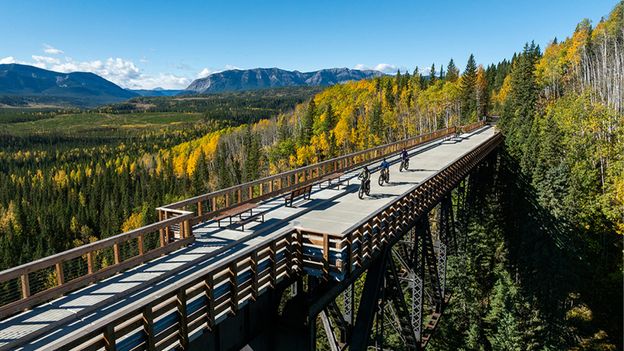
CALGARY – A new route through the Canadian Rockies is taking shape as the new rail trail advances between Nordegg and Jackfish Creek in Alberta, with more than 50km completed and additional work continuing.
Promoted as year-round and open to a wide range of users, the corridor is drawing visitors who want a quieter alternative to routes near Jasper and Banff and a view of how nature is reclaiming a corridor once defined by steam engines and coal.
The project threads through boreal forest, along ridgelines and above broad valleys, reaching areas that have been hard for the public to access.
Year-round, multi-use access
Backed by Alberta’s recreation and land-use framework under the Provincial Parks Act, the route is being developed as a managed public corridor rather than an informal backcountry track, with rules intended to balance tourism growth, local access and environmental protection.
Permitted uses on the corridor include:
- Hikers and cyclists
- Equestrians
- Snowshoers and dogsledders
- Cross-country skiers
- Off-highway vehicles (in designated sections and seasons)
Local officials say that mix is designed to spread use across the calendar year, relieve pressure on more heavily trafficked national park infrastructure and support small businesses in and around Nordegg.
Nordegg-Jackfish Creek build: current status
- Completed: more than 50km from Nordegg to Jackfish Creek, following a former rail alignment that once linked coal operations in the eastern slopes to markets farther east
- Status: the remaining half of the route is underway, with work focused on bridges, signage and staging areas that can safely handle mixed recreational and motorised traffic
Once fully open, the corridor is expected to connect into a wider network of regional trails and recreation sites, including existing campgrounds and day-use areas around Abraham Lake and Jackfish Lake, positioning the line as a backbone for future tourism and land-use decisions in west‑central Alberta.
Visitor account near Abraham Lake
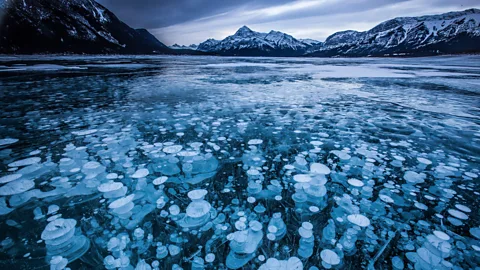
Calgary resident Maddy Tailor said she ended up on the route after a long drive to Abraham Lake, a popular stop near the trail known for its winter ice bubbles and roadside pullouts. “I met an older couple really into trains while I was camping at Preacher’s Point who mentioned they’d just biked a section of the trail from Nordegg. They were sort of raving about it,” she said.
“It’s a stunning spot,” she added.
“I can definitely see us camping along it… who knows, maybe my grandad will even learn a thing or two he didn’t know about [Canadian] history.”
Designed as a year-round, multi-use trail for hikers, cyclists, equestrians, snowshoers, dogsledders, cross-country skiers and off-highway vehicles, the new rail trail leads travellers through boreal forests, above sweeping valleys and into seldom-seen corners of Canada that, until now, have largely been inaccessible to visitors. It’s a rare opportunity to see how nature is reclaiming a landscape once shaped by steam engines and coal; and to experience a quieter, lesser-known side of the Rockies beyond Canada’s two most-famous national parks – Jasper and Banff.
To date, more than 50km of the trail from Nordegg to Jackfish Creek has been completed, with the remaining half underway. Its alignment near established recreation hubs such as Abraham Lake and Jackfish Lake – already familiar to anglers and paddlers using detailed nautical charts and local campground facilities – is central to Alberta’s push to disperse visitor traffic and reduce bottlenecks at a handful of marquee sites.
Calgary resident Maddy Tailor found herself on the trail “almost by accident”, after driving for hours to nearby tourist drawcard Abraham Lake. “I met an older couple really into trains while I was camping at Preacher’s Point who mentioned they’d just biked a section of the trail from Nordegg. They were sort of raving about it,” she said.
After visiting the revitalised trail herself, Tailor wanted to bring her grandfather – a local history buff – to experience it. “It’s a stunning spot,” she added. “I can definitely see us camping along it… who knows, maybe my grandad will even learn a thing or two he didn’t know about [Canadian] history.”
Alamy
The remaining half of the route is underway.
- Urban Infrastructure Resilience: How European and Asian Megacities Are Adapting to Extreme Climate Oscillations in 2026
- UN General Assembly 2026 Framework on Autonomous Systems: International Diplomacy Faces Algorithmic Governance
- Why Canadian Thanksgiving Is in October (It's Not Just the Harvest) (daybreakwire.com)
