
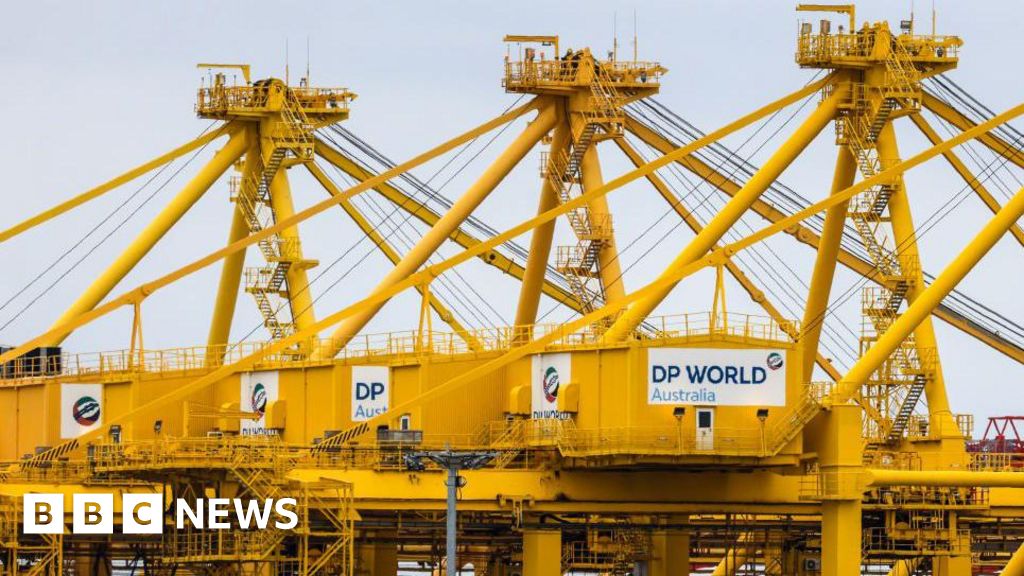
SYDNEY – Port workers in Australia are seeking a reduction in standard working hours to 28 per week as part of negotiations concerning the integration of artificial intelligence and automation in dock operations.
The proposal, led by the Maritime Union of Australia (MUA), represents a strategic attempt to redistribute labor hours and mitigate potential job losses as DP World, a global leader in port terminal operations, implements efficiency-driving technologies. This friction highlights a broader industrial tension in global logistics where capital investment in automation clashes with legacy labor agreements and longstanding expectations around secure, full-time work.
The demand for a shorter work week is positioned as a “just transition” mechanism. By reducing the hours required per employee, the union intends to spread available work across a larger portion of the workforce, thereby preventing the redundancies typically associated with the deployment of automated systems. Union officials argue that, without such mechanisms, productivity gains from AI will accrue primarily to shareholders while eroding job quality and security on the waterfront.
Labor Redistribution and AI Integration
The transition toward automated ports involves the deployment of Artificial Intelligence (AI) to optimize container stacking, berth scheduling, and the operation of Automated Guided Vehicles (AGVs). In fully or partially automated terminals, algorithms now determine yard planning and equipment dispatch decisions that were once handled manually by supervisors and crane operators.
While these technologies increase throughput and reduce operational errors, they diminish the requirement for manual stevedoring and crane operation, particularly in routine container moves. That shift has narrowed the scope of traditional dockside roles even as overall trade volumes continue to grow.
The MUA’s strategy focuses on the following objectives:
- Reducing the standard working week to 28 hours to maintain current employment levels across existing terminals.
- Ensuring that productivity gains from AI are shared with the workforce via reduced hours and potentially reclassified duties, rather than workforce reductions.
- Establishing contractual protections against unilateral automation that results in job losses, including consultation triggers when new technologies are introduced.
“We’re not against technology, but we’re against technology being used to take people’s jobs,”
a union representative stated, framing the dispute as a test case for how AI will be governed in frontline industrial workplaces.
The move comes as port operators globally face pressure to increase efficiency to handle larger vessels and higher volumes of trade. The implementation of AI in logistics is designed to streamline the supply chain from quay to hinterland, but in the Australian context, it has become a central point of industrial dispute and a proxy debate over who controls the pace and terms of technological change.
Infrastructure, Regulation and Corporate Strategy
DP World, based in Dubai, operates critical infrastructure across Australia’s primary shipping hubs, handling a significant share of containerised imports and exports. The company’s corporate strategy emphasizes the digitalization of trade and the shift toward “smart ports,” with integrated data platforms that connect shipping lines, terminal equipment and inland transport operators.
This transition is part of a wider global trend to move away from labor-intensive dock operations toward capital-intensive, automated environments. For governments and regulators, that shift raises questions about resilience: how far ports can automate without increasing vulnerability to cyber incidents, system failures or industrial conflict concentrated around a small pool of highly skilled technical staff.
In Australia, the regulatory environment for these disputes is overseen by the national workplace relations framework administered by the Fair Work Commission, which mediates between corporate entities and unions to prevent systemic disruptions to national trade. Under that regime, protected industrial action, enterprise bargaining and dispute resolution are structured to balance commercial continuity with workers’ bargaining power in sectors deemed essential to the economy.
The economic impact of a 28-hour work week would necessitate a reconfiguration of payroll structures and shift rotations, particularly in terminals that currently rely on overtime and extended shifts to meet vessel schedules. For port operators, the primary concern is maintaining 24/7 operational capability and international competitiveness without increasing the total cost of labor per container move, or passing higher logistics costs through to exporters, importers and, ultimately, consumers.
Both sides are also under scrutiny from federal and state authorities responsible for supply chain security, who are keen to avoid a repeat of recent global port bottlenecks. The negotiations remain focused on the balance between the operational necessity of automation and the contractual security of the workforce, with the outcome likely to set a reference point for future AI-related bargaining in other high-value, high-union-density sectors.
The matter is currently under negotiation between the MUA and DP World.
