
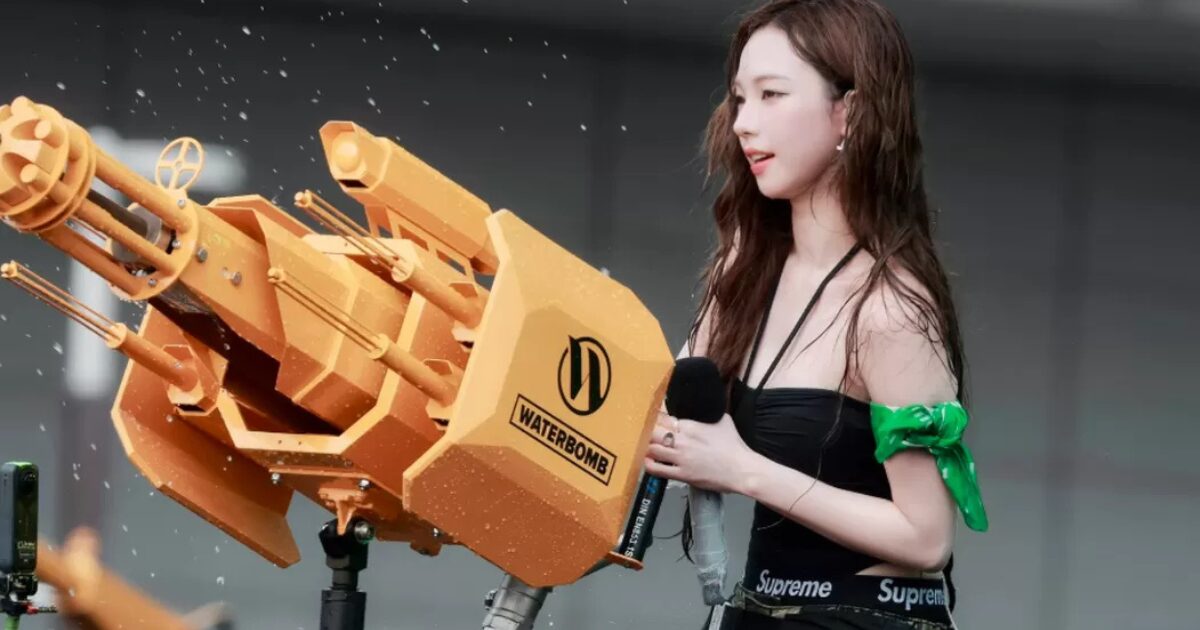
SEOUL – Karina, a member of the group aespa, is scheduled to appear at Waterbomb 2026, triggering a public debate regarding performer styling and audience expectations at the event.
The discourse centers on the festival’s established reputation for bold attire, which frequently generates significant digital engagement. In the South Korean festival circuit, styling is often as central to the event’s visibility as the performances themselves, with male artists often appearing shirtless and female idols frequently utilizing bikinis or revealing outfits.
This trend has historically resulted in substantial viral reach for performers, as seen with soloist Kwon Eunbi.
During her previous appearance at the festival, Karina departed from these norms. She wore a one-piece swimsuit paired with long cargo pants, a choice that drew praise from segments of the fanbase who viewed the decision as a protective measure by her styling team.

Audience Polarization Regarding Artist Image
As the 2026 event approaches, public opinion has divided into three distinct perspectives regarding the artist’s presentation, primarily expressed through social media posts on X (formerly Twitter).
One segment of the audience is calling for the artist to align with the festival’s traditional aesthetics and lean into its image as a highly visual summer water show. User yura (@yura5865) posted on April 22, 2026: “please for the love of god let her wear a bikini 🙏🙏😵💫”.
Conversely, other observers argue that the focus should remain on the musical performance rather than the visual presentation, criticizing what they see as a growing pressure on idols to prioritize spectacle over artistry. User Maruzensky’s Husband 🇪🇸 (@Supercar800) stated on April 22, 2026: “I wish kpop “fans” cared about the music, but nope, it’s all about being almost naked, shaking ass and “slaying””.
A third group emphasizes the autonomy of the performer and the necessity of separating clothing choices from online harassment, framing the debate in terms of victim-blaming and gender-based abuse. User vivi (@rubyrinas) noted on April 22, 2026: “the logic of “there’s people harassing her so she should cover up” is actually so disgusting. since when getting sexually harassed is the women’s responsibility? shouldn’t you be fighting the people who see her in that light instead of controlling what she wears?”.
This viewpoint was echoed by user 유지민 부인⁴¹¹ (@slytherinyjm), who posted on April 22, 2026: “she can wear whatever she want as long as it comfortable mys need to stop victim blaming like controlling what she should wear keep your fake concern somewhere else”.
Beyond fandom discussions, the controversy touches on broader questions of workplace standards and artist protection in live entertainment. South Korea’s Act on the Prevention of Sexual Violence and Protection of Victims Thereof sets out obligations for institutions and employers to prevent harassment and protect victims, a framework labor advocates say is increasingly relevant for large music festivals where performers are exposed to intense public scrutiny and sexualized commentary.
Industry officials note that Waterbomb operates within a competitive regional festival market, where viral clips can influence bookings, sponsorships, and international licensing. At the same time, entertainment companies face rising expectations-from regulators, unions, and the public-to provide clearer internal guidelines on stage costumes, consent, and post-performance online abuse, even when artists elect to appear in revealing attire.
Karina remains scheduled for her appearance at Waterbomb 2026, and neither her agency nor festival organizers have publicly commented on whether her styling will change in response to the debate.
Related reading
