
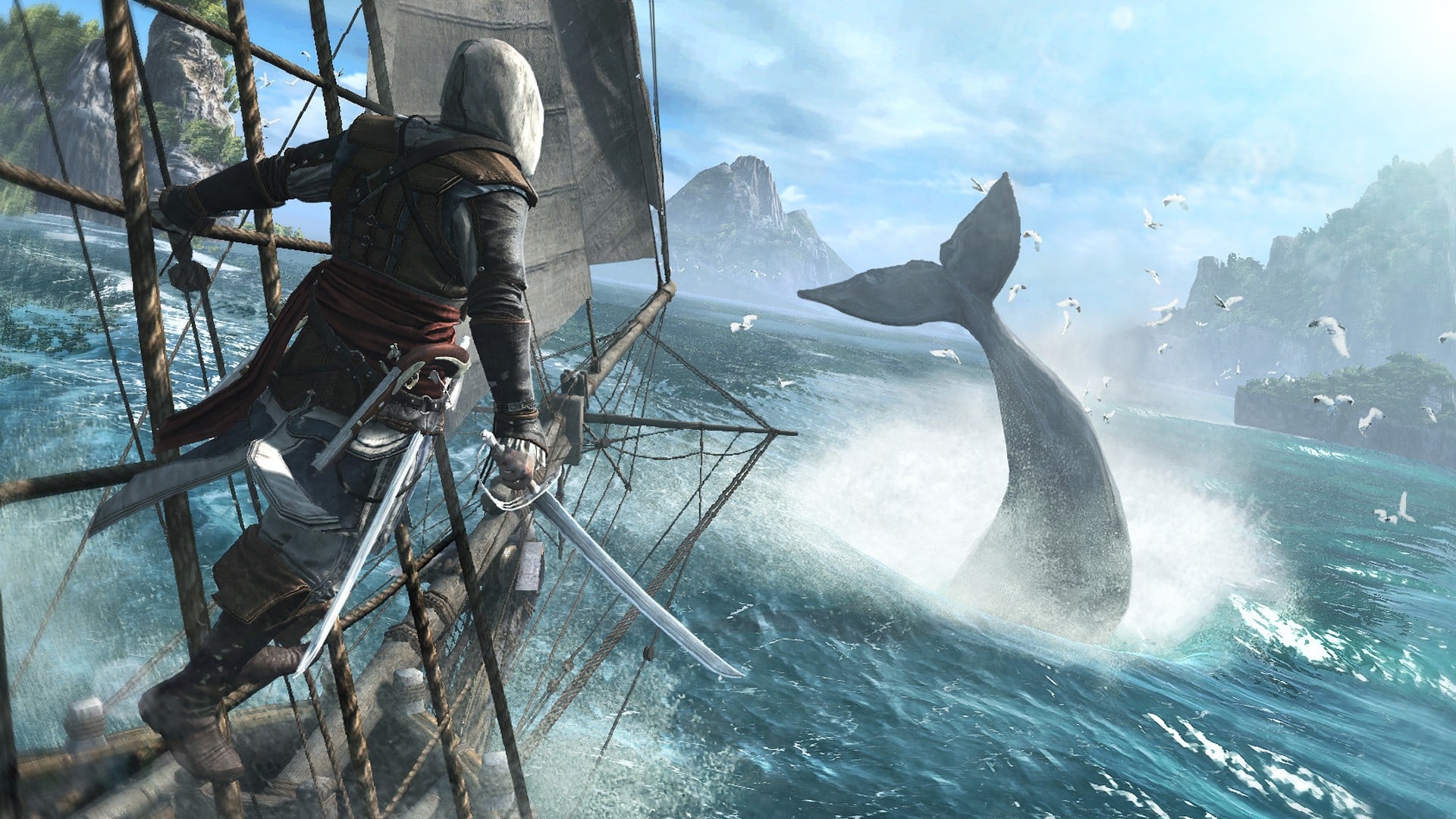
Ubisoft has officially announced Assassin’s Creed: Black Flag Resynced, a comprehensive “from the ground up” remake of the 2013 nautical adventure. The project marks a strategic effort to migrate one of the franchise’s most critically acclaimed titles into the modern hardware era, initially targeting the Xbox Series X|S ecosystem while positioning the brand for the next phase of console-standardization and content regulation under frameworks such as the EU Digital Services Act.
Modernizing the Golden Age of Piracy
Unlike a standard remaster, which typically focuses on resolution bumps and frame rate stability, Resynced is a full rebuild. The development focus centers on leveraging current-generation GPU capabilities to overhaul the visual fidelity, animation density, and systemic responsiveness of the Caribbean open world that defined the original Black Flag.
The update introduces several key technical and mechanical enhancements designed to align the 2013 experience with contemporary performance and accessibility standards now expected on major platforms:
- Visual Fidelity: Implementation of high-resolution textures, enhanced lighting, and improved water and weather simulation to create more immersive maritime environments.
- Combat Refinement: A redesigned combat system engineered to be “faster & more fluid,” reducing input latency and animation rigidity found in the original version while improving responsiveness on modern controllers.
- Engine Overhaul: A total rebuild of the game’s core architecture to optimize asset streaming, environment rendering, and background simulation across large oceanic spaces.
Preserving Narrative Focus over RPG Mechanics
Over the past decade, the gaming industry has shifted toward massive, systemic Role-Playing Games (RPGs) with expansive skill trees and loot-based progression-a direction Ubisoft adopted in later Assassin’s Creed entries such as Origins, Odyssey, and Valhalla. In contrast, the development of Black Flag Resynced intentionally resists that trend, opting to maintain the tighter, character-driven structure and stealth-action identity of the original.
Game director Richard Knight emphasized the importance of preserving that core experience during the rebuilding process:
“Assassin’s Creed: Black Resynced matters deeply to us and to you. That’s why we took the time to rebuild it with the care it deserves. This remains a solo adventure and character-driven experience. It is not an RPG.”
For platform holders and regulators increasingly attentive to monetization design, playtime incentives, and data practices, Ubisoft’s decision to center a self-contained single-player experience-rather than an endlessly expanding live-service model-also aligns with a broader conversation about consumer protection and the long-term governance of digital entertainment ecosystems.
Hardware Integration and Deployment
The transition to the Xbox Series X|S allows the title to bypass the bottlenecks of the original Xbox One’s mechanical hard drives. By utilizing NVMe SSD architecture, the remake can handle more complex asset loads, faster fast-travel, and denser environmental detail without sacrificing stability or frame rate.
That optimization sits within a maturing console lifecycle in which certification processes, content-rating requirements, and cross-border distribution rules are increasingly harmonized through bodies such as the Entertainment Software Rating Board. For a global blockbuster franchise like Assassin’s Creed, technical uplift is now inseparable from meeting those evolving compliance and governance expectations.
| Feature | Original Black Flag (2013) | Black Flag Resynced (2026) |
|---|---|---|
| Development Base | Original Game Engine | From-the-ground-up Remake |
| Visuals | Standard HD | High-Res Textures & Enhanced Lighting |
| Combat | Traditional Action | Fluid, Accelerated Mechanics |
| Genre | Action-Adventure | Action-Adventure (Non-RPG), Single-Player |
Assassin’s Creed: Black Flag Resynced is scheduled for release on Xbox Series X|S on July 9th, 2026, putting one of Ubisoft’s most recognizable titles back at the center of the industry’s debate over how to balance technical ambition, player agency, and responsible design in large-scale interactive worlds.
Keep reading
