
BRADFORD – A volunteer-run venue with a 90-capacity gig room, a members’ bar and a library is being formally documented through a new book and three-part podcast series released during Bradford’s year as the 2025 UK City of Culture, with the project positioning the city’s long-running, self-managed live-music infrastructure as a subject of record rather than nostalgia.
The 1 in 12 Club traces its origin to 1981, when co-founding member Gary Cavanagh was working for Bradford’s claimants union, helping poor and unemployed residents access benefits. Cavanagh said a government report at the time claimed one in 12 dole recipients were defrauding the state, a statistic he and his peers considered implausible and chose to reclaim as an identity. “We became the 1 in 12 Club,” he said.
For the entertainment industry, the book-and-podcast release is a reminder that a significant share of touring, artist development and community programming is carried by small rooms operating outside commercial chains – often without conventional staffing, sponsorship structures, or promoter-led governance. In this case, the club’s model is described by its participants as independent, volunteer-led, and financed largely through bar income, supplemented by occasional grants, at a time when venue sustainability is frequently tied to ancillary revenue and local cultural commissioning.
From a claims union dispute to a music-and-meetings circuit
Cavanagh described Bradford in the early 1980s as a city under severe economic strain. “Things were getting grim,” he said. “There was a hell of a lot of unemployment, and people were thrown on the scrap heap.” Against that backdrop of deindustrialisation and welfare reform, the club’s decision to organise around social security claimants also amounted to a practical response to policies being shaped in Westminster rather than within the city itself.
In its earliest phase, 1 in 12 operated nomadically, staging gigs and leftwing political meetings in upstairs rooms of pubs. Cavanagh and other members framed the project around anarchist principles of self-management, co-operation and mutual aid – an approach that, in practice, sets expectations for how programming, staffing and decision-making are handled in a venue that is not run as a conventional private business.
The club is built around the words “liberty, equality and solidarity,” which remain painted on a mural at the building it has called home since 1988. The conversion of that space took two years of voluntary work, reflecting an organisational method that treats the premises itself as part of the collective’s output – alongside live shows, meetings and day-to-day services. Over time, that ethos has also made the club a recurring point of reference in local debates about who gets to shape Bradford’s cultural offer: commercial operators, public agencies, or the people who live in the city.
A City of Culture commission meets grassroots venue economics
The newly released book and podcast series, created in collaboration with cultural history organisation Home of Metal as part of Bradford’s year as the 2025 UK City of Culture, sets out to tell 1 in 12’s story using contributions from members and bands including Lankum, Chumbawamba, Therapy? and Neurosis. As with other City of Culture projects, the commission is funded in part through cultural investment streams that sit alongside local authority spending decisions, placing a long-running grassroots venue briefly within the same policy frame as major institutions and public events.
Projects of this type typically sit at the intersection of cultural programming and media production: the venue’s history becomes source material for a packaged editorial work (a book) and an audio release (a podcast series), extending the club’s audience beyond the capacity limits of its room. That matters in industry terms because the long-term value of a venue is not only measured through ticketed attendance; it can also be measured through documented legacy, artist testimonies, and the durability of a brand identity anchored to a place. For local decision-makers weighing up cultural funding, that kind of evidence is increasingly used to argue that small venues function as social infrastructure, not just night-time entertainment.
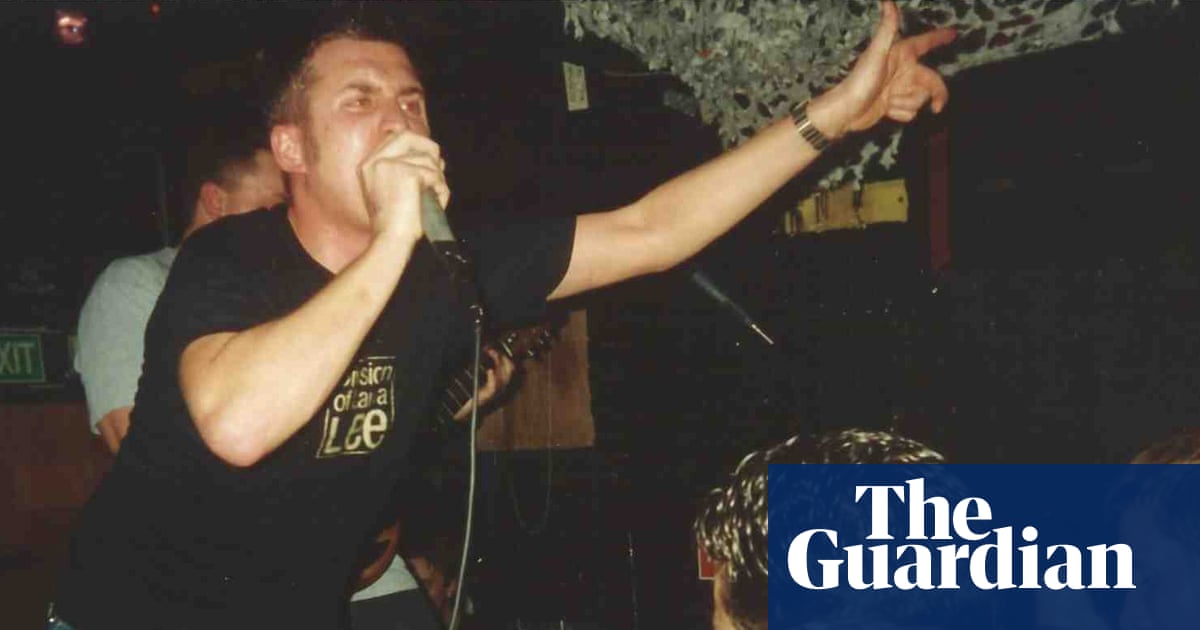
Chumbawamba’s Alice Nutter, who is also a TV writer and playwright, described the intensity of some shows: “Some gigs were so hot and ridiculous, with eight of us on that tiny stage. You’d have sweaty black water dripping on you but the atmosphere was great.”
The building as a year-round cultural facility
A trustee identified as E said he has been coming to the club for 15 years, since he was a young teen, and described his first visit as a formative encounter with a multi-generational crowd. “I’d never seen a space like this before,” he recalled. “I remember a bunch of teenagers – along with punks, hippies, all sorts – all spilling outside into the street.”
E added that he is from a Traveller background and felt accepted on arrival. “Nobody looked at you wrong or assumed anything about you,” he said. “It quickly became a home from home and I wanted to put back into a place that had always given me a space.” His account echoes language policymakers increasingly use about “safe spaces” and inclusion in cultural provision, but here those ideas pre-date the terminology and are enforced through peer norms rather than a formal code of conduct.
Operationally, the club is described as spanning three floors, “each plastered with leftist stickers and posters,” with a cafe, a members’ bar, a games room and an extensive library. Its 90-capacity gig room has hosted “countless shows and booming raves,” with performers over the years including Pulp and Bikini Kill.
For artists and promoters, a 90-capacity room is often where touring routes are built on tight margins: the economics typically depend on low overheads, reliable local attendance, and ancillary spend at the bar. The club’s structure – volunteer-led and sustained primarily through bar income with “the odd grant” – is a direct statement about how it keeps operating without the staffing model of larger venues. It also puts the space on the frontline of regulatory debates over licensing, noise, safety and late-night economies, where decisions taken under the Licensing Act 2003 can determine whether small clubs survive or close.
Politics at the door, but not on a script
Cavanagh said 1 in 12 faced threats in its early years as the National Front was prominent, and he framed the club’s stance as confrontational toward organised racism. “We were always fighting fascists,” he said. “We were threatened but we always took on those people.”
At the same time, both Cavanagh and E described a line between the club’s political roots and any expectation that visitors must adopt a defined ideology. Cavanagh said: “We aren’t a summer school for Marxists. We’re not browbeating people with political dogma. We just encourage people to think for themselves.” E said that “not everyone here would define themselves as an anarchist,” and described the club as “an intersectional or leftist space – just somewhere you can go to be yourself”.
In entertainment terms, that distinction matters because it clarifies the venue’s programming logic: it is a values-led space, but not framed as a single-issue campaign platform. That opens the door to a broader set of artists and audiences while preserving the governance model that shaped the organisation. For local authorities and cultural boards, the club sits awkwardly but productively between community centre, political organising hub and licensed premises – a hybrid that challenges simple funding or regulatory labels.
Gatekeeping, press attention, and a DIY response
The club’s approach to independence has also extended to how it responds to outside attention. Cavanagh and others described a moment in 2008 when the Canadian post-hardcore band Fucked Up arrived to play with the NME in tow. Members responded by bringing out a giant cardboard box structure of a Trojan horse with “NME Out of Our Scene” written on it, and then smashed it to bits.
Read through an industry lens, the incident underlines a common tension for grassroots venues: media attention can increase visibility, but it can also be perceived as re-framing a local scene for external consumption. In this case, the club’s members chose a theatrical protest that made the point without changing the venue’s operating model. For a space built on self-management, the episode functions as an assertion that editorial framing – who tells the story and for whose benefit – is part of the governance question, not a separate concern for the press office.
More than a room: collectives, food, and informal commissioning
Nutter said the club functions as more than a performance space, pointing to the internal collectives that operate within it. “It’s always been more than a venue,” she said. She cited reading groups, the “peasant collective” – which she said provides free communal meals with food from the club’s allotments – and a football team her partner used to play on.
Nutter also spoke about the bar and the club’s social texture, describing it as “a place where there is always someone to have a pint with who isn’t a wanker.”
For creative workers, the venue’s value is also described as access: a place where projects can be staged without the high upfront costs that can attach to formal theatre and commercial hire agreements. Nutter said her first play was performed there and described an open-door approach to use of the building. “There was always an opportunity to use the space,” she said. “If you have the creativity, they will facilitate it. No one said no. If you were willing to put the work in, you could use the building – they would give you the keys.”
As her writing career later moved into traditional theatres, Nutter said the cost structure became more apparent. “I realised it costs thousands to put a play on. The first one we did, everyone did it for nowt.” Her experience illustrates, in miniature, how informal commissioning and in-kind labour at venues like 1 in 12 can act as a de facto development pipeline for artists who might otherwise be priced out of the early stages of their careers – a consideration now frequently cited in cultural policy debates about levelling up and access to the arts.
A milestone marked by new releases and a loss
Alongside the milestone year, the club has also recently lost Tony Grogan, described by participants as a “vital” and “instrumental” founding member. Cavanagh is described as the sole remaining founder and continues to attend gigs; his daughter is now a member.
Cavanagh linked the club’s longevity to continued social need and said it remains part of what he called “strong cultural resistance” in Bradford as “the St George’s flag-waving far right becomes emboldened once more in the city.” “Part of the longevity is that there’s still a need for us,” he said. “It upsets me that we’re still fighting the same battles, but we’ve got a strong cultural resistance in Bradford and we’re part of that. Liberty, equality, solidarity. That’s what we started with and that’s what we’re still trying to do.”
As Bradford uses its City of Culture year to court visitors, investment and political attention, the 1 in 12 Club stands as a reminder that some of the city’s most durable cultural institutions were built from the ground up – and remain, even now, answerable first to their members rather than to a funding programme. The 1 in 12 Club book and podcast series are out now via Home of Metal.
Keep reading
