
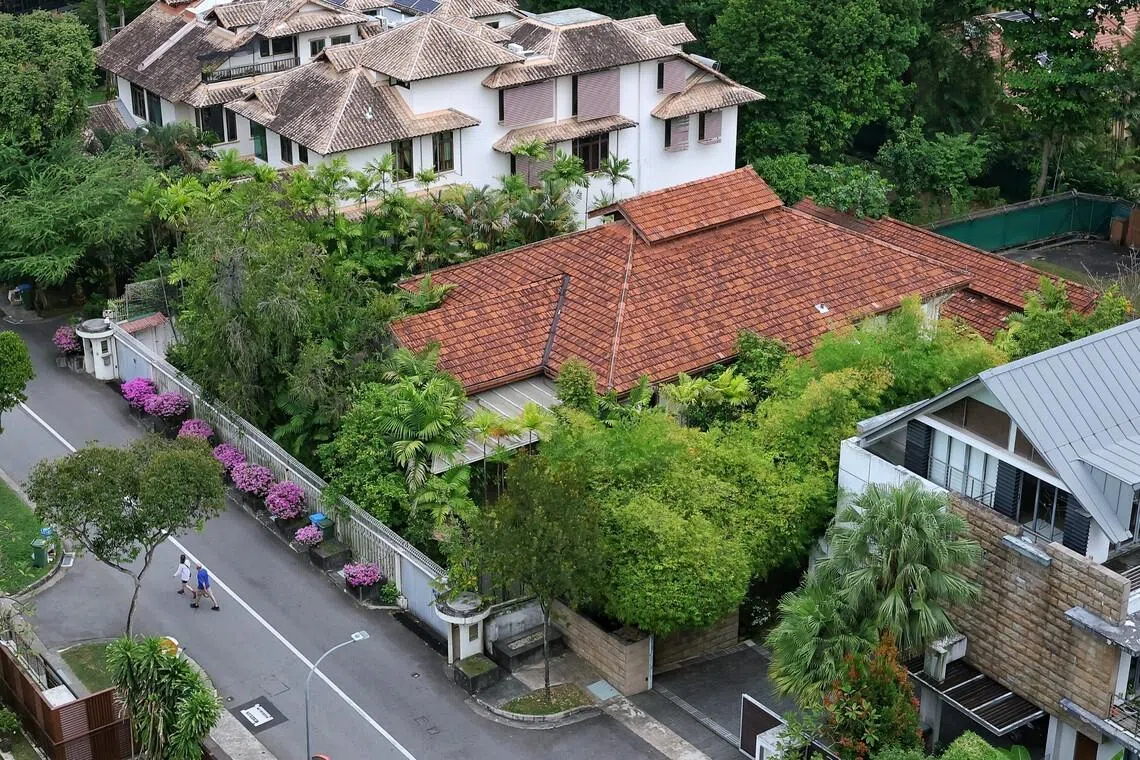
SINGAPORE – The site of the former home of founding prime minister Lee Kuan Yew at 38 Oxley Road was gazetted for acquisition on Jan 29, with authorities citing its historic significance and national importance, according to a joint statement by the Singapore Land Authority (SLA) and the National Heritage Board (NHB).
The move places the property under state acquisition to protect it from private redevelopment while officials determine an appropriate course for long-term preservation.
What the acquisition means for 38 Oxley Road
In their joint statement, the agencies said the decision ensures the property is not converted to other uses. They added that no decision on the site’s future will be taken until a full assessment is completed and options are reviewed, including those set out by a 2018 ministerial committee that examined long-term options for the house and its legacy.
“Preserving and acquiring the site mean that it cannot be redeveloped for residential, commercial or other private uses.”
“After acquisition, the relevant authorities will assess the condition of the buildings and structures within the site, and undertake a detailed study to consider the next steps,” the statement said.
It added: “No decision on its future will be made until all options, including those outlined by the 2018 ministerial committee, have been considered.”
Officials said the acquisition ensures that any eventual use of the property will be determined within a national heritage and land-use framework, rather than by individual owners or market forces.
Site, status and historically significant features
An eight-bedroom pre-war bungalow sits on the site. It was home to Mr Lee from the 1940s until his death in 2015, and has long been regarded as a touchstone of Singapore’s political history as well as a private family residence.
The preservation order for the site came into effect on Dec 13, and the site was gazetted as a national monument, giving it the highest level of protection under Singapore’s built-heritage regime. As a national monument, any works affecting key elements of the property are subject to regulatory oversight by the authorities.
The bungalow’s basement dining room is widely regarded as the most historically significant part of the house, described by authorities as the space where Singapore’s first generation of leaders discussed ideas for the country’s future in the 1950s. The room has been repeatedly referenced in official accounts as a cradle for early discussions on self-governance and nation-building.
Privacy commitments stated by the Government
Officials said the Government has committed to protect the family’s privacy by ensuring private living spaces will not be displayed as part of any future treatment of the house’s interior.
“Under no circumstances will the interior of the house as Mr Lee knew be displayed, recorded, remodelled or duplicated elsewhere,” it added.
The commitment is aimed at drawing a clear line between the treatment of historically significant spaces, such as the basement dining room, and the preservation of private family areas, in a bid to balance public interest in the site with respect for the Lee family’s wishes.
Acquisition process and compensation framework
SLA and NHB said they will work with the owner through the acquisition process. Compensation will be determined in accordance with the Land Acquisition Act 1966. The statement said compensation will take into account the market value of the acquired site as at the date of the gazette of the acquisition, and claims submitted by interested persons.
Under Singapore’s compulsory land acquisition framework, valuation is typically based on prevailing market conditions at the point of acquisition, with affected parties invited to submit claims and, where necessary, to seek clarification or appeal through established statutory channels.
Key procedural points cited by the authorities:
– Gazette of acquisition: Jan 29.
– Compensation basis: market value as at the gazette date.
– Claims: to be submitted by interested persons.
– Agency engagement: SLA and NHB to work with the owner through acquisition.
– Post-acquisition: condition assessment of buildings and a detailed study to consider next steps.
Authorities said this process is intended to ensure the state can secure sites of exceptional public interest while providing a transparent, legislated route for owners and other parties to seek redress or clarification.
Key dates and policy milestones for 38 Oxley Road
– 1940s: Mr Lee moved into the eight-bedroom bungalow.
– 1950s: Meetings among Singapore’s first generation of leaders in the basement dining room.
– 2015: Mr Lee’s death; the bungalow had been his residence from the 1940s to 2015.
– 2018: Ministerial committee outlines options for the property’s long-term treatment, including potential heritage and commemorative uses.
– Dec 13: Preservation order took effect; site gazetted as a national monument.
– Jan 29: Site gazetted for acquisition.
SLA and NHB said they will work with the owner of the site through the acquisition process, adding that any eventual decision on how the property is presented to the public will be guided by heritage considerations, planning needs and prior policy discussions on Mr Lee’s legacy.
Keep reading
